


Best Things to Do in Jeju: A Complete Guide
10 Best Things to Do in Jeju
Looking for what to do in Jeju? South Korea’s beloved island getaway feels like a different world from the mainland — a place of volcanic craters, lava caves, tangerine orchards, cliffs, waterfalls and beaches framed by emerald fields and stone walls. Long favoured by Korean honeymooners and hikers, Jeju is increasingly popular with international travellers who come for its blend of nature, coastal roads, quirky museums and slow island life.
Whether you want to climb a volcano at sunrise, walk coastal trails, swim in clear bays, explore lava tubes or simply relax in a pension with ocean views, Jeju can easily fill several days. The island is best experienced at an unhurried pace, circling by car or bus and stopping wherever the scenery tempts you. Here are the 10 best things to do in Jeju, written to help you plan an in-depth island adventure.
1. Hike or Drive Around Hallasan, South Korea’s Highest Peak
Hallasan, the dormant volcano at the centre of Jeju, dominates the island’s skyline and defines much of its landscape. At 1,947 metres, it’s South Korea’s highest mountain, but thanks to well-maintained trails, it’s accessible to regular hikers with reasonable fitness. On clear days, views from higher slopes reveal the island’s coastline and patchwork of fields spreading out in all directions.
Popular hiking routes such as the Seongpanak and Gwaneumsa trails offer different perspectives, passing through forests, volcanic rock formations and alpine wetlands that change dramatically with the seasons — from winter snow to spring blossoms and autumn colours. Even if you don’t hike to the summit, lower-level walks and scenic drives through Hallasan National Park let you experience the volcano’s forests, craters and fresh mountain air.
2. Watch Sunrise at Seongsan Ilchulbong (Sunrise Peak)
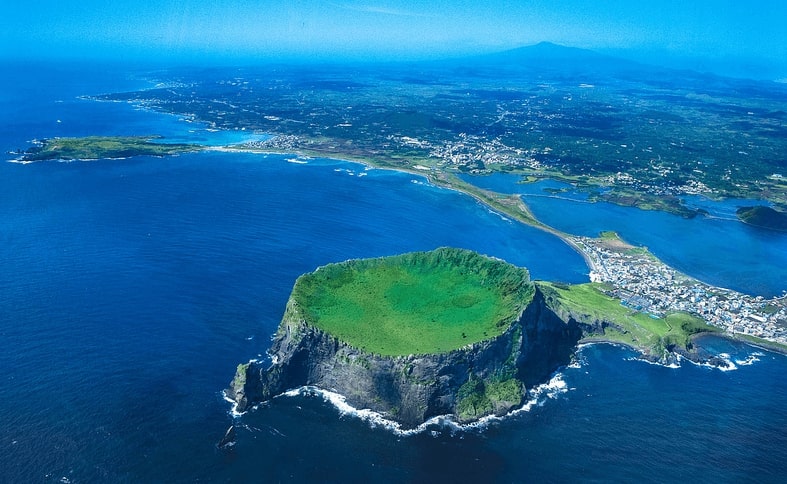
Seongsan Ilchulbong, or Sunrise Peak, is one of Jeju’s most iconic sights — a tuff cone formed by an ancient underwater volcanic eruption. Rising steeply from the sea on the island’s eastern tip, it looks like a giant stone crown when viewed from the air or surrounding hills.
A well-marked trail and steps lead from the base to the crater rim in around 20–30 minutes. Many visitors arrive before dawn to watch the sun rise over the ocean, bathing the crater and nearby coastline in warm light. After your hike, explore the small village below, stroll along the coastal paths or watch haenyeo — Jeju’s traditional women divers — demonstrate their free-diving skills at designated performance spots.
3. Explore Manjanggul Cave and Jeju’s Lava Tubes
Jeju’s volcanic past is dramatically visible underground in its lava tubes — long tunnels created when the surface of flowing lava hardened while molten rock continued to move below. Manjanggul Cave is one of the most accessible and impressive of these formations, with a cool, otherworldly interior that offers welcome relief on hot summer days.
Walk along the lit path to see stalactites, lava stalagmites, flow lines and the famous “lava column,” formed by molten rock dripping from above and solidifying. Information panels explain how the cave was formed and highlight geological features along the route. Visiting Manjanggul gives you a deeper appreciation for the forces that shaped Jeju’s rolling hills and dramatic coastline.
4. Walk the Jeju Olle Trails Along Coast and Countryside
The Jeju Olle Trails are a network of long-distance walking routes that circle much of the island, threading through villages, beaches, forests, farm roads and cliffs. Each numbered route covers a different section of coastline or interior landscape, making it easy to choose a stretch that fits your fitness level and time.
On these trails, you’ll pass stone-walled fields, tangerine orchards, traditional black-rock houses, quiet harbours and windswept headlands where waves crash against volcanic cliffs. The Olle Trails are one of the best ways to experience Jeju at a slow, immersive pace, encountering local life and scenery beyond the main tourist stops.
5. Visit Jeju’s Waterfalls: Cheonjiyeon, Jeongbang and Cheonjeyeon
Jeju’s south coast near Seogwipo is home to some of the island’s most photogenic waterfalls. Cheonjiyeon Falls sits at the end of a short, leafy riverside path lit by lanterns at night, dropping into a wide plunge pool surrounded by basalt cliffs. Jeongbang Falls is one of the few waterfalls in Asia that tumbles directly into the sea, especially striking when waves surge up against its base.
Nearby Cheonjeyeon Falls is actually a series of cascades and pools linked by forest trails and arched stone bridges. Each waterfall area has its own character, and visiting two or three in a single day makes for an easy, scenic outing filled with photo stops and short walks.
6. Relax on Jeju’s Beaches and Coastal Roads
Jeju’s coastline ranges from rugged cliffs to smooth sandy bays with clear, turquoise water. On the north and east coasts, beaches like Hamdeok, Woljeong and Gimnyeong are known for their pale sand, black lava rocks and shallow, inviting water. Beach cafés and small pensions line the roads, many with large windows overlooking the sea.
Rent a car or use local buses to follow the coastal roads, stopping at viewpoints, harbour villages and café clusters. In summer, beaches are busy with swimmers, paddleboarders and families; in the cooler months, they’re ideal for windswept walks, shell collecting and watching moody weather roll in from the sea.
7. Take a Boat or Ferry to Udo Island
Just off Jeju’s eastern shore, Udo is a smaller island known for its soft white-sand beaches, gentle rolling fields and relaxed rural vibe. Ferries run frequently from Seongsan Port, and once on Udo you can rent bicycles, scooters or small electric cars to loop around the island at your own pace.
Highlights include beaches like Seobinbaeksa with its almost Caribbean-like turquoise shallows, coastal walks past low stone walls and viewpoints where you can look back toward Seongsan Ilchulbong and Jeju’s main coast. Peanut ice cream, seafood dishes and local snacks add flavour to a day of slow exploration.
8. Visit Seogwipo, Jungmun and Jeju’s Resorts and Museums
On the island’s south side, Seogwipo and the Jungmun resort area offer a mix of natural beauty and visitor attractions. Jungmun Saekdal Beach sits beneath high cliffs and resort hotels, with layered rock formations and good waves for swimming and surfing in season. Nearby, you’ll find botanical gardens, small museums and coastal viewpoints linked by walking paths.
Seogwipo’s harbour, covered markets and neighbourhood streets feel more local, with small restaurants serving fresh sashimi, hot stews and Jeju black pork dishes. Exploring both the resort area and the town gives you a sense of how Jeju balances tourism infrastructure with everyday island life.
9. Taste Jeju’s Local Food and Green Tea
Jeju has a distinctive food culture that reflects its island environment. Local specialties include Jeju black pork grilled over charcoal, hairtail and mackerel stews, abalone rice porridge, seafood hotpots and raw fish served in casual harbourside restaurants. Many places showcase ingredients sourced directly from the surrounding sea and farms.
Inland, green tea fields roll across gentle slopes, particularly in areas like the O’Sulloc Tea Museum region. Here you can taste different teas, try green tea desserts and walk paths between carefully manicured rows. Combining a tea stop with a visit to nearby museums or cafés makes for a relaxing afternoon.
10. Discover Jeju’s Stone Culture, Folk Villages and Myths
Jeju’s culture is deeply tied to its volcanic stone, from the black walls that criss-cross fields to the dol hareubang — carved stone “grandfather” statues that traditionally stand guard at village entrances. Folk villages and cultural parks around the island preserve traditional thatched-roof houses, tools and customs that reveal how residents once lived with limited resources and harsh weather.
Many of Jeju’s legends involve gods, spirits and heroic divers, and local museums and cultural centres tell these stories through exhibits and performances. Visiting a folk village or cultural museum adds context to the landscapes you see — helping you understand not just what Jeju looks like, but how generations of islanders have adapted to and interpreted it.
Check monthly weather averages for
Latest Secret Flying deals to Jeju
Madrid, Spain to Jeju, South Korea for only €448 roundtrip
Cheap flights from Madrid, Spain to Jeju, South Korea for only €448 roundtrip.
View DealBudapest, Hungary to South Korean cities from only €396 roundtrip
Cheap flights from Budapest, Hungary to South Korean cities from only €396 roundtrip.
View DealLondon, UK to Jeju, South Korea for only £445 roundtrip
Cheap flights from London, UK to Jeju, South Korea for only £445 roundtrip.
View Deal [adblockingdetector id="638efa67113bf"]