


Laos Food Guide
Food in Laos: What to Eat & Drink
Laos’s culinary landscape is a subtle, earthy expression of Mekong River traditions, French colonial influence, and deeply rooted Southeast Asian foodways, making it one of Asia’s most underrated and distinctive cuisines. As Southeast Asia’s only landlocked nation, Laos has developed a food culture shaped by river fishing, forest foraging, and mountain agriculture, all underpinned by Buddhist values and a slower, more traditional pace of life. The country’s cuisine reflects its history as the Lan Xang Kingdom, its position between Thai and Vietnamese culinary spheres, its diverse ethnic minority communities, and its emerging role as a destination for travelers seeking authenticity. The result is food that is herb-forward, fermented, boldly flavored, yet remarkably restrained and balanced.
Core ingredients such as sticky rice, freshwater fish, herbs, chili, and fermented products form the backbone of Lao cooking. Dishes emphasize contrast in texture and flavor, with the distinctive use of padaek (fermented fish sauce) giving Lao cuisine its unmistakable depth and pungency. Laos’s geography—defined by the Mekong River and a rugged, mountainous interior—creates a unique river-and-forest culinary identity. From early-morning markets in Luang Prabang to relaxed riverside restaurants in Vientiane, Laos offers a culinary journey through one of Southeast Asia’s most terroir-driven kitchens.
Local Specialities of Laos
Laos is best known for laap (also spelled larb), a minced meat salad flavored with lime juice, chili, fresh herbs, and toasted rice powder. Considered the national dish, it is always eaten with sticky rice and carries cultural significance as a symbol of good fortune. Tam mak hoong, the Lao version of green papaya salad, is typically spicier and more pungent than its Thai counterpart, often incorporating padaek and sometimes fermented crab.
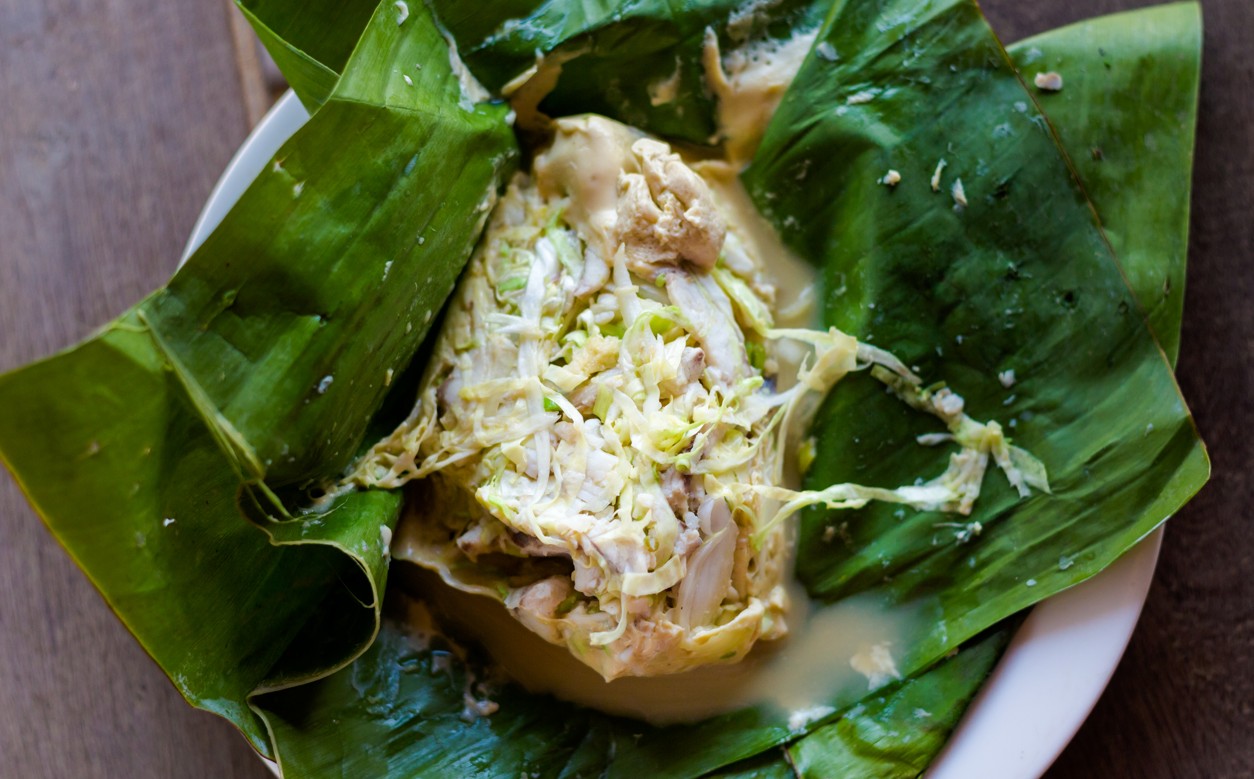
Or lam, a rich stew from Luang Prabang made with meat, vegetables, and aromatic herbs thickened with sakhan (a woody vine), reflects northern Lao cooking traditions. Khao piak sen, a comforting hand-pulled rice noodle soup, is widely eaten for breakfast or lunch. Mok pa, fish steamed in banana leaves with herbs, highlights the delicacy of Lao flavors. Sai oua, a fragrant herb-laced sausage, is popular as street food. Khao niew (sticky rice) is not merely a side dish but the centerpiece of every meal, traditionally eaten by hand. Khao jee, a Lao baguette sandwich filled with pâté, vegetables, and chili sauce, reflects lasting French influence.
Everyday Lao Food
Breakfast in Laos often consists of khao piak sen, a simple baguette with coffee, or sticky rice paired with leftovers from the previous evening. Lunch commonly features laap, grilled meats, or noodle soups, while dinner is a communal affair with multiple shared dishes accompanied by sticky rice.
Sticky rice is the undisputed staple and is consumed at nearly every meal. Freshwater fish from the Mekong and its tributaries appear grilled, steamed, or incorporated into soups and salads. Pork and chicken are the most common meats, while herbs such as mint, dill, sawtooth coriander, and cilantro are used generously. Padaek provides deep umami and distinguishes Lao cooking from neighboring cuisines. Vegetables including eggplant, long beans, and leafy greens are eaten raw, blanched, or mixed into salads. Morning markets are central to daily life, with households buying fresh ingredients each day. Meals are designed to balance heat, acidity, saltiness, bitterness, and freshness.
Cultural Fusion: Tai Foundations, French Influence & Ethnic Diversity
Laos’s cuisine is shaped by indigenous Tai culinary traditions, French colonial influence, and the contributions of numerous ethnic minority groups. Tai foodways emphasized sticky rice, freshwater fish, and herbal flavors, forming the foundation of Lao cuisine.
French colonization introduced baguettes, pâté, coffee, and café culture, all of which were absorbed into daily life rather than remaining elite imports. Ethnic groups such as the Hmong and Khmu contributed forest ingredients, fermentation methods, and preservation techniques. The result is a uniquely Lao cuisine where traditional laap, French-style bread, and indigenous foraged ingredients coexist seamlessly. Lao food culture values balance and restraint, transforming simple ingredients through technique and confident seasoning.
Craft Beverage Scene and Local Libations
Laos’s beverage culture reflects its French heritage, agricultural traditions, and growing tourism scene. Coffee from the Bolaven Plateau is among the country’s most important products, typically served strong and sweetened with condensed milk.
Beerlao, the national beer, enjoys near-universal popularity and is widely regarded as one of Southeast Asia’s best lagers. Lao-Lao, a potent rice whiskey often produced at home, is the traditional spirit and is commonly served at celebrations. Fresh fruit shakes made from mango, pineapple, banana, and dragon fruit are widely available. Herbal teas and infusions are also common. What distinguishes Laos is the centrality of coffee and beer to social life—both have become symbols of national pride. Traditional rice wine production continues in rural areas, often tied to ceremonial occasions.
International Dining and Contemporary Scene
While Lao cuisine dominates everyday dining, international options are available in areas with higher tourism. French restaurants in Vientiane and Luang Prabang offer classic dishes reflecting colonial legacy.
Thai and Vietnamese restaurants are common due to geographic proximity, while Western cafés cater to travelers. Modern Lao restaurants are beginning to reinterpret traditional dishes with refined presentation, particularly in boutique hotels. Despite these influences, Laos’s culinary soul remains firmly rooted in local eateries and street food. Even in tourist centers, authentic Lao cooking is easy to find. The country’s food scene balances preservation and accessibility, with laap and noodle dishes remaining fiercely traditional.
Food Customs and Practical Tips
Dining in Laos ranges from casual street stalls to refined restaurants, with service that is relaxed and unhurried. Tipping is not customary but is appreciated in tourist areas. Sticky rice is traditionally eaten by hand—pinch off a small amount, roll it into a ball, and use it to scoop up other dishes.
Laap is typically served with raw vegetables and herbs for balance. Tam mak hoong from street vendors offers the most authentic experience, though spice levels can be intense. Morning markets are ideal for sampling local breakfast foods and observing daily life. Dishes featuring padaek are essential for understanding true Lao flavor.
Explore Vientiane for the widest dining variety, Luang Prabang for traditional Lao cuisine blended with French influence, smaller towns for everyday local food, and rural areas for ethnic minority specialties. Try both visitor-friendly restaurants and places filled with locals. Cooking classes are an excellent way to learn about Lao ingredients and techniques. Be prepared for Laos’s famously relaxed pace—meals are unhurried and social. Laos offers outstanding culinary value, with deeply flavorful food at modest prices. Above all, embrace Laos’s culinary spirit: food here is about balance, community, and quiet confidence in tradition.
This guide covers what to eat in Laos, from laap and tam mak hoong to khao piak sen, mok pa, and regional specialties. Use it to plan your culinary exploration of Southeast Asia’s hidden gem, where every meal reflects Mekong traditions and enduring French-Lao fusion.
Check monthly weather averages for
Latest Secret Flying deals to Laos
London, UK to Vientiane, Laos for only £450 roundtrip
Cheap flights from London, UK to Vientiane, Laos for only £450 roundtrip with Hainan Airlines.
View DealSan Francisco to Laos for only $385 roundtrip
Cheap flights from San Francisco to Laos for only $385 roundtrip.
View DealLos Angeles to Laos for only $336 roundtrip
Cheap flights from Los Angeles to Laos for only $336 roundtrip.
View Deal [adblockingdetector id="638efa67113bf"]