


Lima Food Guide
Food in Lima: What to Eat & Drink
Lima’s culinary landscape is a refined fusion of ancient Peruvian foodways, Spanish colonial heritage, and bold global innovation, making it one of the world’s most influential and exciting food capitals. As Peru’s sprawling capital and gastronomic epicenter, Lima has developed a distinctive food culture that blends more than 5,000 years of indigenous culinary knowledge with contemporary ambition, shaped by its Pacific Ocean setting, colonial past, and modern role as the birthplace of Novoandina cuisine. The city’s cuisine reflects its history as the seat of the Viceroyalty of Peru, its access to Andean, Amazonian, and coastal ecosystems, its diverse immigrant communities, and its present-day identity as a UNESCO City of Gastronomy, resulting in food that is complex, expressive, and globally celebrated.
Core ingredients such as potatoes, corn, ají peppers, seafood, and quinoa form the foundation of Lima’s cuisine. Dishes emphasize freshness, layered sauces, and the seamless integration of indigenous and immigrant techniques that define Peruvian cooking. Lima’s position on the Pacific coast, fed by the cold Humboldt Current, provides some of the world’s finest seafood, which merges with Andean and Amazonian ingredients in a distinctive tri-ecological cuisine found nowhere else. From humble cevicherías in traditional neighborhoods to world-ranked fine dining restaurants in Miraflores and Barranco, Lima offers a culinary journey through Peru’s most sophisticated and diverse kitchen.
Local Specialities of Lima
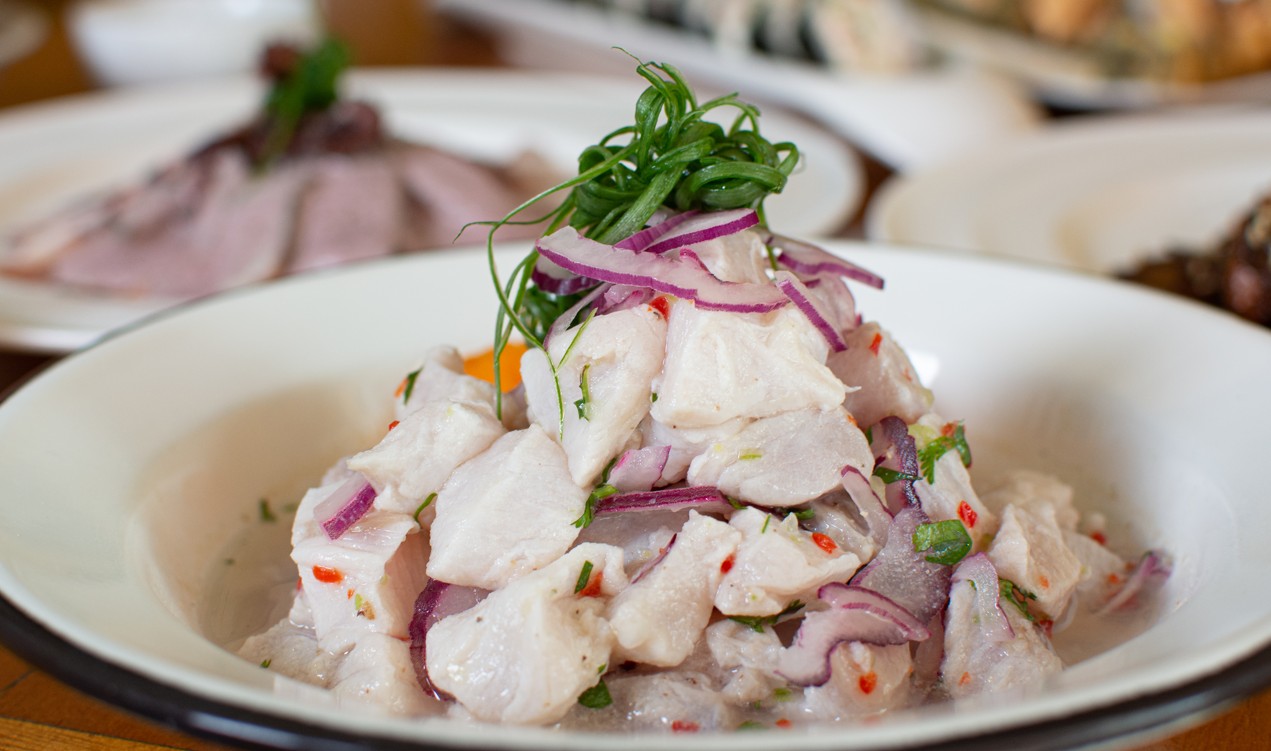
Lima is world-famous for ceviche—ultra-fresh raw fish cured in lime juice with ají peppers, red onion, and cilantro, served with sweet potato and corn, and regarded as Peru’s national dish. Lomo saltado, a stir-fry of beef, onions, tomatoes, soy sauce, and french fries served with rice, exemplifies chifa cuisine, the Chinese-Peruvian fusion born in Lima.
Aji de gallina, shredded chicken in a creamy yellow chili sauce with walnuts and cheese, is a beloved creole comfort food. Anticuchos, skewered and grilled beef heart marinated in spices, are a classic street food with pre-Columbian roots. Causa, a layered potato terrine filled with chicken, tuna, or seafood, is served cold and showcases Peru’s potato heritage. Rocoto relleno, spicy peppers stuffed with minced meat and cheese, is an Arequipa specialty widely embraced in Lima. Picarones, fried dough made from sweet potato and squash and drizzled with molasses syrup, are Peru’s signature dessert. Pisco sour, the national cocktail made from pisco, lime juice, syrup, egg white, and bitters, is the essential drink pairing.
Everyday Lima & Peruvian Food
Breakfast in Lima is typically light and informal, often consisting of tamales, simple sandwiches, or bread with butter and coffee. Lunch is the most important meal of the day and is commonly eaten as a menú—a fixed-price set including soup, a main course, and a drink at local eateries. Dinner ranges from casual neighborhood restaurants to formal dining experiences and often begins later than in many other countries.
Potatoes—grown in thousands of native varieties—appear in countless preparations. Corn is consumed fresh, dried, and as a base for drinks and side dishes. Rice accompanies most meals. Seafood is eaten daily due to Lima’s coastal location, with ceviche, tiradito, and grilled fish at the forefront. Ají peppers (amarillo, limo, and rocoto) provide heat, aroma, and identity. Lima’s strong chifa (Chinese-Peruvian) and nikkei (Japanese-Peruvian) traditions reflect waves of immigration that reshaped the city’s food culture. The city’s mild, overcast climate (garúa) allows for year-round dining without extreme seasonal shifts.
Cultural Fusion: Indigenous Foundations, Colonial Influence & Global Immigration
Lima’s cuisine is a layered expression of its pre-Columbian foundations, Spanish colonial legacy, and diverse immigrant contributions. Indigenous civilizations domesticated potatoes, corn, quinoa, and developed sophisticated fishing techniques long before European arrival. Spanish colonization introduced livestock, dairy, wheat, and new cooking methods.
African enslaved communities added techniques and flavors that shaped criollo cuisine. Chinese immigrants in the 19th century created chifa cooking, while Japanese immigrants in the 20th century developed nikkei cuisine. Italian, French, and other European communities added further refinement. The result is a uniquely Limeño table where pre-Columbian ingredients, Spanish traditions, Asian precision, and global creativity coexist seamlessly. Lima’s food culture embodies mestizaje—the cultural blending that defines Peru itself.
Craft Beverage Scene and Local Libations
Lima’s beverage culture reflects its coastal setting, colonial history, and modern culinary confidence. Pisco, Peru’s grape brandy, is the national spirit, enjoyed neat or in cocktails.
Chicha morada, a non-alcoholic drink made from purple corn, fruit, and spices, is a traditional accompaniment to meals. Inca Kola, the iconic yellow soda with a sweet, herbal flavor, remains Peru’s most popular soft drink. Coffee from Peru’s Andean regions is gaining international recognition. Lima’s craft beer scene has grown rapidly, with breweries such as Barbarian producing experimental styles. What distinguishes Lima is its pisco culture—specialized bars showcase single-varietal piscos and innovative cocktails. The city’s café scene is also thriving, combining third-wave coffee shops with historic cafés.
International Dining and Contemporary Scene
While Peruvian cuisine dominates completely, Lima offers world-class international dining reflecting its status as a global gastronomic capital. Nikkei cuisine is particularly exceptional, combining Japanese technique with Peruvian ingredients.
Chifa restaurants range from humble neighborhood institutions to refined dining rooms. Italian and European restaurants are sophisticated and long-established. Modern Peruvian restaurants, led by internationally renowned chefs such as Gastón Acurio and Virgilio Martínez, reinterpret traditional dishes using avant-garde techniques and native ingredients. Despite this innovation, Lima’s culinary soul remains rooted in its cevicherías and criollo kitchens. The city’s food scene balances deep tradition with experimentation, particularly in the highly competitive ceviche and fine dining sectors. What distinguishes Lima dining is its confidence—this is where Peruvian cuisine is being defined and elevated on the world stage.
Food Customs and Practical Tips
Dining in Lima ranges from street stalls to some of the world’s most acclaimed restaurants, with service generally warm and knowledgeable. Tipping is customary—10% is standard. Expect late dining hours, with lunch starting around 1–2 PM and dinner often beginning after 8 PM.
Ceviche is traditionally eaten at lunch rather than dinner, due to freshness. A menú lunch offers excellent value and insight into everyday Peruvian cooking. Markets such as Surquillo provide a window into local ingredients and snacks. Seasonal products play a major role, so availability can change throughout the year.
Explore different districts: Miraflores and San Isidro for fine dining, Barranco for creative restaurants and nightlife, central Lima for classic criollo food and chifas, and residential neighborhoods for authentic local eateries. Try both internationally recognized restaurants and places filled with locals. Consider a food tour to experience Lima’s culinary diversity efficiently. Lima offers exceptional range—from inexpensive street food to high-end tasting menus. Above all, embrace Lima’s culinary spirit: food here is a source of pride, identity, and cultural expression in a city that has become one of the world’s great gastronomic capitals.
This guide covers what to eat in Lima, from ceviche and lomo saltado to aji de gallina, anticuchos, and Peruvian classics. Use it to plan your culinary exploration of Peru’s capital, where every meal reflects centuries of fusion and one of the world’s most exciting food cultures.
Check monthly weather averages for
Latest Secret Flying deals to Lima

Non-stop from Madrid, Spain to Lima, Peru for only €486 roundtrip
Non-stop flights from Madrid, Spain to Lima, Peru for only €486 roundtrip.
View DealAustin, Texas to Lima, Peru for only $431 roundtrip
Cheap flights from Austin, Texas to Lima, Peru for only $431 roundtrip with Delta Air Lines and LATAM Airlines.
View Deal [adblockingdetector id="638efa67113bf"]