


Luxembourg Food Guide
Food in Luxembourg: What to Eat & Drink
Luxembourg’s culinary landscape is a refined fusion of Germanic heartiness, French elegance, and European crossroads sophistication, making it one of Europe’s most underrated yet high-quality food destinations. As one of the world’s smallest and wealthiest sovereign nations, Luxembourg has developed a distinctive food culture that balances rustic rural traditions with global culinary refinement, shaped by its position between France, Germany, and Belgium, its history as a fortified state, and its modern role as a European Union capital. The country’s cuisine reflects centuries of territorial change, a deeply multicultural population, and a contemporary identity built on precision, quality, and international influence.
Core ingredients such as pork, potatoes, wine, dairy, freshwater fish, and smoked meats form the foundation of Luxembourgish cuisine. Dishes are defined by preserved foods, seasonal cooking, and a seamless blend of French technique with German substance. Luxembourg’s setting in the Moselle Valley—where vineyards meet forests and rivers—creates a terroir-driven food culture that is both hearty and elegant. From traditional brasseries in the Grund district to Michelin-starred restaurants in Luxembourg City, the country offers one of Europe’s most concentrated collections of high-quality dining experiences.
Local Specialities of Luxembourg
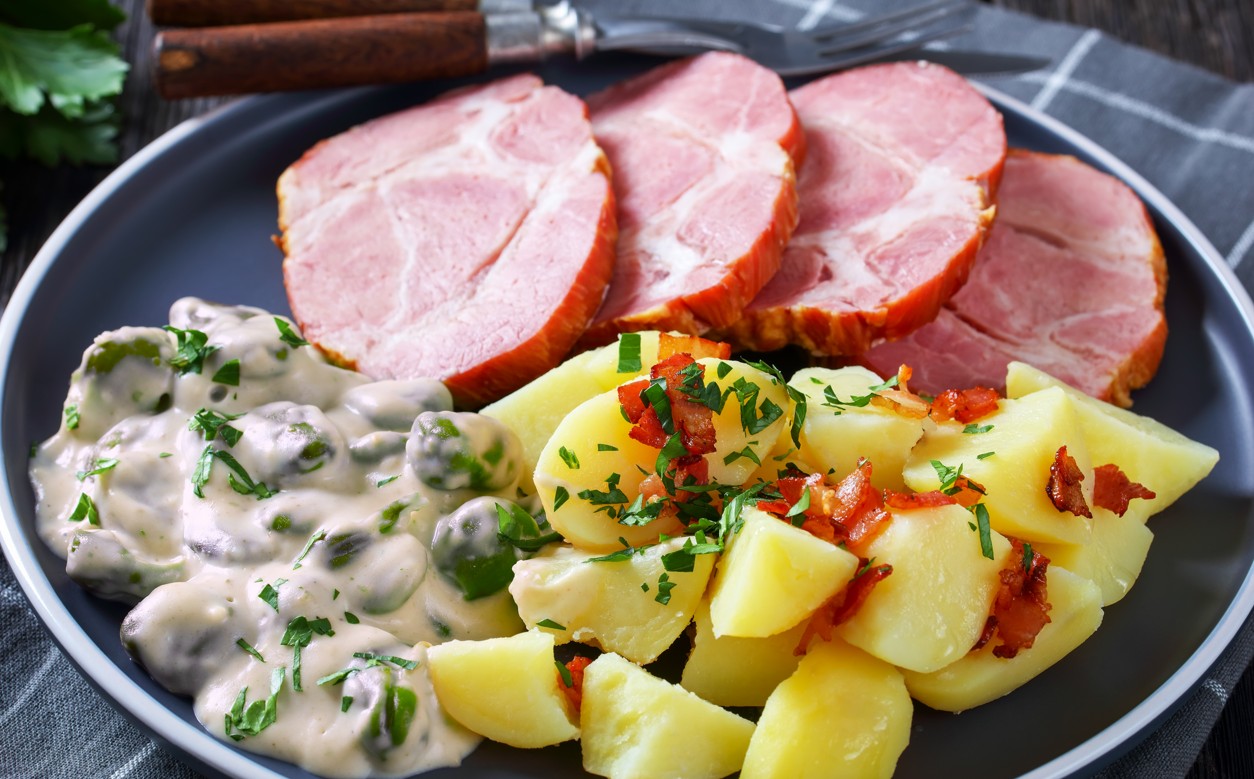
Luxembourg is best known for Judd mat Gaardebounen, the national dish consisting of smoked pork collar served with broad beans—an unmistakable expression of the country’s rural roots. Bouneschlupp, a comforting green bean soup with potatoes, bacon, and sausage, is a traditional staple served year-round.
Gromperekichelcher, crispy potato fritters seasoned with onion and parsley, are Luxembourg’s most beloved street food, commonly found at markets and festivals. Rieslingspaschtéit, a cold pork and veal pie set in aspic, reflects the country’s charcuterie heritage. Träipen (black pudding), often paired with apple compote, highlights traditional pork butchery. F’rell am Rèisleck, trout in Riesling sauce, showcases Moselle wine and river fish. For dessert, Quetschentaart—a plum tart made with local quetsch plums—is the national sweet, while Kachkéis, a soft cooked cheese spread, is a uniquely Luxembourgish specialty served with bread.
Everyday Luxembourg & Luxembourgish Food
Breakfast in Luxembourg is typically continental, featuring bread, cheese, cured meats, and coffee. Lunch is often the main meal of the day, particularly for professionals, with brasseries serving hearty traditional dishes or refined business menus. Dinner varies from simple home-style cooking to elegant restaurant dining.
Pork dominates the cuisine in smoked, cured, and fresh forms. Potatoes appear boiled, mashed, fried, or transformed into fritters. Dense breads—especially rye-based varieties—accompany most meals. Dairy products such as cream, butter, and local cheeses are central to both savory dishes and desserts. Game meats like venison and wild boar feature prominently in autumn. Café and brasserie culture is integral to daily life, encouraging long, social meals. Luxembourg’s temperate climate supports strong seasonal eating, with rich dishes in winter and lighter fare during warmer months.
Cultural Fusion: Germanic Foundations, French Refinement & European Exchange
Luxembourg’s cuisine is a culinary synthesis of Germanic foundations, French culinary refinement, and its long-standing role as a European crossroads. Germanic traditions contributed pork-based dishes, potatoes, and preservation techniques, while French influence introduced sauces, pastry craftsmanship, and refined presentation.
Luxembourg’s position between major European powers ensured constant cultural exchange, further enriched by post-war immigration from Italy, Portugal, and beyond. The result is a cuisine where Germanic substance meets French finesse, complemented by Mediterranean influences, all unified into a coherent national identity. Luxembourg’s food culture reflects the European ideal in edible form—diverse traditions harmonized through quality and restraint.
Craft Beverage Scene and Local Libations
Luxembourg’s beverage culture mirrors its culinary sophistication, with strong winemaking and brewing traditions. Wines from the Moselle Valley—particularly Riesling, Pinot Gris, Auxerrois, and Crémant de Luxembourg—are internationally respected and central to national pride.
Beer culture is equally important, with historic breweries such as Diekirch, Bofferding, and Simon producing widely consumed lagers and specialty beers. Traditional fruit eaux-de-vie made from quetsch, mirabelle, and pear are common digestifs. Coffee culture is refined and omnipresent. What distinguishes Luxembourg is its balance—French-style wine appreciation, German brewing precision, and a polished café culture that reflects the country’s cosmopolitan identity.
International Dining and Contemporary Scene
Beyond its traditional cuisine, Luxembourg offers exceptional international dining due to its wealthy, multilingual, and multinational population. French restaurants are particularly strong, ranging from classic brasseries to high-end gastronomic establishments.
Italian and Portuguese restaurants reflect major immigrant communities and maintain high authenticity. Luxembourg also boasts one of Europe’s highest concentrations of Michelin-starred restaurants per capita, many combining global techniques with local ingredients. Despite its international scope, the country’s dining soul remains rooted in traditional cafés and brasseries, even within the financial district. Luxembourg’s food scene excels at balancing rustic heritage with global culinary excellence.
Food Customs and Practical Tips
Dining in Luxembourg ranges from casual cafés to some of Europe’s most exclusive restaurants. Service is professional, discreet, and multilingual, with menus commonly offered in French, German, and English. Tipping is not expected but appreciated—rounding up or leaving 5–10% is generous.
Traditional Luxembourgish dishes are hearty, with generous portions. Street food such as gromperekichelcher is best enjoyed at markets. Visiting a Moselle Valley winery is highly recommended, especially during harvest season. Game dishes are seasonal and best enjoyed in autumn and winter.
Explore different areas: Ville Haute for historic brasseries and fine dining, the Grund for traditional restaurants with river views, Kirchberg for business dining and modern spots, and residential neighborhoods for authentic local favorites. Be prepared for Luxembourg’s high prices—dining is expensive, but quality is consistently excellent. Most importantly, embrace Luxembourg’s culinary spirit: food here is about precision, tradition, and European cosmopolitanism, expressed in a country that quietly delivers some of the continent’s best dining.
This guide covers what to eat in Luxembourg, from Judd mat Gaardebounen and bouneschlupp to gromperekichelcher, quetschentaart, and Luxembourgish specialties. Use it to plan your culinary exploration of Europe’s smallest grand duchy, where every meal reflects Germanic depth, French refinement, and continental sophistication.
 [adblockingdetector id="638efa67113bf"]