


Best Things to Do in Luxembourg: A Complete Guide
10 Best Things to Do in Luxembourg
Looking for what to do in Luxembourg? The Grand Duchy’s captivating capital, one of Europe’s smallest and most enchanting, is a city of breathtaking contrasts and profound beauty. Perched atop sheer sandstone cliffs and carved by the deep gorges of the Alzette and Pétrusse rivers, Luxembourg City is a living tapestry of medieval fortifications, cobblestone charm, and sleek modernity. As a UNESCO World Heritage site, its historic core tells a story of strategic might as the “Gibraltar of the North,” while its contemporary districts hum with the energy of a European financial and political hub. With its dramatic viewpoints, lush green valleys weaving through the urban fabric, world-class museums, and a refined, multicultural atmosphere, Luxembourg offers a uniquely compact yet richly layered travel experience at the very heart of Europe.
From exploring legendary underground fortresses and walking along the “most beautiful balcony in Europe” to discovering picturesque riverside quarters, royal palaces, cutting-edge art, and verdant parks, here are the 10 best things to do in Luxembourg City to help you plan the perfect trip to this extraordinary capital.
1. Explore the Old Town (Ville Haute)
The historic heart of Luxembourg, the Ville Haute or Old Town, is a UNESCO World Heritage site and a masterclass in preserved urban beauty. Wandering its pedestrian-friendly cobblestone streets feels like stepping through centuries of European history. The architectural ensemble is a harmonious blend of medieval, Renaissance, and classical styles. Begin at the bustling Place Guillaume II, the city’s main square, lined with cafes and dominated by the equestrian statue of William II. Just around the corner stands the ornate Grand Ducal Palace, the official residence of the reigning monarch.
Meander through charming squares like Place d’Armes, alive with open-air concerts in summer, and discover hidden lanes leading to ancient churches and former guildhouses. The Old Town is not a museum frozen in time but a vibrant district where history intersects with daily life—luxury boutiques nestle beside centuries-old patrician houses, and the sound of church bells mingles with the chatter from cosmopolitan terraces. It is the essential starting point for any visit, offering both grand landmarks and intimate discoveries.
2. Visit the Bock Casemates
Carved deep into the rocky promontory of the Bock cliff, the Bock Casemates are the city’s most emblematic historical site and a testament to its formidable defensive past. Originally expanded from medieval tunnels in the 17th and 18th centuries by Vauban and other military engineers, this underground network stretches for 23 kilometers. It served as barracks, storage, workshops, and artillery platforms, capable of sheltering thousands of soldiers and their horses along with equipment.
Today, visitors can explore a fascinating section of this labyrinth. Winding through the cool, atmospheric passages, you’ll pass cannon embrasures offering sudden, breathtaking views of the Alzette Valley below and descend deep into the rock. The casemates powerfully illustrate why Luxembourg was considered one of the most fortified places in Europe. A visit here is a unique and slightly eerie journey into the city’s martial soul, providing a dramatic contrast to the elegance of the streets above.
3. Walk the Chemin de la Corniche
Hailed as “Europe’s most beautiful balcony,” the Chemin de la Corniche is a breathtaking promenade built atop the former ramparts of the city’s 17th-century Spanish fortifications. This elevated walkway runs along the edge of the Alzette Valley, offering uninterrupted, panoramic vistas that are nothing short of spectacular. From this vantage point, you gaze down upon the red-roofed houses of the Grund district, the winding river, the ancient bridge of the Pont du Château, and the verdant cliffsides.
Strolling its length is a leisurely and essential Luxembourg experience. Informative plaques detail the history of the fortifications you’re standing upon. The views change with every step, making it a photographer’s paradise. For the most magical light, visit in the late afternoon as the setting sun bathes the stone buildings in a warm, golden glow, or see the valley twinkle after dark. The Corniche perfectly encapsulates the city’s dramatic topography and scenic grandeur.
4. Discover Grund
Nestled in the Alzette River gorge directly below the Old Town, the Grund district feels like a secret, storybook village hidden within the city. Accessible by foot via steep staircases, a panoramic elevator, or a short drive, this neighborhood is a world apart. Its quiet, winding lanes are lined with beautifully restored 17th and 18th-century houses, many painted in soft pastel colors. The imposing Neumünster Abbey, now a cultural center, dominates the area, and the soothing sound of the river is a constant companion.
Grund is ideal for a peaceful stroll along the water’s edge, crossing its charming stone bridges, and enjoying a meal or a drink at one of its inviting brasseries with terraces overlooking the river. By night, the illuminated cliffs of the upper city rising dramatically above create a truly romantic atmosphere. Exploring Grund offers a serene and picturesque counterpoint to the busier historic center above.
5. Visit the Grand Ducal Palace
The official residence of the Grand Duke of Luxembourg, the Grand Ducal Palace is a symbol of the nation’s monarchy and continuity. This magnificent Renaissance-style building, with its distinctive façade adorned with ornate gables and the national coat of arms, began life as the city hall in the 16th century. During the summer months (typically July-August), the palace opens its doors to the public for guided tours.
Visitors can explore a selection of stunning state rooms, including the grand staircase, the formal reception rooms adorned with portraits of former rulers, and the exquisite Chamber of Deputies where the parliament convenes. The tour offers a glimpse into the ceremonial life of Europe’s last grand duchy and the refined elegance of its royal tradition. Even outside of tour season, admiring the palace’s exterior, especially when beautifully lit at night, is a must.
6. Explore the National Museum of History and Art (MNHA)
Located in the heart of the Old Town, the National Museum of History and Art (Musée national d’histoire et d’art – MNHA) is the country’s premier institution for cultural and historical exploration. Housed in a striking complex that seamlessly integrates modern architecture with ancient Roman ruins discovered on-site, the museum’s collections are vast and meticulously curated.
Its galleries take you on a journey from prehistoric times and the Roman occupation (showcasing impressive mosaics from nearby Vichten) through the Middle Ages and up to the 20th century. The fine arts collection includes works by Luxembourgish and international artists, while sections dedicated to decorative arts, coins, and arms provide a comprehensive view of the nation’s heritage. The MNHA is an essential visit for anyone seeking to understand the deep historical layers that have shaped Luxembourg.
7. Visit Kirchberg’s Modern District & Museums
Cross the Grand Duchess Charlotte Bridge, and you enter Kirchberg, Luxembourg’s striking modern quarter and the seat of several European Union institutions. This district is a showcase of contemporary architecture, with bold glass-and-steel skyscrapers housing banks and EU offices. It is also the city’s cultural powerhouse, home to two world-class institutions. The Mudam Luxembourg – Musée d’Art Moderne Grand-Duc Jean, designed by renowned architect I.M. Pei, is a masterpiece of light and space dedicated to contemporary art from around the globe.
Next door, the Philharmonie Luxembourg, with its forest of white columns, is an acoustically perfect concert hall hosting an illustrious program of classical and modern music. Even if you don’t enter the museums, a walk through Kirchberg offers a fascinating look at the forward-looking, international face of a city deeply rooted in the past.
8. Relax in Parc de Ville (Municipal Park)
Often overlooked by visitors rushing between historic sites, the Parc de Ville is a verdant oasis and a beloved retreat for locals. This beautifully landscaped English-style garden stretches along the city’s former western fortifications, seamlessly blending with the Pescatore Park to form a large green lung. Meandering paths lead past tranquil ponds, vibrant flower beds, majestic old trees, and elegant sculptures.
Highlights include the ornate bandstand, the rose garden, and the charming “Wenzel” circular walk. It’s the perfect spot for a leisurely picnic, a quiet read on a bench, or a reflective stroll away from the urban bustle. The park’s serene atmosphere and romantic vistas, particularly of the valley near the “Bock” promontory, make it an ideal place to unwind and absorb the city’s more tranquil side.
9. Cross the Adolphe Bridge (New Bridge)
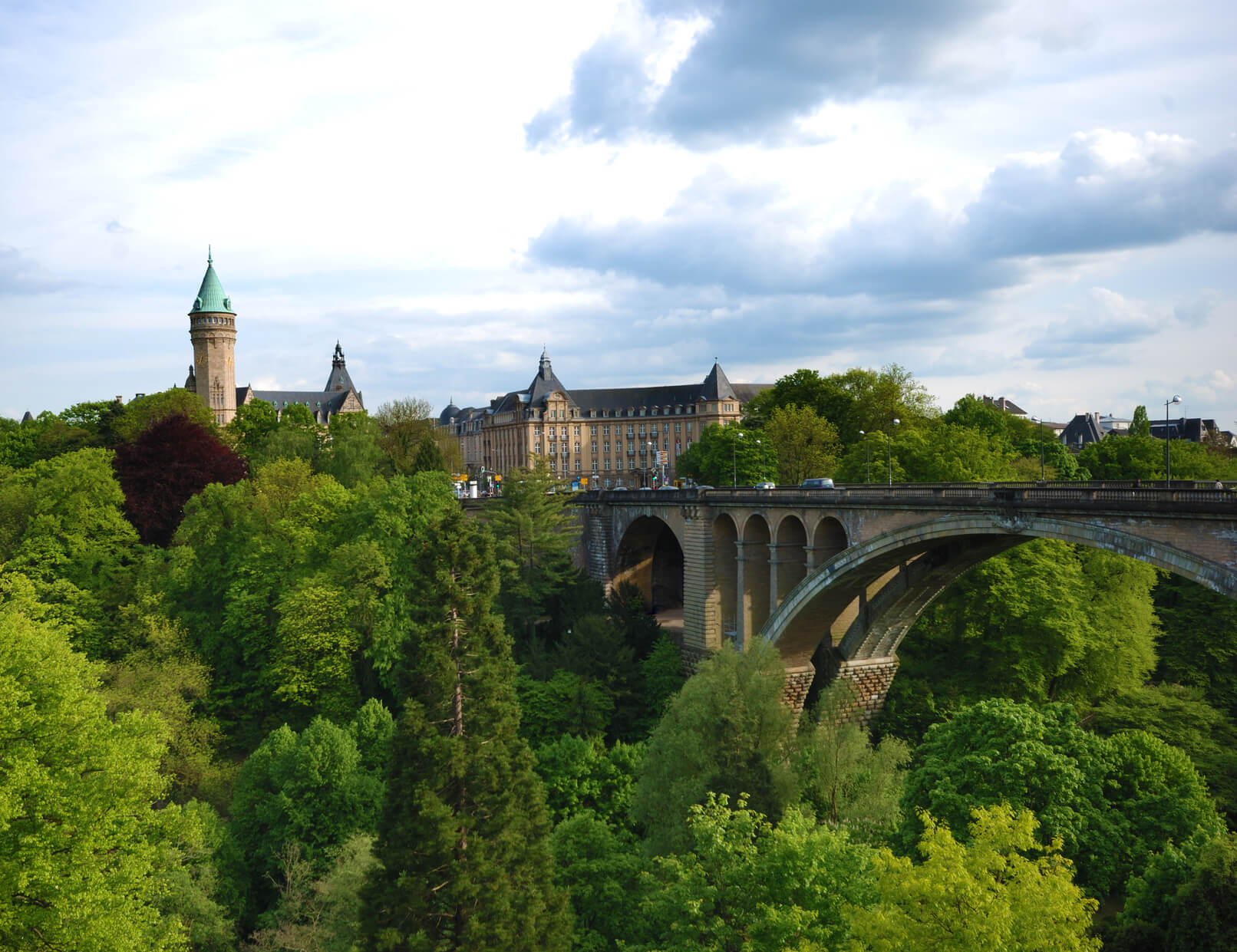
An iconic symbol of Luxembourg’s independence and engineering prowess, the Adolphe Bridge (commonly called the “New Bridge”) is a double-deck stone arch bridge spanning the Pétrusse Valley. Completed in 1903, its grand, 84-meter central arch was once the largest of its kind in the world. Walking across the upper deck provides magnificent views of the gorge, the city’s spires, and the verdant parkland below.
For a truly unique and thrilling perspective, consider walking the “Passerelle”—a glass-floored pedestrian walkway suspended beneath the main deck. This engineering marvel offers a dizzying, bird’s-eye view straight down into the valley. Whether admired from a distance, crossed on foot, or viewed from below, the Adolphe Bridge is a functional monument and a quintessential part of the Luxembourg cityscape.
10. Enjoy Luxembourg’s Gourmet Cuisine & Wine
Luxembourg’s culinary scene is a sophisticated reflection of its location at the crossroads of French and Germanic cultures, with a proud local identity. Must-try national dishes include Judd mat Gaardebounen (smoked collar of pork with broad beans) and Rieslingspaschtéit (a savory pie in aspic). The country also produces excellent cheeses and charcuterie.
The Moselle region, along the eastern border, yields crisp, aromatic white wines (Riesling, Pinot Gris, Auxerrois) and fine crémants (sparkling wine). In the city, you can enjoy everything from Michelin-starred dining in Grund to cozy, traditional brasseries in the Old Town and innovative bistros in Clausen. Pairing a delicious meal with a glass of local crémant while overlooking the city’s dramatic scenery is the perfect finale to a day of exploration.
 [adblockingdetector id="638efa67113bf"]