


Madrid Food Guide
Food in Madrid: What to Eat & Drink
Madrid’s culinary landscape is a bold celebration of Castilian tradition, Spanish regional diversity, and restless urban energy, making it one of Europe’s most convivial and food-obsessed capitals. As Spain’s political and geographic heart, Madrid has developed a distinctive food culture built less on local agriculture and more on absorption—drawing ingredients, techniques, and traditions from every corner of the country and reassembling them into a uniquely Madrileño way of eating. The result is a cuisine that is hearty, social, and deeply rooted in daily ritual.
The city’s food identity reflects its evolution from a Moorish outpost to imperial capital, its high-altitude plateau climate, and its status as a city that rarely sleeps. Madrid is not defined by refinement alone, but by rhythm: late lunches, even later dinners, and the constant movement of people between bars, taverns, and markets. From centuries-old tabernas in La Latina to modern kitchens in Salamanca and Chamberí, Madrid offers a culinary experience that is less about spectacle and more about shared pleasure.
Local Specialities of Madrid
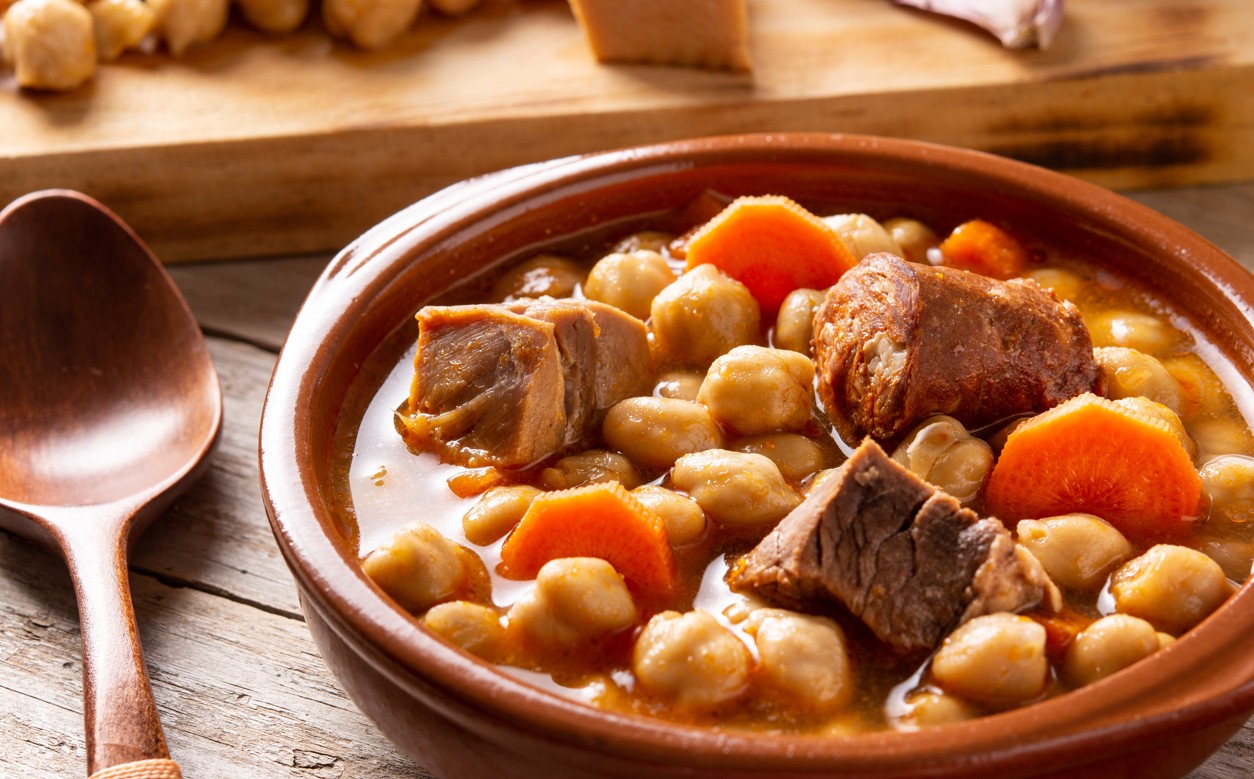
Madrid is synonymous with cocido madrileño, the city’s defining dish and one of Spain’s great stews. Built around chickpeas, vegetables, and multiple cuts of pork and beef, cocido is traditionally served in three stages and eaten slowly—most famously on winter Thursdays.
The bocadillo de calamares, fried squid rings stuffed into a crusty roll, is Madrid’s most iconic street food and a Plaza Mayor staple. Callos a la madrileña, a rich tripe stew with chorizo and morcilla, reflects the city’s love of offal and robust flavors. Huevos rotos—fried eggs broken over potatoes and often topped with jamón or chorizo—appear on menus citywide.
Tortilla de patatas, Spain’s national omelet of eggs, potatoes, and olive oil, is treated with near-religious seriousness in Madrid. Oreja a la plancha (grilled pig’s ear) is a classic bar snack, while churros con chocolate—fried dough dipped into thick hot chocolate—are eaten at breakfast, late at night, or both. Traditional rosquillas doughnuts are closely associated with the San Isidro festival, Madrid’s most important local celebration.
Everyday Madrid & Spanish Food
Daily eating in Madrid follows a distinctive rhythm. Breakfast is light—coffee with toast or pastry. Lunch is the main meal and happens late, typically between 2 and 4 PM, often in the form of a menú del día offering exceptional value. Dinner is rarely early and frequently informal, built around tapas rather than large plates.
Pork dominates the table in all its forms: jamón ibérico, chorizo, morcilla, and cured loin. Chickpeas anchor traditional stews, while codfish (bacalao) appears frequently due to historical preservation methods. Olive oil is fundamental—used generously for frying, dressing, and finishing. Bread is ever-present, not as an accessory but as a tool for soaking sauces and oils.
The defining feature of everyday eating is tapeo: moving from bar to bar, ordering a drink and a small dish at each stop. This is not simply dining—it is social choreography. Madrid’s climate reinforces this rhythm, with warming stews in winter and lighter dishes such as gazpacho and salads in the summer months.
Cultural Foundations: Castilian Roots, Moorish Legacy & National Capital
Madrid’s cuisine is rooted in Castilian austerity—pork, legumes, bread, and slow-cooked stews designed to sustain life on the central plateau. Moorish influence introduced frying techniques, spices, almonds, and sweets, leaving a subtle but lasting imprint.
As Spain’s capital, Madrid became a culinary magnet, absorbing dishes and ingredients from every region. Andalusian cold soups, Galician seafood, Basque techniques, and Catalan creativity coexist naturally. This makes Madrid less a regional cuisine and more a national one—Spain’s entire culinary map compressed into a single city. Madrid’s food culture embodies convivencia: shared space, shared tables, and constant exchange.
Craft Beverage Scene and Local Libations
Madrid’s beverage culture mirrors its social energy and relaxed sophistication. Beer—ordered simply as a caña—is the default drink for tapas. Wine from across Spain, particularly Rioja and Ribera del Duero, is widely available and affordable.
Vermouth occupies a special place, especially before lunch during la hora del vermut, when bars fill with locals sipping house vermouth on tap. Coffee culture is deeply ingrained, from café con leche in the morning to quick cortados throughout the day. Madrid’s terraces are essential in summer, and its craft beer scene is quietly expanding without overshadowing traditional drinking habits.
International Dining and Contemporary Scene
While Spanish food dominates daily life, Madrid’s international dining scene reflects its global outlook. Peruvian cuisine—particularly Nikkei (Japanese-Peruvian)—has become especially influential. Asian dining continues to evolve, with increasingly authentic Chinese and Japanese options.
Modern Spanish restaurants reinterpret classics using contemporary techniques, but even avant-garde chefs remain deeply connected to traditional flavors. Madrid’s dining soul still lives in its tabernas and bars, not its tasting menus. What distinguishes Madrid is that innovation rarely feels detached from tradition—new ideas grow directly out of everyday eating.
Food Customs and Practical Tips
Dining in Madrid ranges from standing at crowded bar counters to refined restaurant meals. Service can feel brisk, especially in busy bars, but efficiency is valued over ceremony. Tipping is not expected—rounding up or leaving small change is sufficient.
Some bars still serve free tapas with drinks, though this is increasingly rare. Winter is the best time to try cocido madrileño. Markets such as Mercado de San Miguel offer concentrated tastings, though neighborhood markets provide more authentic daily experiences. Churros at Chocolatería San Ginés are a rite of passage at any hour.
Explore La Latina for traditional tapas and Sunday vermouth, Malasaña for trend-driven dining, Salamanca for upscale restaurants, Chueca for diversity and nightlife, and Lavapiés for international cuisine. Consider a guided tapas crawl to understand tapeo properly. Expect late nights, lively streets, and long meals. Madrid offers outstanding culinary value, particularly at lunchtime. Most importantly, embrace Madrid’s culinary spirit: food here is about movement, conversation, and shared enjoyment in a city where every meal is part of the social fabric.
This guide covers what to eat in Madrid, from cocido madrileño and bocadillo de calamares to callos, tortilla, and classic tapas. Use it to plan your culinary exploration of Spain’s capital—where eating is never rushed, bars are living rooms, and food is inseparable from daily life.
Check monthly weather averages for
Latest Secret Flying deals to Madrid
Sydney, Australia to European cities from only $1166 AUD roundtrip
Cheap flights from Sydney, Australia to European cities from only $1166 AUD roundtrip with Turkish Airlines.
View DealMelbourne, Australia to European cities from only $1177 AUD roundtrip
Cheap flights from Melbourne, Australia to European cities from only $1177 AUD roundtrip with Turkish Airlines.
View Deal
 [adblockingdetector id="638efa67113bf"]