


Malaga Food Guide
Food in Málaga: What to Eat & Drink
Málaga’s culinary landscape is a radiant expression of Andalusian coastal tradition, Moorish legacy, and Mediterranean abundance, making it one of southern Spain’s most joyful and immediately gratifying food destinations. As the capital of the Costa del Sol and a historic gateway between sea and mountains, Málaga has developed a food culture rooted in simplicity, freshness, and seasonality—where the quality of ingredients matters more than complexity, and meals are inseparable from sun, sand, and social life.
The city’s cuisine reflects more than 3,000 years of continuous settlement, from Phoenician traders and Roman fish processors to centuries of Moorish rule and modern Spanish life. Málaga is defined by its fishing culture, its almond- and citrus-rich hinterland, and its deep connection to the Mediterranean Sea. From smoke-kissed sardines grilled on the beach to cold soups designed for intense summer heat, Málaga offers a cuisine that is light in touch, ancient in origin, and perfectly adapted to outdoor living.
Local Specialities of Málaga
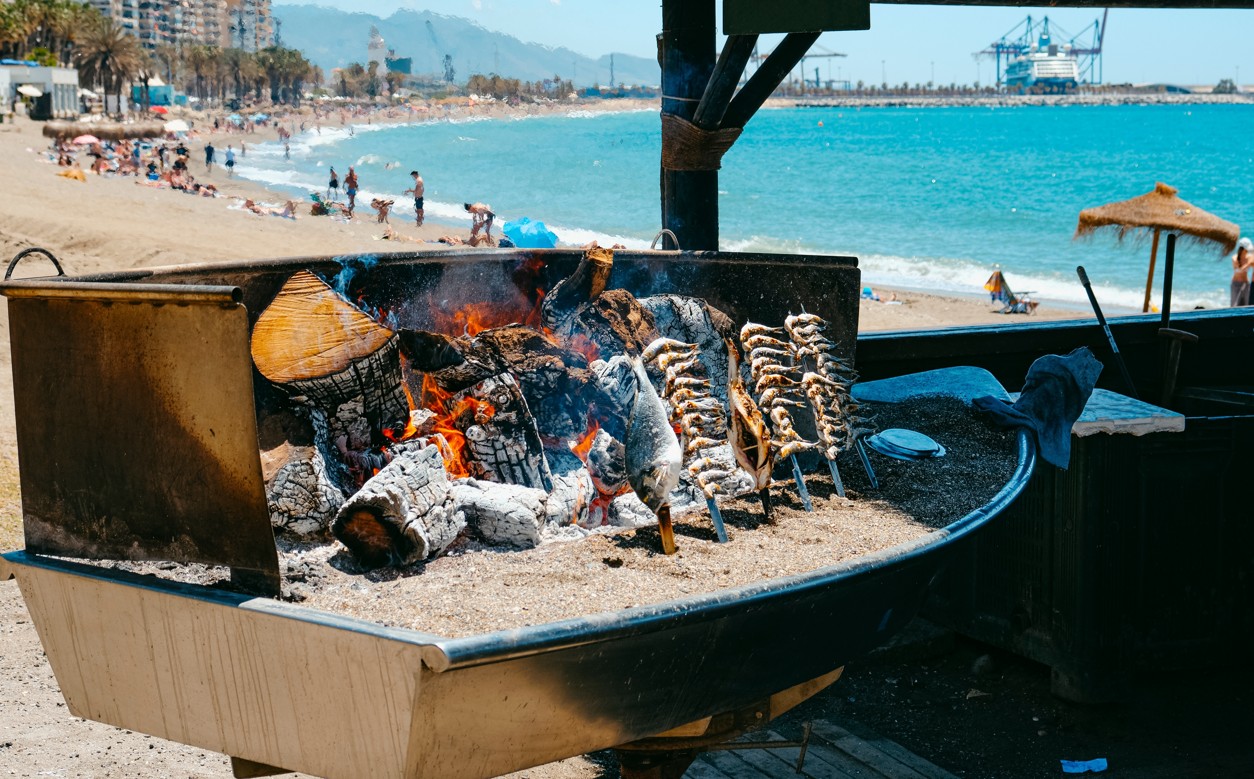
Málaga is inseparable from espetos—fresh sardines skewered on sugarcane sticks and grilled over open flames directly on the beach. This is not just a dish but a ritual, best enjoyed at sunset in neighborhood chiringuitos where the fire pits are built into old fishing boats filled with sand.
Ajoblanco, a chilled almond and garlic soup served with grapes or melon, is Málaga’s most distinctive summer dish and a direct inheritance from Moorish cooking. Gazpachuelo, a warm fish and potato soup thickened with a delicate mayonnaise-like emulsion, is the city’s comforting counterpoint to cold gazpacho.
Pescaíto frito—a mixed platter of lightly floured and fried fish such as anchovies, squid, and baby cuttlefish—is Málaga’s everyday staple. Boquerones en vinagre, fresh anchovies cured in vinegar with garlic and parsley, appear in nearly every bar. Tortillitas de camarones, crisp shrimp fritters made with chickpea flour, reflect Cádiz’s influence. Porra antequerana, a thicker, richer cousin of gazpacho, originates from nearby Antequera. Local shellfish such as conchas finas are prized delicacies, while desserts like bizcocho borracho, sponge cake soaked in Málaga sweet wine, highlight the region’s historic viticulture.
Everyday Málaga & Andalusian Food
Daily eating in Málaga follows a relaxed Mediterranean rhythm. Breakfast is simple—toast with olive oil and crushed tomato, churros with chocolate, or coffee with a pastry. Lunch is the main meal and happens late, often between 2 and 4 PM. Dinner is lighter, later, and frequently built around shared seafood dishes or tapas.
Fresh fish dominates the table, prepared with minimal intervention: grilled, fried, or lightly marinated. Almonds appear in soups, sauces, and desserts. Olive oil from nearby groves is used generously and proudly. Citrus fruits—especially lemons and oranges—brighten both savory dishes and drinks. Tomatoes, peppers, and eggplants anchor vegetable preparations.
Chiringuitos—informal beachside restaurants—are central to everyday life, particularly in summer. Here, meals are eaten with bare feet in the sand, accompanied by cold beer or tinto de verano. Málaga’s climate allows for year-round outdoor dining, reinforcing a food culture built around daylight, sea air, and long conversations.
Cultural Foundations: Phoenician Origins, Moorish Legacy & Mediterranean Exchange
Málaga’s cuisine is a layered reflection of its Mediterranean history. Phoenician settlers introduced fishing and early winemaking. Romans expanded agriculture and developed fish preservation, including garum production. Moorish rule between the 8th and 15th centuries profoundly shaped local cooking, introducing almonds, citrus, spices, irrigation systems, and cold soups.
The Christian reconquest reintroduced pork and reshaped local foodways without erasing earlier influences. The result is a distinctly Malagueño cuisine where Moorish almond soups coexist with Christian-era fried fish and modern beach cooking. Málaga’s food culture exemplifies Mediterranean restraint: letting excellent ingredients speak for themselves.
Craft Beverage Scene and Local Libations
Málaga’s beverage culture is anchored by its historic sweet wines, produced from sun-dried grapes and enjoyed as aperitif or dessert. These wines have ancient roots and remain a point of local pride.
Traditional bodegas such as Antigua Casa de Guardia serve Málaga wine directly from wooden barrels, marked in chalk behind the bar. Beer (caña) is the default companion to fried fish and tapas. Vermouth has grown in popularity, particularly before lunch. Brandy de Jerez and refreshing tinto de verano are widely consumed in warmer months.
Beach bars define the city’s drinking culture—cold drinks, minimal ceremony, maximum atmosphere. Málaga’s craft cocktail scene is emerging slowly, especially in Soho, but never overshadows traditional habits.
International Dining and Contemporary Scene
While Malagueño and Andalusian cuisine dominate daily life, Málaga’s growing international profile has brought increased culinary diversity. Italian restaurants line much of the coast, while modern Spanish kitchens reinterpret regional classics with contemporary techniques.
Despite this evolution, Málaga’s culinary soul remains firmly anchored in bodegas and chiringuitos. Even high-end hotels emphasize local fish, cold soups, and Andalusian flavors. What distinguishes Málaga dining is authenticity—fish grilled on the same beach where it was landed, served without pretension or delay.
Food Customs and Practical Tips
Dining in Málaga ranges from standing-room tapas bars to elegant seaside restaurants. Service is friendly and unhurried. Tipping is not expected, though rounding up is common. Dining hours are late, especially in summer.
Espetos are best eaten at beachside chiringuitos in neighborhoods like El Palo or Pedregalejo, ideally at sunset. Ajoblanco is most common in summer. Atarazanas Market is essential for understanding local ingredients and everyday food culture. Málaga sweet wine is best tried both as an aperitif and with dessert.
Explore the historic center for traditional bodegas, El Palo and Pedregalejo for authentic seafood, Soho for contemporary cafes and restaurants, and the marina for polished dining with views. Consider a market and chiringuito food tour for context. Be prepared for summer heat—cold soups, shaded terraces, and slow meals are part of the rhythm. Málaga offers excellent culinary value, especially outside tourist-heavy zones. Most importantly, embrace Málaga’s culinary spirit: food here is about freshness, sunlight, and shared pleasure in a city where meals unfold outdoors and time is measured by the sea.
This guide covers what to eat in Málaga, from espetos and ajoblanco to pescaíto frito, boquerones, and Andalusian coastal classics. Use it to plan your culinary exploration of southern Spain’s sunniest city, where every meal is shaped by history, heat, and the Mediterranean.
Check monthly weather averages for
Latest Secret Flying deals to Malaga
New York to Malaga, Spain for only $386 roundtrip
Cheap flights from New York to Malaga, Spain for only $386 roundtrip with Scandinavian Airlines.
View DealBoston to Malaga, Spain for only $372 roundtrip
Cheap flights from Boston to Malaga, Spain for only $372 roundtrip with Swiss International Air Lines.
View DealSan Francisco to Malaga, Spain for only $421 roundtrip
Cheap flights from San Francisco to Malaga, Spain for only $421 roundtrip with American Airlines and British Airways.
View Deal [adblockingdetector id="638efa67113bf"]