


Marseille Food Guide
Food in Marseille: What to Eat & Drink
Marseille’s culinary landscape is a bold Mediterranean fusion of Provençal tradition, North African spice, Italian practicality, and port-city cosmopolitanism, making it one of France’s most vibrant and multicultural food destinations. As France’s oldest city and largest Mediterranean port, has developed a food culture shaped by ancient Greek foundations, centuries of migration, and the constant movement of people, goods, and ideas through its harbor.
The city’s cuisine reflects its 2,600-year history as a trading port, its role as France’s gateway to the Mediterranean and former colonies, and its identity as the country’s most ethnically diverse major city. Marseille is gritty, sun-soaked, and proudly unpolished, and its food mirrors this character—robust, aromatic, generous, and deeply tied to the sea. From ritualized bouillabaisse along the Vieux-Port to North African eateries in Noailles and Italian-influenced street food across the city, Marseille offers one of France’s most expressive and culturally layered culinary experiences.
Local Specialities of Marseille
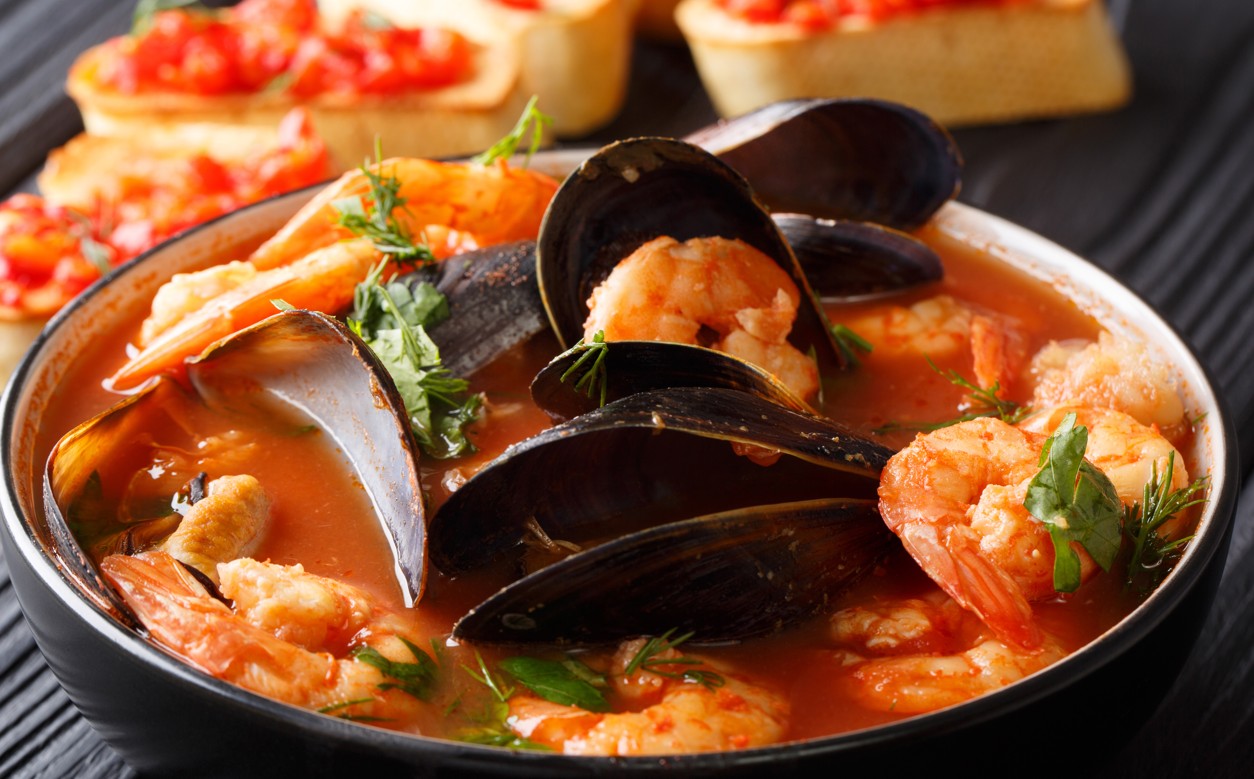
Marseille is world-famous for bouillabaisse, its iconic fish stew and culinary symbol. True bouillabaisse is governed by tradition: it must include several varieties of Mediterranean rock fish (such as rascasse and conger), be cooked in a single pot, and served in two stages—first the saffron-infused broth with toasted bread and rouille (garlic-chili mayonnaise), followed by the fish and potatoes. Authentic versions are expensive, ceremonial, and fiercely defended by locals.
Navettes, boat-shaped biscuits scented with orange-flower water, are Marseille’s oldest pastry and traditionally eaten at Candlemas. Panisse, chickpea-flour fritters fried until crisp, reflects the city’s Italian influence and is a beloved street food. Pieds et paquets, lamb’s feet and tripe parcels stewed in white wine and tomatoes, is a classic working-class dish.
Other local staples include aïoli, garlic mayonnaise served with vegetables, cod, and eggs; fougasse, Provençal flatbread flavored with olives or herbs; tielle, a spicy octopus pie introduced by Italian immigrants; and chichi frégi, long fried dough sticks similar to churros, eaten at beaches and fairs.
Everyday Marseille & Provençal Food
Daily eating in Marseille follows relaxed Mediterranean rhythms. Breakfast is simple—coffee with croissant or tartine. Lunch is the main meal, often a bistro plat du jour or quick street food, while dinner is later and social, especially in summer.
Seafood dominates local cooking, sourced from Mediterranean waters and prepared simply to highlight freshness. Olive oil from Provence is used generously. Garlic, onions, and tomatoes form the base of many dishes, while herbs de Provence—thyme, rosemary, oregano—define the region’s aromatic profile. Bread accompanies every meal, often local fougasse.
Café culture is central to social life, especially around the Vieux-Port, neighborhood squares, and coastal promenades. Marseille’s climate encourages year-round terrace dining, with seafood and chilled rosé defining warm-weather meals.
Mediterranean Crossroads: Greek Origins, Italian Roots & North African Influence
Marseille’s cuisine is a living record of Mediterranean migration. Founded by Greek settlers in 600 BCE, the city inherited olives, grapes, and fishing traditions. Massive Italian immigration in the 19th and early 20th centuries introduced pizza, pasta, pastries, and chickpea-based dishes.
North African communities from Algeria, Tunisia, and Morocco brought couscous, tagines, spices, and market culture, especially visible in the Noailles district. These influences coexist with Provençal French traditions, creating a uniquely Marseillais table where bouillabaisse, couscous, panisse, and pizza feel entirely at home. Marseille’s food culture embodies métissage—the blending of cultures that defines the city.
Pastis, Rosé & Local Drinks
Marseille’s beverage culture is inseparable from its climate and social life. Pastis, the anise-flavored spirit diluted with cold water, is the city’s signature apéritif and a daily ritual in cafés.
Rosé wine from nearby Provence is the preferred wine, perfectly suited to seafood and outdoor dining. Coffee culture is strong, with traditional cafés and modern specialty shops throughout the city. Local and craft beers are increasingly popular, reflecting a growing brewing scene.
What distinguishes Marseille is its relaxed drinking culture—pastis at midday, rosé by the sea, espresso at the bar—always social, always unpretentious.
International Dining and the Contemporary Scene
While Marseillais and Provençal cuisine dominate, Marseille offers exceptional international dining driven by its immigrant communities. North African restaurants in Noailles are among the best in France, serving couscous, grilled meats, and pastries.
Italian restaurants range from family-run pizzerias to refined trattorias. Contemporary French chefs are reinterpreting local dishes with modern techniques, particularly in neighborhoods like Cours Julien and Le Panier. Despite innovation, Marseille’s culinary soul remains rooted in authenticity—bouillabaisse houses, ethnic eateries, and market kitchens define the city far more than fine dining formality.
Food Customs and Practical Tips
Dining in Marseille ranges from street food to elegant restaurants. Service is informal and sometimes brusque, but generally genuine. Tipping is not expected; rounding up is sufficient.
When ordering bouillabaisse, ensure the restaurant prepares it properly—cheap versions are not authentic. Try navettes from the historic Four des Navettes bakery. Visit the Vieux-Port fish market early in the morning for the best atmosphere and seafood. The Noailles market is essential for experiencing Marseille’s multicultural food scene.
Explore different areas: the Vieux-Port for classic bouillabaisse, Le Panier for intimate bistros, Noailles for North African food, Cours Julien for creative dining, and the beaches for casual meals with sea views. Consider a food tour to understand Marseille’s complex culinary identity. Be mindful of the mistral wind, which can affect terrace dining.
This guide covers what to eat in Marseille, from bouillabaisse and navettes to panisse, aïoli, and multicultural Marseillais specialities. Use it to plan your culinary exploration of France’s Mediterranean capital, where every meal reflects the meeting of cultures, the power of the sea, and the unapologetic soul of a true port city.
Check monthly weather averages for
Latest Secret Flying deals to Marseille
Abidjan, Ivory Coast to Marseille, France for only $498 USD roundtrip
Cheap flights from Abidjan, Ivory Coast to Marseille, France for only $498 USD roundtrip with Brussels Airlines.
View DealChicago to French cities from only $186 one-way
Cheap flights from Chicago to French cities from only $186 one-way with British Airways.
View DealUS cities to French cities from only $484 roundtrip
Cheap flights from US cities to French cities from only $484 roundtrip with United Airlines and Air Canada.
View Deal [adblockingdetector id="638efa67113bf"]