


Best Things to Do in Medina: A Complete Guide
10 Best Things to Do in Medina
Looking for what to do in Medina? As the second holiest city in Islam and the radiant City of the Prophet, Medina (Al-Madinah Al-Munawwarah) is a destination of profound spirituality, historical significance, and deep reverence for Muslims worldwide. Beyond its primary role as a pilgrimage site, Medina offers a unique opportunity to connect with the living legacy of the Prophet Muhammad ﷺ through its preserved landmarks, enlightening museums, and serene atmosphere. The city’s landscape is one of dignified calm, where modern urban development respectfully surrounds the illuminated expanse of the Prophet’s Mosque, the spiritual and geographic heart of the city. For visitors, Medina is a place of reflection, learning, and peaceful immersion in Islamic heritage.
From the majestic Prophet’s Mosque and the historically significant mosques of Quba and Al-Qiblatain to the poignant sites of Uhud, insightful museums, and traditional markets, here are the 10 best things to do in Medina to help you plan a meaningful and memorable visit steeped in reverence and history.
1. Visit Al-Masjid an-Nabawi (The Prophet’s Mosque)
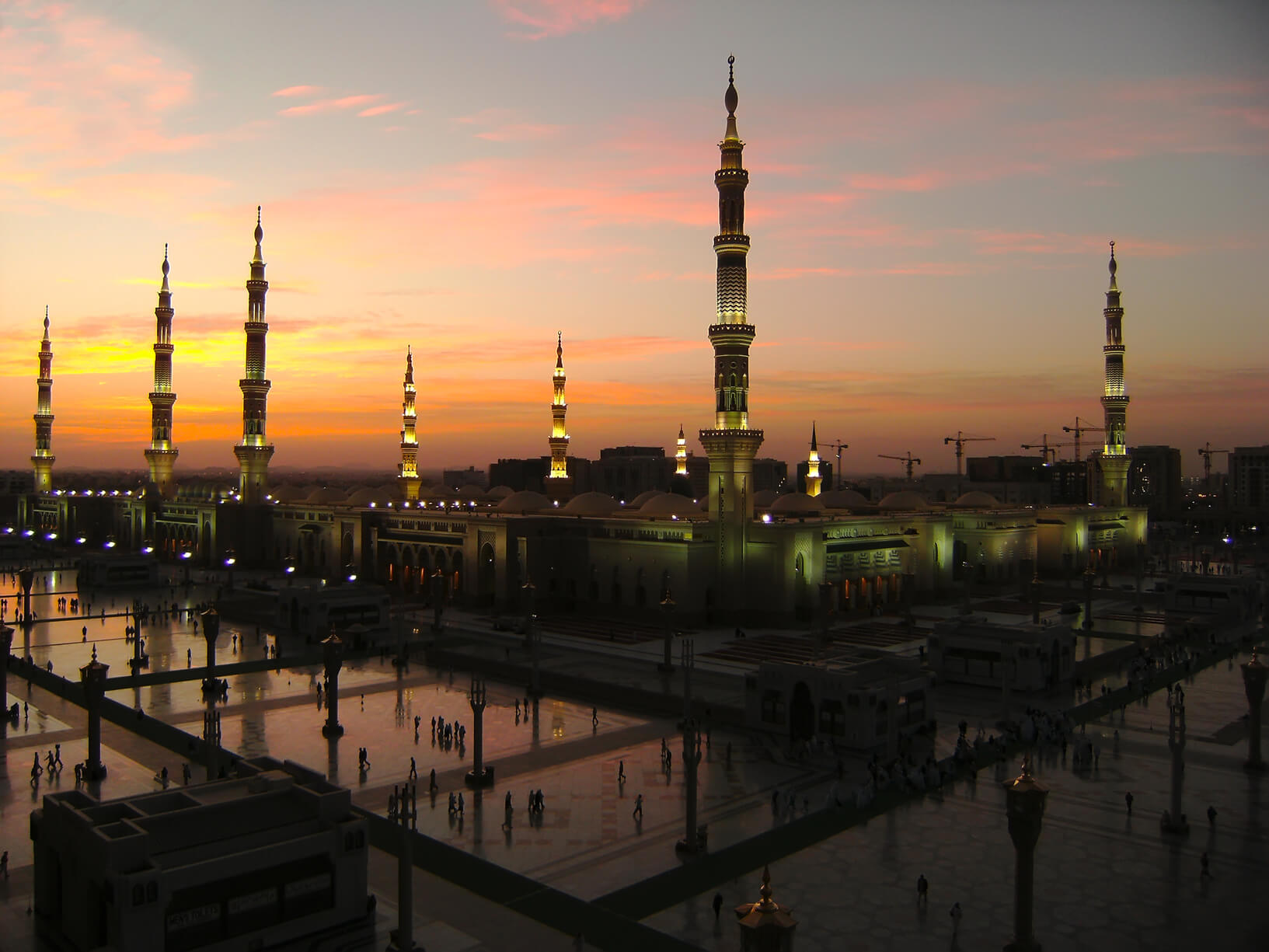
The spiritual center of the Muslim world after the Kaaba, Al-Masjid an-Nabawi is more than a mosque; it is a sanctuary of peace, faith, and immense historical weight. Originally built by the Prophet Muhammad ﷺ and his companions, it has been lovingly expanded over the centuries into one of the largest mosques on earth. Its iconic features—the serene courtyards, the towering minarets, the brilliant white and gold architecture, and the famed Green Dome marking the location of the Prophet’s burial chamber—are instantly recognizable.
Inside, the atmosphere is one of collective serenity. The polished marble floors, intricate calligraphy, and the vast, columned prayer halls invite quiet contemplation and worship. The mosque is uniquely beautiful at night when its architecture is magnificently illuminated, and during the day, the expansive automated sun-shading umbrellas provide a tranquil, cool respite. A visit here, whether for prayer, reflection, or simply to absorb its majestic presence, is the defining experience of any trip to Medina. It is essential to maintain the utmost respect, dress modestly, and observe the mosque’s guidelines for visitors.
2. Explore Quba Mosque
Holding the esteemed distinction of being the first mosque ever built in Islamic history, Quba Mosque carries immense spiritual significance. It was founded by the Prophet Muhammad ﷺ upon his arrival in Medina from Mecca. A hadith mentions that offering two rak’ahs of prayer here is equal in reward to performing an ‘Umrah. Located about 3.5 kilometers south of Al-Masjid an-Nabawi, the current structure is a magnificent modern expansion that beautifully incorporates the original site.
The mosque’s design is elegantly simple, dominated by pristine white marble and multiple graceful domes. The surrounding courtyards and palm-lined gardens are impeccably maintained, creating an atmosphere of pure tranquility. Many pilgrims make a special journey here, especially on Saturday mornings, following the Sunnah of the Prophet. Visiting Quba Mosque offers a tangible connection to the very dawn of the Islamic community in Medina.
3. Visit Masjid al-Qiblatain
Masjid al-Qiblatain, or the Mosque of the Two Qiblas, commemorates one of the most pivotal moments in Islamic history. It was here, during a prayer congregation, that the Prophet Muhammad ﷺ received the divine revelation to change the direction of prayer (qibla) from Jerusalem to the Kaaba in Mecca. The mosque uniquely preserves two prayer niches (mihrabs)—one facing the old direction and one facing Mecca—serving as a powerful physical testament to this event.
The current mosque is a beautifully renovated structure with clean, modern lines and a peaceful interior. While one mihrab is now purely symbolic, the mosque serves as a living lesson in Islamic history and the evolution of worship. It is a place for quiet prayer and reflection on the unity of the Muslim Ummah under a single qibla, making it an essential stop for those seeking to understand the foundational developments of the faith.
4. Explore the Seven Mosques (Sab’u Masajid)
Located near the site of the Battle of the Trench (Ghazwat al-Khandaq), the Sab’u Masajid (Seven Mosques) is a cluster of small, historic mosques built to mark strategic points from that significant defensive battle. While there are actually six remaining mosques today (Al-Fath, Salman Al-Farsi, Abu Bakr Al-Siddiq, Umar ibn Al-Khattab, Ali ibn Abi Talib, and Fatima Al-Zahra), the name endures. These simple, mostly restored stone structures are nestled on a rocky hill slope.
Visiting this area is a journey through early Islamic military and social history. Informational plaques explain the role of each location and the companions of the Prophet associated with them. It is a site for quiet contemplation rather than lavish architecture, offering a humbling sense of the challenges faced and overcome by the first Muslim community. The view from the hill overlooking the trench line is particularly evocative.
5. Discover Mount Uhud and the Martyrs’ Cemetery
The red-hued Mount Uhud and the plains at its base are the site of the second major battle in Islamic history. The Battle of Uhud was a severe test for the early Muslims, marked by both valor and valuable lessons. The mountain itself stands as a silent, majestic witness to these events. Visitors often climb partway up its slopes for reflection and to view the battlefield below.
At the foot of the mountain lies the Martyrs’ Cemetery (Shuhada Uhud), the resting place for the approximately 70 companions of the Prophet who fell in the battle, including the beloved uncle of the Prophet, Hamza ibn Abdul-Muttalib. The cemetery is a profoundly moving site of reverence. Visitors come to offer prayers (dua) for the martyrs, contemplating their sacrifice and the eternal lessons of patience, steadfastness, and unity derived from this chapter of history. The atmosphere is one of solemn respect and historical gravity.
6. Visit the Al-Madina Museum at Hejaz Railway Station
Housed within the beautifully restored historic Hejaz Railway Station, the Al-Madina Museum offers a fascinating look at the city’s social and architectural evolution. The station itself is a relic of the Ottoman-era railway that once linked Damascus to Medina, a project of immense historical importance. The museum uses this evocative setting to display a rich collection of artifacts, including pre-Islamic and Islamic archaeological finds, historical photographs, traditional handicrafts, coins, weapons, and manuscripts.
One of the most compelling exhibits is a large-scale model of the Prophet’s Mosque as it appeared in different historical periods. The museum provides crucial context, showing Medina not just as a holy site but as a living, evolving urban center with a deep past that stretches back thousands of years. It’s an excellent educational stop that enriches one’s understanding of the city’s layered heritage.
7. Explore the Dar Al-Madinah Museum
For an immersive, detailed journey into the Prophetic era, the Dar Al-Madinah Museum (also known as the International Fair and Museum of the Prophet’s Biography and Islamic Civilization) is unparalleled. This privately run museum is renowned for its incredibly detailed, handcrafted dioramas and scale models. These intricate displays reconstruct key moments from the Prophet’s life, the architecture of early Medina, traditional houses, markets, and the expansion of the Prophet’s Mosque through history.
Knowledgeable guides bring these models to life with stories and historical explanations, making the experience engaging for visitors of all ages. The museum also houses a collection of ancient artifacts and Qur’anic manuscripts. It serves as a powerful visual and educational tool, helping visitors vividly imagine the environment in which Islam flourished, making distant history feel immediate and tangible.
8. Wander through Medina’s Traditional Markets (Souqs)
Beyond the spiritual sites, Medina’s traditional markets offer a vibrant glimpse into daily life and local culture. The most famous is the Al-Hijaz Souq near the Prophet’s Mosque, a multi-story modern market where you can find everything from high-quality prayer mats, misbahas (prayer beads), and Islamic literature to perfumes (attar), gold jewellery, dates, and Saudi traditional clothing (thobes and abayas).
For a more traditional experience, explore the older market lanes where the scent of spices and incense fills the air. The Date Market is a sensory delight, showcasing dozens of varieties of the region’s famous dates, from the common Ajwa to luxurious Sukkari. Shopping here is not just about souvenirs; it’s an opportunity to interact with local merchants and experience the city’s commercial heartbeat, all within the framework of a respectful and welcoming atmosphere.
9. Relax at King Fahd Garden and Public Parks
Medina’s climate has inspired the creation of several lush, green oases within the city that provide peaceful retreats for families and visitors. The crown jewel is King Fahd Central Park (Al-Mughaisilah), one of the largest urban parks in Saudi Arabia. This meticulously landscaped space features vast lawns, shaded walking paths, ornate fountains, flower gardens, children’s play areas, and cafes.
Other parks like Prince Mohammed bin Abdulaziz Park offer similarly serene environments. These spaces come alive in the cooler evening hours, offering a place for relaxation, leisurely strolls, and family picnics away from the more crowded central areas. They reflect the city’s commitment to providing beautiful, tranquil public spaces that enhance the quality of life for residents and guests alike.
10. Enjoy Medina’s Cuisine
Medina’s culinary scene is a delightful reflection of Hejazi and broader Saudi Arabian flavors. Dining here is an integral part of the cultural experience. Must-try local and regional dishes include Mandi (fragrant rice and meat slow-cooked in a tandoor), Kabsa (spiced rice with chicken, lamb, or goat), and Madfoon (meat and rice cooked in a buried pot). For breakfast, try Foul Medames or Balaleet (sweet vermicelli with eggs).
The city is also famous for its exceptional dates, which are often served with Arabic coffee as a gesture of hospitality. The areas around the Prophet’s Mosque are filled with restaurants ranging from simple local eateries serving hearty meals to international chains. Sharing a traditional meal provides not just sustenance but a taste of the region’s rich culinary heritage and generous spirit.
Check monthly weather averages for
Latest Secret Flying deals to Medina
French cities to Medina or Jeddah, Saudi Arabia from only €250 roundtrip
Cheap flights from French cities to Medina or Jeddah, Saudi Arabia from only €250 roundtrip.
View DealZurich, Switzerland to Medina, Saudi Arabia for only €273 roundtrip
Cheap flights from Zurich, Switzerland to Medina, Saudi Arabia for only €273 roundtrip.
View DealMontreal, Canada to Medina, Saudi Arabia for only $767 CAD roundtrip (Oct-Mar dates)
Cheap flights from Montreal, Canada to Medina, Saudi Arabia for only $767 CAD roundtrip with Qatar Airways.
View Deal [adblockingdetector id="638efa67113bf"]