


Mexico City Food Guide
Food in Mexico City: What to Eat & Drink
Mexico City’s culinary landscape is one of the most profound and influential on earth—a living synthesis of ancient Mesoamerican traditions, Spanish colonial refinement, and contemporary global innovation. As North America’s largest metropolis and the cultural heart of Mexico, Mexico City (CDMX) has developed a food culture that spans more than seven centuries, balancing deep historical continuity with constant reinvention. Designated a UNESCO Creative City of Gastronomy, the capital is not simply a place to eat Mexican food—it is where Mexican cuisine is defined, preserved, challenged, and elevated.
The city’s cuisine reflects its origins as the Aztec capital of Tenochtitlan, its transformation under Spanish rule, its role as a meeting point for regional Mexican traditions, and its modern identity as a global gastronomic powerhouse. Built in a high-altitude basin at 2,240 meters, Mexico City’s food culture adapts ancient ingredients to urban scale, creating dishes that are bold, complex, and deeply rooted in identity. From neighborhood taco stands to world-ranked restaurants, the city offers the most complete expression of Mexican cuisine anywhere in the world.
Local Specialities of Mexico City
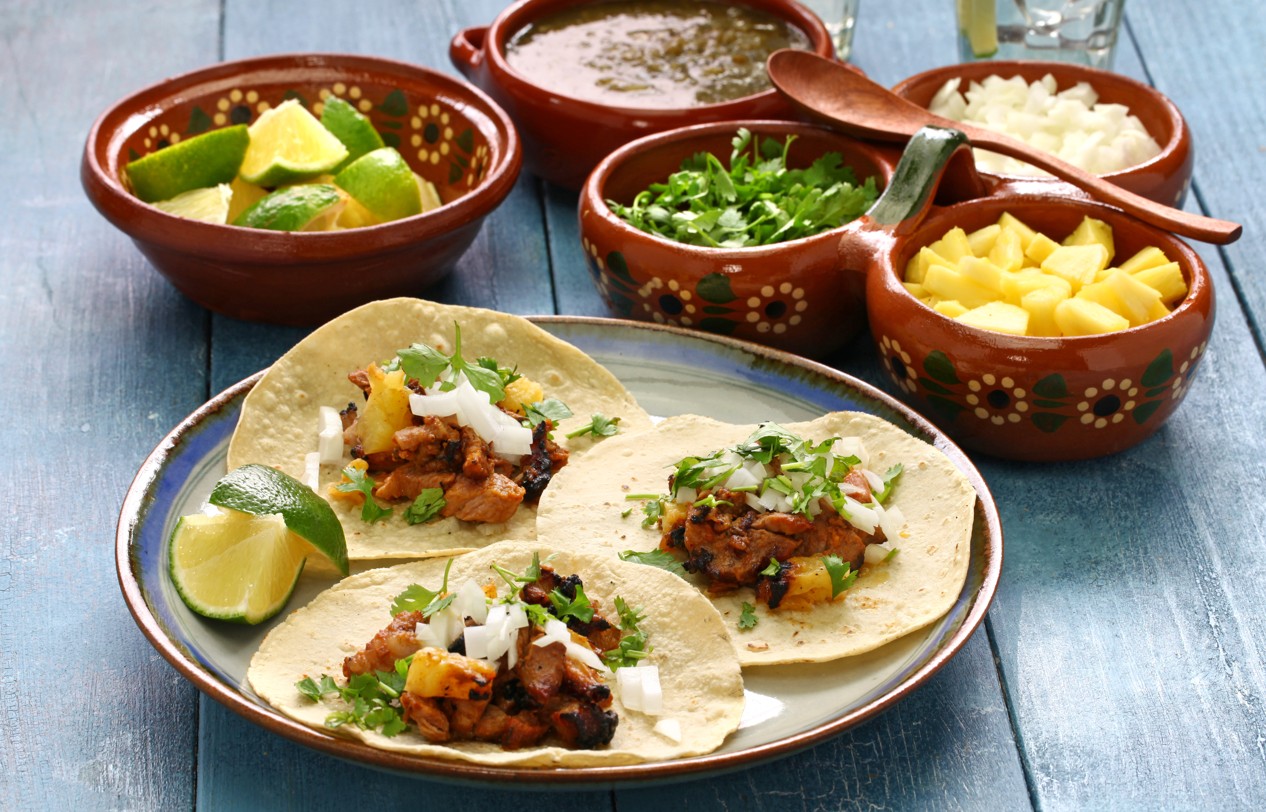
Mexico City is most famous for tacos al pastor—thinly sliced pork marinated in chili and spices, cooked on a vertical spit, and finished with pineapple. A product of Lebanese immigration in the early 20th century, al pastor has become the city’s defining street food and a global icon of Mexican cuisine.
Barbacoa, traditionally lamb slow-cooked overnight in underground pits lined with maguey leaves, is a weekend ritual, often served with consommé and fresh tortillas. Carnitas—pork confit-style cooked in its own fat—arrived from nearby Michoacán and were perfected in the capital. Chilaquiles, fried tortilla chips simmered in salsa and topped with eggs, chicken, or cream, are a daily breakfast staple and cultural comfort food.
Other essentials include tamales (steamed masa wrapped in corn husks or banana leaves), pozole (a ceremonial pre-Hispanic hominy soup), tlacoyos (oval masa cakes filled with beans or fava paste), esquites (corn kernels with lime, chili, cheese, and mayonnaise), and chiles en nogada—a seasonal dish of stuffed poblano peppers topped with walnut sauce and pomegranate seeds, symbolizing the Mexican flag.
Everyday Mexico City & Urban Mexican Food
Breakfast in Mexico City often begins with chilaquiles, tamales with atole, or huevos rancheros. Lunch is the most important meal of the day, commonly eaten between 2 and 4 PM as a comida corrida—a fixed menu including soup, main dish, and drink. Dinner is later and lighter, frequently centered around tacos, street food, or casual restaurants.
Corn is the backbone of daily life, appearing as tortillas, masa-based snacks, and beverages. Chili peppers—ranging from mild to intensely hot—provide depth rather than pure heat. Beans and avocado are constant companions. Street food is not peripheral but central to the city’s identity, with thousands of stalls serving everything from tacos and quesadillas to insects and ancient recipes.
Mexico City’s cooler evenings and high elevation favor soups, stews, and rich sauces, reinforcing a cuisine that is comforting, filling, and layered with flavor.
Cultural Foundations: Mesoamerican Roots, Colonial Influence & Global Exchange
Mexico City’s cuisine is a layered historical record. Indigenous civilizations developed a sophisticated food system based on corn, beans, squash, chili, cacao, and agave. Spanish colonization introduced livestock, dairy, wheat, sugar, and new cooking techniques, producing the foundations of modern Mexican cuisine.
Later influences include French baking traditions, Lebanese immigration that shaped al pastor, and contemporary global exchange that continues to redefine fine dining. The result is a uniquely Chilango food culture where pre-Hispanic techniques coexist with European sauces, Middle Eastern flavors, and modern experimentation. Mexico City’s cuisine embodies syncretism—the blending of cultures that defines Mexican identity itself.
Drinks, Pulque & Modern Libations
Mexico City’s beverage culture is as layered as its food. Pulque, a lightly fermented agave drink consumed since pre-Hispanic times, has experienced a revival, with traditional pulquerías serving flavored versions known as curados.
Mezcal and tequila feature prominently in both traditional and contemporary cocktails. Café de olla—coffee brewed with cinnamon and piloncillo—remains a classic. Aguas frescas such as horchata and jamaica are consumed daily. The city’s craft cocktail scene is internationally respected, often incorporating indigenous ingredients and historical techniques. Specialty coffee culture is also thriving, with excellent cafes throughout Roma, Condesa, and beyond.
International Dining and Contemporary Gastronomy
While Mexican cuisine dominates absolutely, Mexico City’s global stature supports an exceptional international dining scene. Japanese restaurants—particularly in Polanco—are among the best outside Japan. French, Italian, and other European cuisines are executed at a high level.
Modern Mexican restaurants led by globally recognized chefs reinterpret traditional dishes using contemporary techniques without losing cultural grounding. Despite this innovation, the city’s culinary soul remains firmly rooted in street food and neighborhood eateries. What distinguishes Mexico City is its range—from pesos to Michelin stars—offering extraordinary quality at every level.
Food Customs and Practical Tips
Dining in Mexico City ranges from standing at sidewalk taco stands to multi-hour tasting menus. Service is generally warm and professional. Tipping is expected at 10–15%. Lunch and dinner times run later than in many countries.
When eating street food, follow the crowds—busy stalls indicate freshness and quality. Look for tacos al pastor carved directly from the trompo. Visit markets such as Mercado de San Juan or La Merced for an immersive food experience. Seek out seasonal dishes like chiles en nogada in late summer.
Explore neighborhoods strategically: Centro Histórico for traditional cooking and cantinas, Roma and Condesa for contemporary dining, Polanco for fine dining, Coyoacán for historic charm, and everywhere in between for street food. Consider a food tour to navigate the city’s scale. Mexico City offers extraordinary culinary value, but distances and traffic require planning.
This guide covers what to eat in Mexico City, from tacos al pastor and barbacoa to chilaquiles, tamales, and regional Mexican classics. Use it to plan your culinary exploration of one of the world’s great food capitals—where every meal reflects centuries of history, cultural fusion, and the living soul of Mexico.
Check monthly weather averages for
Latest Secret Flying deals to Mexico City
Denver, Colorado to Mexico City, Mexico for only $270 roundtrip
Cheap flights from Denver, Colorado to Mexico City, Mexico for only $270 roundtrip.
View DealNon-stop from Toronto, Canada to Mexico City, Mexico for only $464 CAD roundtrip
Non-stop flights from Toronto, Canada to Mexico City, Mexico for only $464 CAD roundtrip.
View DealNon-stop from US cities to Mexican cities from only $55 one-way
Non-stop flights from US cities to Mexican cities from only $55 one-way.
View Deal [adblockingdetector id="638efa67113bf"]