


Milan Food Guide
Food in Milan: What to Eat & Drink
Milan’s culinary landscape is a refined expression of Lombard tradition, northern Italian richness, and international sophistication, making it one of Italy’s most elegant and distinctive food destinations. As the country’s financial, fashion, and design capital, Milan has developed a food culture that favors substance over rusticity, butter over olive oil, and precision over excess. Shaped by its position in the fertile Po Valley, centuries of wealth and foreign rule, and its role as Italy’s most cosmopolitan city, Milanese cuisine is polished, hearty, and quietly luxurious.
The city’s food reflects its Roman foundations, long periods under Spanish and Austrian control, and its emergence as the economic engine of modern Italy. Unlike the tomato-driven cuisines of the south, Milanese cooking is built on rice, dairy, beef, and slow techniques. From historic trattorias serving time-honored classics to contemporary kitchens redefining northern Italian cooking, Milan offers a culinary experience rooted in restraint, richness, and refinement.
Local Specialities of Milan
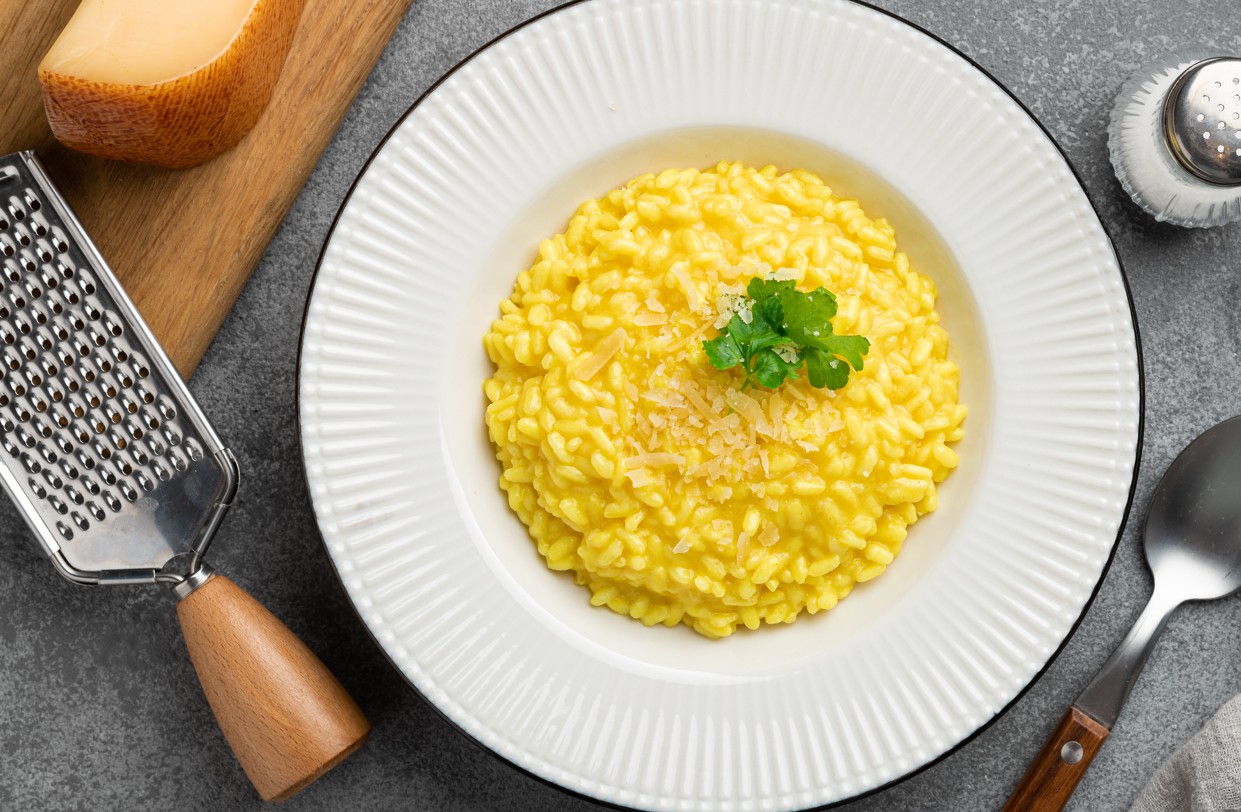
Milan is world-famous for risotto alla milanese, a saffron-infused risotto enriched with butter, bone marrow, and Parmigiano-Reggiano, cooked to a creamy consistency known as all’onda. It is traditionally paired with ossobuco alla milanese, veal shanks slowly braised with vegetables and white wine, finished with gremolada of lemon zest, garlic, and parsley.
Cotoletta alla milanese, a breaded, bone-in veal cutlet fried in butter, is another cornerstone dish. Panettone, the iconic Christmas sweet bread studded with raisins and candied fruit, originated here and remains a source of local pride. Other traditional dishes include cassoeula, a winter stew of pork and cabbage; mondeghili, Milanese meatballs made from leftover meats; michetta, the city’s airy bread roll; and Lombard cheeses such as Gorgonzola, Taleggio, and Grana Padano.
Everyday Milan & Lombard Food
Breakfast in Milan is typically light—espresso or cappuccino with a cornetto at a standing bar. Lunch is traditionally structured around a primo (risotto or pasta) followed by a secondo (meat or fish), especially on weekdays. Dinner is similar but often more social, particularly when paired with aperitivo.
Rice varieties such as carnaroli and vialone nano are essential. Butter is the primary cooking fat, giving Lombard cuisine its characteristic richness. Beef features prominently, while cornmeal appears as polenta served with braised meats or cheese. Milan’s famous aperitivo culture defines early evenings—drinks served with complimentary snacks that range from olives to elaborate small plates. Seasonal eating is emphasized, with hearty comfort food in winter and lighter fare in summer.
Cultural Foundations: Roman Roots, Austrian Rule & Northern Prosperity
Milanese cuisine is the product of layered cultural influence. Roman and Celtic foundations established early agricultural practices. Centuries under Spanish and Austrian rule left a lasting mark, particularly in butter-based cooking and breaded meats reminiscent of Central Europe.
Following Italian unification, Milan became the country’s industrial and financial center, drawing people, ideas, and ingredients from across Italy. This created a cuisine that feels deeply regional yet nationally influential—where northern wealth and discipline shaped dishes designed to nourish, impress, and endure. Milan’s food culture reflects prosperity expressed through quality rather than excess.
Drinks, Aperitivo & Local Libations
Milan is the birthplace of Italy’s aperitivo tradition, a defining social ritual. Early evening drinks are accompanied by snacks that often replace dinner altogether.
Classic cocktails such as the Negroni and Americano were invented here. Campari, also created in Milan, remains central to local drinking culture. Wines from nearby Lombardy, Piedmont, and Veneto dominate wine lists. Espresso is consumed throughout the day, while craft beer has grown steadily in recent years. What distinguishes Milan is its cocktail heritage—historic bars continue to shape Italy’s modern drinking culture.
International Dining and Contemporary Scene
While Lombard cuisine anchors the city, Milan’s international dining scene is among the strongest in Italy. Japanese restaurants—particularly in luxury districts—are refined and high quality. Chinese, Middle Eastern, and global cuisines reflect the city’s international population.
Modern Italian restaurants reinterpret classic dishes with contemporary technique, often emphasizing presentation and precision. Even Michelin-level restaurants frequently reference risotto, cotoletta, or ossobuco. Milan’s food scene balances heritage and innovation, with elegance, consistency, and professionalism setting it apart from other Italian cities.
Food Customs and Practical Tips
Dining in Milan ranges from quick espresso bars to formal fine dining, with service typically efficient and polished. Tipping is not expected—rounding up or leaving small change is sufficient. Dress codes are more formal than in much of Italy, especially at upscale restaurants.
When ordering risotto, expect it to be creamy but not soupy. Aperitivo usually starts between 6–8 PM. Panettone is essential during the Christmas season and widely available in artisanal versions.
Explore different areas: Brera for classic trattorias and stylish dining, Navigli for casual food and nightlife, the historic center for traditional institutions, and Porta Nuova for modern restaurants. Balance famous names with neighborhood favorites. Milan offers exceptional culinary quality, though prices are higher than most Italian cities. Most importantly, embrace Milan’s culinary spirit: food here is about restraint, refinement, and the confident expression of northern Italian abundance.
This guide covers what to eat in Milan, from risotto alla milanese and ossobuco to cotoletta, panettone, and Lombard classics. Use it to plan your culinary exploration of Italy’s fashion capital, where every meal reflects elegance, history, and quiet gastronomic power.
Check monthly weather averages for
Latest Secret Flying deals to Milan
🔥 Chiang Mai, Thailand to European cities from only $176 USD one-way
Cheap flights from Chiang Mai, Thailand to European cities from only $176 USD one-way with Etihad Airways.
View DealMiami to Milan or Rome, Italy from only $405 roundtrip
Cheap flights from Miami to Milan or Rome, Italy from only $405 roundtrip with TAP Air Portugal.
View DealKaunas, Lithuania to Milan, Italy for only €15 one-way
Non-stop flights from Kaunas, Lithuania to Milan, Italy for only €15 one-way.
View Deal [adblockingdetector id="638efa67113bf"]