


Munich Food Guide
Food in Munich: What to Eat & Drink
Munich’s culinary landscape is a hearty, convivial, and deeply traditional expression of Bavaria’s capital, where Alpine pastoralism, royal Wittelsbach opulence, and centuries of monastic brewing culture converge. The result is a dining scene defined by rustic elegance, ceremonial indulgence, and a steadfast commitment to Gemütlichkeit—the Bavarian concept of cozy, communal comfort. As the cultural and economic heart of southern Germany, shaped by royal patronage and later transformed into a global high-tech hub, Munich has developed a food culture that remains proudly Bavarian while benefiting from a cosmopolitan edge. Daily life still follows familiar rhythms: the beer garden season, the classic white sausage tradition, and the cherished ritual of afternoon Kaffee und Kuchen. Influenced by Catholic traditions, the nearby Alps, and fertile farmlands, Munich’s cuisine celebrates roast pork, dumplings, pretzels, sweet mustard, and world-renowned beer, served everywhere from historic beer halls to Michelin-starred dining rooms. Food here is both regional pride and social ritual, where Frühstück tends to be substantial, Brotzeit is taken seriously, and every meal feels like an invitation into Bavaria’s generous hospitality.
Core ingredients such as pork in countless forms, veal, freshwater fish like trout and carp, rye and wheat flour for breads and dumplings, potatoes, cabbage, root vegetables, apples, plums, onions, caraway, parsley, horseradish, sweet mustard, and vinegar form the foundation of Munich cuisine. Dishes are typically robust and savory, often rich without being fussy, and built on expertise in roasting, braising, and dumpling-making. Munich’s setting on the Isar River, with the Alps visible on the horizon, links the city to both mountain and pasture, while its modern identity blends Baroque churches with sleek design studios and high-tech campuses. From centuries-old beer halls serving Schweinshaxe to fine-dining restaurants reimagining Alpine ingredients, eating in Munich is a journey through tradition, ceremony, and unpretentious excellence.
Local Specialties of Munich
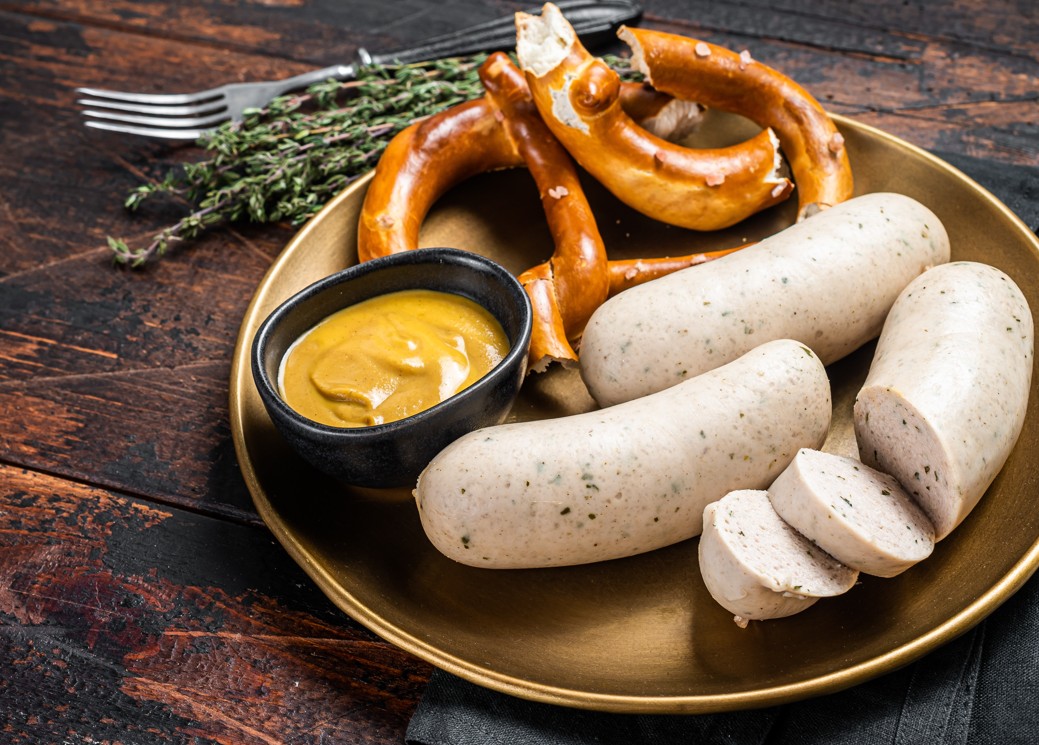
Munich’s iconic dishes are inseparable from Bavarian Wirtshaus (tavern) culture. The signature is Weißwurst, a delicate veal and parsley sausage traditionally simmered and enjoyed in the late morning, served with sweet mustard, a pretzel, and a wheat beer.
Schweinshaxe is a showstopper: roasted pork knuckle with crisp crackling, often paired with bread dumplings and sauerkraut or red cabbage. Obatzda is a classic beer garden spread made by mashing ripe Camembert with butter, paprika, and onions, then eating it with pretzels and radishes.
Leberkäse is a finely ground meatloaf baked until a crust forms, served hot in a roll as a Leberkässemmel or sliced cold with potato salad. The Bayerische Brezn is the Bavarian standard-bearer: large, soft, and lye-dipped, with a dark crust and pillowy interior. Käsespätzle is Bavaria’s comforting answer to mac and cheese, made with tender egg noodles layered with melted cheese and finished with crispy fried onions. For something sweet, apfelstrudel remains a classic, filled with spiced apples and often served with vanilla sauce. Beer gardens also lean on simple, crunchy accompaniments such as Radi (radish) and Salzgurken (pickled cucumbers).
Everyday Munich & Bavarian Food
Breakfast (Frühstück) might be as simple as a bread roll with jam or as elaborate as a hotel buffet, while late morning often makes room for the traditional Weißwurst meal. Lunch (Mittagessen) is frequently the main hot meal of the day, followed by the much-loved pause for Kaffee und Kuchen in the afternoon. Dinner can be lighter, especially when it takes the form of Brotzeit, a cold spread of bread, cheese, and cold cuts. The culture of the beer garden and beer hall is central, as are traditional taverns, butcher shops that sell hot snacks, cake shops, and wine taverns.
Meals tend to be communal and gently ceremonial. Sharing long tables in beer halls is normal, and service in traditional places can be brisk and direct in a way many visitors come to appreciate. Beer is the default companion, though sparkling water (Mineralwasser) and apple spritzer (Apfelschorle) are common as well. In beer gardens, the pace is especially relaxed, and bringing your own food for Brotzeit is often part of the experience.
Cultural Fusion: Bavarian Alpine and Farmland Roots, Royal and Monastic Refinement, Global Cosmopolitanism
Munich’s food tradition begins with the hearty, farm-based cuisine of Upper Bavaria, shaped by Catholic feast days and the rhythms of the agricultural year. The Wittelsbach court introduced refinement and outside influences, while monasteries played a major role in perfecting brewing, baking, and cheese-making.
Post-war prosperity and Munich’s status as a global business hub brought international flavors, although they tend to be absorbed into the city’s strong local framework rather than replacing it. As a result, you can taste a simple farmer’s Brotzeit, a refined roast shaped by royal tastes, a perfectly balanced lager rooted in monastic tradition, and modern global interpretations—all within a city that fiercely protects its culinary identity.
Craft Beverage Scene and Local Libations
Munich’s beverage scene is dominated by its world-famous brewing tradition, although there is more variety than many first-time visitors expect. Beer is not merely a drink here; it is a cultural institution. The city’s major breweries produce the classics, including Helles (light lager), Dunkles (dark lager), and cloudy, yeasty Hefeweizen (wheat beer).
Weißbier is a popular choice in warmer months, while a radler—beer mixed with lemon soda—offers a lighter, refreshing alternative. A growing craft beer scene exists alongside the historic giants, and traditional spirits such as Bavarian Obstler, a clear fruit brandy made from pear or plum, are still widely enjoyed. Franconian wine from nearby regions, particularly varieties like Silvaner and Riesling, also has a place, especially in wine taverns. What distinguishes Munich is the ritual itself: ordering a Maß in a lively beer hall or sharing a heartfelt Prost under chestnut trees in a beer garden, which captures the essence of Bavarian Gemütlichkeit.
International Dining and Contemporary Scene
Munich has a sophisticated and consistently high-quality international dining scene that reflects its wealthy, international population. Neighborhoods such as Schwabing and Maxvorstadt, as well as areas around the museum quarters, offer excellent Italian, French, Japanese, and modern European restaurants, many of them polished and quietly upscale.
Alongside international options, a modern Bavarian movement has emerged that updates traditional dishes with lighter techniques and more refined presentation, often found in upscale Wirtshäuser. Even so, Munich’s everyday culinary soul remains in its beer halls, beer gardens, and traditional taverns. The city’s dining identity is defined by this duality: an unwavering commitment to tradition running in parallel with global haute cuisine.
Food Customs and Practical Tips
Dress is generally smart-casual, although traditional clothing such as lederhosen and dirndls is common during festivals and on weekends. Tipping is customary, typically by rounding up or adding around 5 to 10 percent. In beer gardens, shared long tables are normal, and it is polite to ask Ist hier frei? before taking a seat. Reservations are strongly recommended for popular traditional restaurants and are often essential for dinner.
For an authentic introduction, try a Weißwurst meal in the late morning at a classic local spot, then seek out Schweinshaxe in a historic beer hall for a true taste of Bavarian roasting tradition. Spend an afternoon in a beer garden, ideally under chestnut trees, and make time for Kaffee und Kuchen at a renowned Konditorei. The Viktualienmarkt is another essential stop, offering fresh produce, snacks, and a central beer garden that showcases the city’s everyday food culture.
Exploring different neighborhoods adds texture to any visit. The Altstadt offers historic beer halls and well-known classics, Schwabing and Maxvorstadt provide a mix of university cafés and international dining, Haidhausen is excellent for local Wirtshäuser, and the Glockenbachviertel leans more modern and trend-driven. Try both the lively beer hall experience and a quieter afternoon café ritual, and consider picking up a hot Leberkässemmel from a butcher shop for the most satisfying kind of “fast food.” Prices can be higher than in other German cities, but quality is reliably strong. Above all, embrace Munich’s culinary spirit: generous, ceremonial, deeply traditional, and always served with a sense of Gemütlichkeit that feels distinctly Bavarian.
This guide covers what to eat in Munich, Germany, from Weißwurst and Schweinshaxe to Obatzda, Brezn, and the city’s world-famous beer culture. Use it to plan a culinary journey into the heart of Bavarian tradition and cosmopolitan excellence.
Check monthly weather averages for
Latest Secret Flying deals to Munich
Sydney, Australia to European cities from only $1166 AUD roundtrip
Cheap flights from Sydney, Australia to European cities from only $1166 AUD roundtrip with Turkish Airlines.
View Deal
🔥 Krabi, Thailand to European cities from only $171 USD one-way
Cheap flights from Krabi, Thailand to European cities from only $171 USD one-way with Etihad Airways.
View Deal [adblockingdetector id="638efa67113bf"]