


Muscat Food Guide
Food in Muscat: What to Eat & Drink
Muscat’s culinary landscape is a fragrant, elegant reflection of Oman’s maritime history, Bedouin heritage, and long-standing role at the crossroads of Arabian, Persian, Indian, and East African trade routes. As the capital of a modern yet deeply traditional sultanate, Muscat has developed a food culture that balances ancient customs with contemporary sophistication, where the scent of frankincense and rosewater often feels as present as the salty breeze from the Gulf of Oman. Shaped by mountains meeting the sea, centuries of seafaring commerce, and the Omani values of hospitality (ḥusn al-diyāfa), the city’s cuisine is subtle, aromatic, and frequently labor-intensive, celebrating rice, seafood, dates, and a warm, layered spice palette.
Core ingredients such as rice (especially Omani basmati), fish and seafood, lamb, dates, limes, onions, tomatoes, and a distinctive spice mix (baharat) featuring black lime (loomi), cardamom, and saffron form the backbone of Muscat’s cooking. Dishes tend to be defined by depth rather than heat, with slow-cooked tenderness, balanced acidity, and ceremonial presentation that treats food as a genuine expression of generosity. Muscat’s identity as a historic port city brings the bounty of the sea to the table, while its desert and mountain hinterlands contribute prized dates, pomegranates, and rosewater. From simple grill houses in Muttrah to polished hotel restaurants in Shatti Al Qurum, the city offers a culinary journey through the refined and welcoming heart of Omani culture.
Local Specialities of Muscat
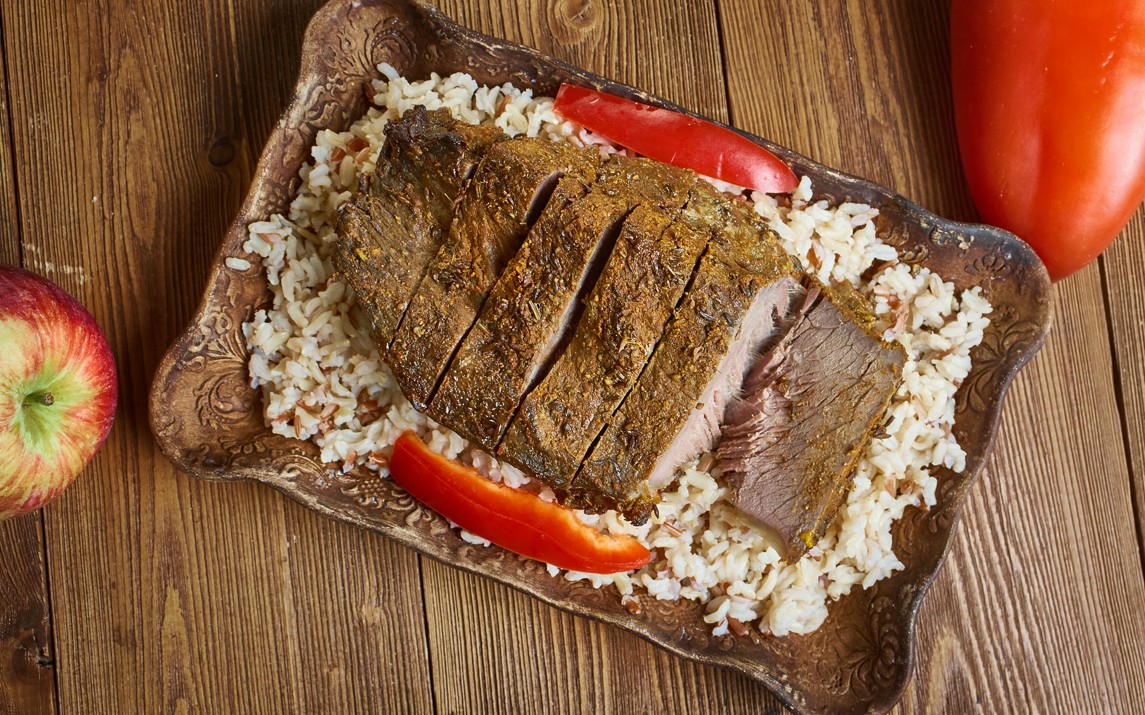
Muscat is best known for shuwa, the ultimate Omani celebration dish. Lamb or goat is marinated with spices, wrapped in banana or palm leaves, and slow-cooked for up to two days in an underground sand oven, resulting in intensely tender, smoky meat. Another essential dish is majboos (also known as kabsa), a fragrant platter of spiced rice topped with stewed meat or fish, widely regarded as a national staple.
Mashuai features whole roasted fish, often kingfish, served with distinctive lemon rice and remains a beloved coastal specialty. Harees, a savory porridge of cracked wheat and meat cooked slowly to a smooth, comforting consistency, is especially popular during Ramadan. Muqalab, a tripe and offal stew seasoned with black lime, cinnamon, and cardamom, reflects the traditional nose-to-tail approach in Omani cooking. For something quick and widely available, mishkak—skewers of marinated meat grilled over charcoal—is among the most popular street foods. Rukhal bread, thin and paper-like, is traditionally baked over hot stones and often paired with Omani honey. For dessert, Omani halwa is a dense, fragrant sweet made from sugar, rosewater, nuts, and spices, typically served alongside coffee. Dates, especially prized varieties such as Fardh and Khalas, are offered with coffee as a gesture of welcome, while laban, a salty buttermilk drink, commonly accompanies meals.
Everyday Muscat & Omani Food
Breakfast in Muscat may be as simple as rukhal bread with honey or cheese, or a modest plate of eggs and olives. Lunch is usually the main meal of the day, often centered around a shared platter of majboos or a seafood dish with rice and salad. Dinner is frequently lighter, especially in warmer months, and may include soup, sandwiches, or leftovers.
Fresh fish and seafood such as hammour, kingfish, shrimp, and lobster are daily staples, grilled, fried, or cooked in gently spiced sauces. Rice is the dominant carbohydrate and is often tinted yellow with turmeric or saffron. Salads are typically crisp and bright, built on cucumber, tomato, and onion dressed with lime. Dried black lime (loomi) is one of the cuisine’s signature ingredients, adding a musky, tangy depth to stews and rice dishes. Meals are traditionally communal, served on large shared platters and eaten with the right hand. Eating patterns also follow the cadence of prayer times and the heat of the day, with a general preference for lighter evenings.
Cultural Fusion: Bedouin Roots, Persian and Indian Influences, Zanzibari Legacy
Muscat’s cuisine begins with a Bedouin foundation of dates, meat, and bread suited to desert life and hospitality traditions. Centuries of trade and empire, including historic ties to Zanzibar, added profound Persian influence in rice dishes and sweets, Indian spices and cooking techniques, and East African ingredients and flavor pairings that still appear in coastal cooking.
The result is a distinctly Omani table where grilled meats, saffron-scented rice, spiced curries, and fragrant desserts can coexist naturally, reflecting Muscat’s history as a cosmopolitan maritime power. Underpinning it all is ḥusn al-diyāfa, the belief that offering food and drink to guests is a meaningful duty, and that meals should reinforce generosity, respect, and community.
Craft Beverage Scene and Local Libations
Because Oman is an Islamic country, everyday beverage culture is predominantly non-alcoholic, but it is rich in ritual and variety. Qahwa, Omani coffee, sits at the center of hospitality. Lightly roasted and infused with cardamom, it is typically unsweetened and served in small handle-less cups alongside dates as a formal sign of welcome.
Karak chai, a strong, sweet, milky tea often infused with spices such as cardamom and saffron, is widely popular in cafés. Fresh juices and smoothies made from fruits like mango, pineapple, banana, and carrot are readily available, especially in warmer months. Laban and other yogurt-based drinks are common at meals, while rosewater-scented refreshments and tamarind juice (tamar hindi) are widely enjoyed. Alcohol is available in licensed hotel restaurants and clubs, but it is not central to Omani home dining. What truly distinguishes Muscat is the qahwa ritual itself, including the etiquette of serving and receiving coffee, which embodies Omani ideas of hospitality and respect.
International Dining and Contemporary Scene
While Omani cuisine is the cultural core, Muscat’s large expatriate community and tourism have created a varied international dining scene, particularly in hotels and dedicated restaurant districts. Lebanese, Iranian, Indian, Pakistani, Filipino, and other regional cuisines are widely represented, often at a high standard.
Luxury hotels also offer polished European, Japanese, and broader Asian dining, and modern Omani fine dining is gradually emerging, with chefs presenting traditional flavors in more contemporary formats. Even so, the most authentic experiences are often found in local restaurants, simple grill houses, and, above all, in Omani homes. In practice, Muscat’s dining culture is a graceful blend of private, tradition-rich hospitality and a curated international restaurant scene.
Food Customs and Practical Tips
Dining in Muscat, particularly in Omani settings, follows clear etiquette. When offered qahwa and dates, accept them as a gesture of respect. Eat with your right hand only, and when sharing a platter, take food from the portion closest to you. Tipping around 10 percent is appreciated in restaurants, although it is not always strictly expected.
If you are seated on the floor, avoid pointing the soles of your feet toward others, and dress modestly when dining out. For a deeper introduction to local cuisine, seek recommendations from residents or consider a food tour that explains Omani ingredients and customs. The Muttrah Souq is an excellent place to experience the sensory side of the cuisine, with stalls selling spices, dried limes, and traditional halwa.
Exploring different districts helps you understand the city’s range. Muttrah offers traditional restaurants and the atmosphere of the souq, Shatti Al Qurum and Al Mouj provide upscale dining by the water, and Ruwi is known for excellent, affordable Indian subcontinental food. Try mishkak from a street vendor, then compare it with a well-made majboos in a family restaurant. Be prepared for the heat, as many meals are enjoyed in air-conditioned comfort. Muscat can be expensive at the luxury end, but local Omani and Indian restaurants often provide excellent value. Above all, embrace Muscat’s culinary spirit: food here is an art of hospitality, a fragrant lesson in history, and a quiet, dignified celebration of Oman’s land and sea.
This guide covers what to eat in Muscat, from shuwa and majboos to mashuai, halwa, and classic Omani specialties. Use it to plan your culinary exploration of Oman’s graceful and aromatic capital.
Check monthly weather averages for
Latest Secret Flying deals to Muscat
Belgrade, Serbia to Muscat, Oman for only €226 roundtrip
Cheap flights from Belgrade, Serbia to Muscat, Oman for only €226 roundtrip.
View DealBucharest, Romania to Muscat, Oman for only €240 roundtrip
Cheap flights from Bucharest, Romania to Muscat, Oman for only €240 roundtrip.
View DealLjubljana, Slovenia to Muscat, Oman for only €184 roundtrip
Cheap flights from Ljubljana, Slovenia to Muscat, Oman for only €184 roundtrip.
View Deal [adblockingdetector id="638efa67113bf"]