


Nanjing Food Guide
Food in Nanjing: What to Eat & Drink
Nanjing’s culinary landscape is a thoughtful and deeply expressive reflection of its long history as the “Southern Capital” of multiple Chinese dynasties. A city shaped by scholars, bureaucrats, and centuries of political importance, Nanjing has developed a food culture that is refined, seasonal, and quietly elegant. As the capital of Jiangsu Province and a core center of Huaiyang cuisine—one of China’s Four Great Culinary Traditions—the city is known for its meticulous techniques, restrained flavors, and an unmistakable devotion to duck and freshwater ingredients. Influenced by its position along the Yangtze River, its role as a cultural and administrative hub, and the weight of its historical memory, Nanjing’s cuisine balances imperial banquet sophistication with comforting, everyday street food, all expressed through the precise knife work and subtle seasoning that define Jiangsu cooking.
Core ingredients such as freshwater fish and shrimp, duck, lotus root, tofu, bamboo shoots, and a wide variety of seasonal vegetables form the backbone of Nanjing cuisine. Dishes emphasize clarity of flavor, texture, and presentation, relying on braising, stewing, gentle simmering, and careful preparation rather than bold spice. The city’s culinary identity is closely tied to the Qinhuai River and Xuanwu Lake, long sources of waterfowl and aquatic produce. Historically, Nanjing’s chefs refined banquet cooking to satisfy emperors and scholar-officials, prioritizing balance, elegance, and visual harmony. From humble duck blood soup stalls to time-honored restaurants serving dishes once favored by literati, Nanjing offers a culinary journey that feels poetic, nostalgic, and deeply rooted in place.
Local Specialities of Nanjing
Nanjing is best known for Nanjing salted duck (yanshui ya), the city’s signature dish. The duck is dry-cured, gently boiled, and chilled, producing tender, aromatic meat with a delicate saltiness and translucent skin. Equally iconic is duck blood and vermicelli soup (yaxie fensi tang), a comforting street food made with duck blood curd, glass noodles, offal, and a savory broth.
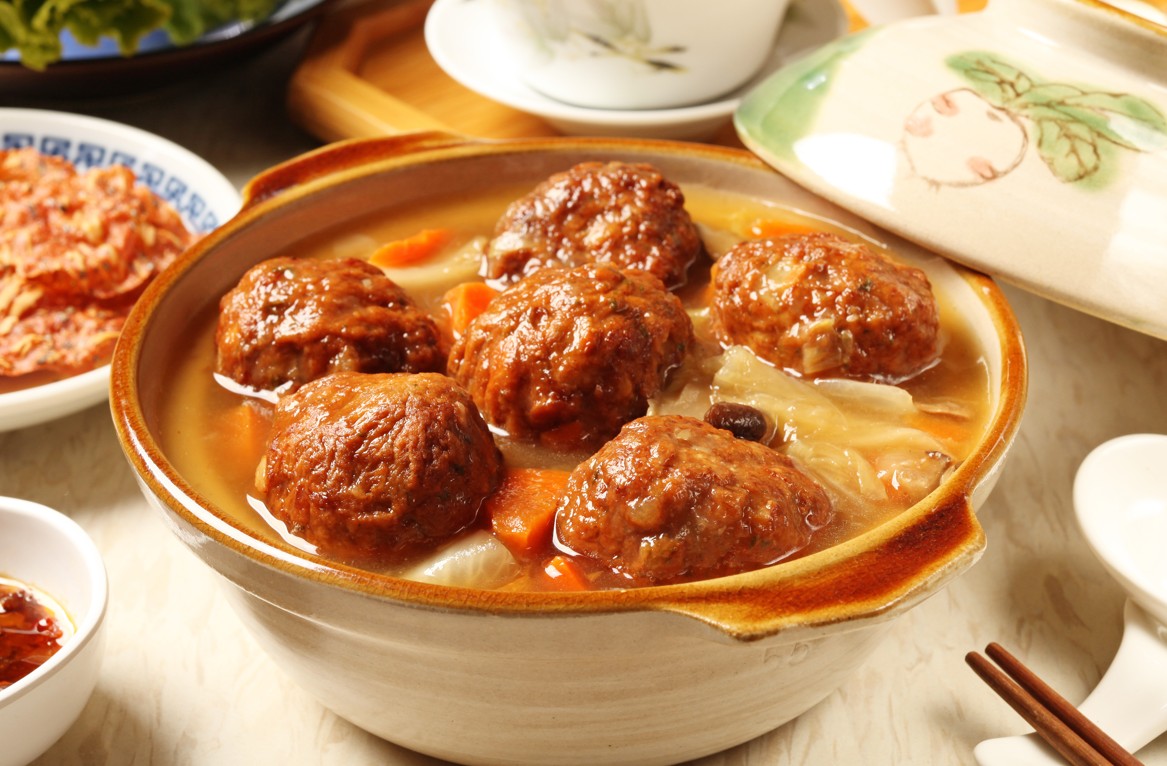
Lion’s head meatballs (shizi tou) are another classic, consisting of large, tender pork meatballs—sometimes enriched with crab meat—slow-braised with cabbage. Pressed salted duck (baobao ya) is a variation in which the duck is compressed during preparation, resulting in an especially tender texture. The Qinhuai eight delicacies refer to a historic collection of snacks associated with the Qinhuai River area, including dumplings, fried dough twists, and traditional pastries. Sweet dishes feature prominently as well, especially osmanthus rock sugar lotus root (guihua tang ou), made by stuffing lotus root with glutinous rice and simmering it with rock sugar and fragrant osmanthus. Pan-fried beef dumplings (shengjian bao) are popular for their crisp base and juicy filling, while Nanjing-style stinky tofu is fermented in vegetable brine for a milder, savory aroma. Seasonal freshwater shrimp and hairy crab are prized in autumn, and yangchun noodles offer a lesson in Huaiyang restraint: wheat noodles served in a clear, clean broth that highlights purity of flavor.
Everyday Nanjing & Huaiyang Food
Breakfast in Nanjing is dominated by street food, with sesame flatbreads, pan-fried buns, and bowls of duck blood soup among the most common choices. Lunch may be a simple noodle dish or a more substantial meal accompanied by rice. Dinner is typically the most important family meal, often consisting of soup, a vegetable dish, a meat or fish course, and rice.
Duck appears in countless everyday preparations and is a staple of local diets. Seasonal vegetables are treated with care and restraint, usually braised or lightly cooked to preserve their natural sweetness. Rice remains the primary carbohydrate, while soups and stews are preferred over stir-fried dishes. Nanjing follows a strict seasonal rhythm: spring brings bamboo shoots and tender greens, summer highlights lotus root and eel, autumn is defined by crab and osmanthus-scented sweets, and winter favors hearty braises and preserved foods. The city’s food culture carries a scholarly, reflective quality, with many dishes tied to historical anecdotes and literary traditions.
Cultural Fusion: Imperial Huaiyang Tradition, Yangtze River Bounty & Literary Refinement
Nanjing’s cuisine is inseparable from its history as a capital city. Huaiyang cooking was formalized to serve imperial courts and the scholar-gentry, emphasizing refined technique, balanced seasoning, and visual elegance. The Yangtze River and surrounding lakes supplied an abundance of freshwater ingredients that became central to the regional diet.
The city’s strong literary heritage infused its food culture with historical allusions, and many dishes are linked to poets, officials, or classical stories. Although less influenced by foreign cuisines than China’s coastal trading cities, Nanjing absorbed regional influences during the twentieth century as people migrated from other parts of the country. The result is a cuisine that seamlessly blends imperial refinement, riverine abundance, and everyday comfort. In Nanjing, history is not only preserved in monuments and texts, but also tasted in every carefully prepared dish.
Craft Beverage Scene and Local Libations
Nanjing’s beverage culture is understated yet rooted in tradition. One of the most classic pairings in the city is salted duck served alongside warm huangjiu, or yellow rice wine, whose gentle sweetness balances the duck’s savory depth.
Yuhua tea, a local green tea named after Yuhua Terrace, is light, fragrant, and widely appreciated. Osmanthus wine is enjoyed as a sweet, aromatic drink, particularly in autumn when osmanthus trees are in bloom. Sweet fermented rice wine soup (jiuniang), sometimes served with tangyuan, functions as both dessert and beverage. Baijiu is reserved for banquets and celebrations. Alongside these traditions, modern cafés and bubble tea shops are widespread. What distinguishes Nanjing is the seasonal pleasure of pairing duck and huangjiu, and the city’s affection for osmanthus-scented drinks during the autumn months.
International Dining and Contemporary Scene
While Huaiyang and Nanjing specialties dominate, the city’s large student population and expanding economy have encouraged a modest international dining scene. Korean, Japanese, Italian, and Western restaurants are most commonly found in commercial areas such as Xinjiekou.
Contemporary Chinese restaurants increasingly reinterpret local flavors with modern techniques, but Nanjing’s culinary heart remains firmly anchored in its long-established brands and traditional food streets. Time-honored restaurants specializing in salted duck or dumplings, along with the lively snack lanes around the Confucius Temple area, define the city’s dining identity. Rather than chasing global trends, Nanjing focuses on preserving and celebrating its profound culinary heritage, making it an ideal destination for those seeking refined, historically grounded Chinese cuisine.
Food Customs and Practical Tips
Dining in Nanjing ranges from informal street stalls to formal banquet settings, with service styles varying accordingly. Tipping is not customary in China, and dishes are typically shared family-style.
Buying salted duck from a specialty shop is an essential experience; it is usually sold by weight, chopped into bite-sized pieces, and eaten at room temperature. Sampling Qinhuai snacks near the Confucius Temple offers insight into the city’s historical street food culture. Many dishes are tender and delicately prepared, so careful chopstick use is appreciated. Evening visits to open-air food stalls provide a lively contrast to more refined dining.
Different neighborhoods offer distinct experiences. The Confucius Temple area is known for classic snack streets, Xinjiekou concentrates modern shopping and restaurants, and the Zhonghua Men area is famous for duck dishes and traditional street food. Food-focused walks through Lao Men Dong provide a concentrated introduction to local classics. Visitors should be prepared for subtle, layered flavors rather than spice-driven heat; Huaiyang cuisine emphasizes balance, umami, and harmony. Nanjing offers excellent value, with high-quality street food and local restaurant meals at reasonable prices. Above all, embrace the city’s culinary spirit: a refined, comforting, and deeply historical expression of Jiangsu culture.
This guide covers what to eat in Nanjing, from salted duck and duck blood soup to lion’s head meatballs, osmanthus lotus root, and classic Huaiyang specialties. Use it to plan your culinary exploration of China’s historic and flavor-rich southern capital.
Check monthly weather averages for
Latest Secret Flying deals to Nanjing
Amsterdam, Netherlands to Nanjing, China for only €471 roundtrip
Cheap flights from Amsterdam, Netherlands to Nanjing, China for only €471 roundtrip with Xiamen Airlines.
View DealLondon, UK to Nanjing, China for only £441 roundtrip
Cheap flights from London, UK to Nanjing, China for only £441 roundtrip.
View DealMilan, Italy to Nanjing, China for only €493 roundtrip
Cheap flights from Milan, Italy to Nanjing, China for only €493 roundtrip.
View Deal [adblockingdetector id="638efa67113bf"]