


Osaka Food Guide
Food in Osaka: What to Eat & Drink
Osaka’s culinary landscape is a dynamic, indulgent, and deeply theatrical expression of Japan’s mercantile heart. This is the city where the phrase kuidaore, meaning “to eat oneself bankrupt,” was born, reflecting a culture in which food is not merely sustenance but a form of entertainment, commerce, and passionate pursuit. As Japan’s historic merchant capital and its third-largest city, Osaka has developed a food culture that is famously down-to-earth, boldly flavorful, and centered on street food, casual dining, and the shared pleasure of eating together.
Shaped by its history as a canal-laced “water city,” its merchant-class values that prioritized practicality and taste over aristocratic refinement, and its long role as a gateway for foreign influences, Osaka’s cuisine celebrates carbohydrates, clever cooking techniques, and exceptional value. The city’s access to the Seto Inland Sea brought abundant seafood, while its trading networks ensured a steady flow of ingredients and ideas. Today, Osaka’s identity as savvy, humorous, and socially oriented is reflected in food that is filling, inventive, and designed to please crowds. From the neon-lit chaos of Dōtonbori to standing noodle counters in Umeda, eating in Osaka is an enthusiastic and deeply satisfying experience.
Core ingredients such as wheat flour, dashi stock, soy sauce, cabbage, octopus, and batter form the backbone of Osaka’s iconic street foods and everyday home cooking, known as katei ryōri. Dishes are defined by their contrasting textures, savory-sweet profiles often built around Worcestershire-style sauces, and a focus on quick, affordable meals that can be eaten standing or on the move. Osaka’s food culture is pragmatic yet joyful, reflecting a city that takes eating seriously but never solemnly.
Local Specialities of Osaka
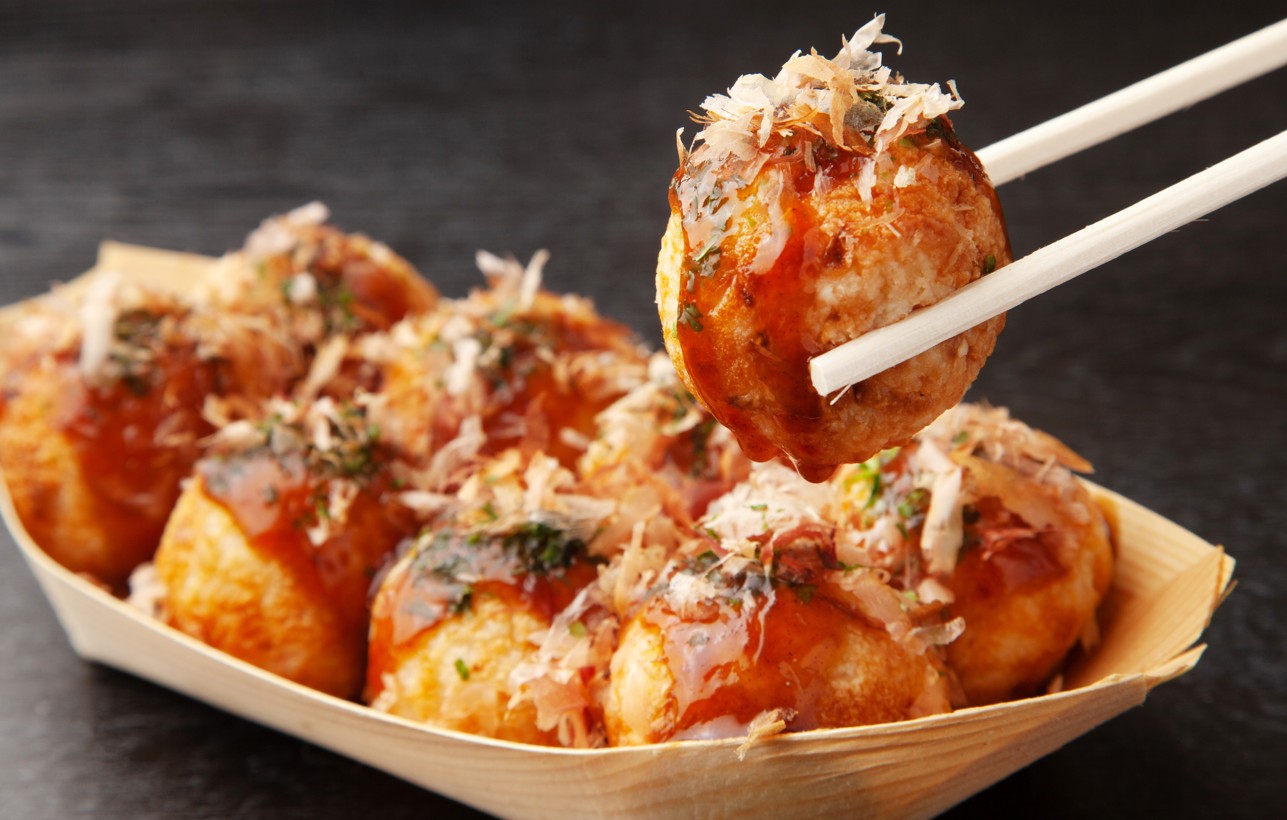
Osaka is universally recognized as the home of takoyaki, bite-sized balls of batter filled with diced octopus, green onion, and tempura scraps, cooked in a molded pan and finished with sauce, mayonnaise, and dancing bonito flakes. Equally central to the city’s identity is okonomiyaki, often described as a savory pancake, made from flour, eggs, grated yam, and shredded cabbage, cooked on a griddle with customizable fillings such as pork, seafood, or cheese, and generously topped with sauce and mayonnaise.
Kushikatsu, also known as kushiage, consists of skewered meat, seafood, and vegetables that are breaded and deep-fried, then dipped into a communal sauce, with the strict rule that dipping is allowed only once. Teppanyaki and yakiniku are also widely enjoyed, reflecting Osaka’s love of interactive, grill-focused dining. Udon is especially popular, served either in light broths such as kitsune udon, topped with sweet fried tofu, or as udon-suki, a hot pot preparation.
Osaka is also known for oshizushi, a historic style of pressed sushi that predates the nigiri sushi associated with Tokyo. The city is a major center for fugu preparation, with licensed chefs serving this notoriously dangerous pufferfish delicacy. Higher-end kappō cuisine offers refined, multi-course meals served at counters, while simpler street foods such as ikayaki, whole grilled squid, remain everyday favorites. Hiroshima-style okonomiyaki with noodles is also widely available, reflecting Osaka’s openness to regional variations.
Everyday Osaka and Kansai Food
Daily eating in Osaka is informal, social, and fast-paced. Breakfast may be a quick pastry from a convenience store or a traditional Japanese set at a hotel. Lunch often consists of a bowl of udon, a teishoku set meal, or a stop at a takoyaki stand. Dinner is where Osaka truly comes alive, with groups gathering for okonomiyaki, yakiniku, or lively izakaya crawls through entertainment districts.
Street food is not a novelty but a respected and practical option for locals. Dashi forms the fundamental flavor base of many dishes and is typically used more lightly than in Tokyo, allowing individual ingredients to stand out. Cabbage plays a surprisingly important role, appearing in okonomiyaki, yakisoba, and as a simple accompaniment. The culture of tachigui, or standing and eating, remains strong at noodle shops and kushikatsu bars. Osaka’s food culture is loud, communal, and participatory, with many restaurants designed so diners cook together at the table.
Cultural Fusion: Merchant Ingenuity, Water Trade, and Postwar Reinvention
Osaka’s cuisine grew out of its role as Japan’s rice market and merchant capital, where efficiency, flavor, and affordability were paramount. Merchants favored portable, filling foods such as takoyaki and oshizushi, which also benefited from preservation techniques like vinegared rice. The city’s canals facilitated trade and the exchange of ingredients and culinary ideas.
After World War II, okonomiyaki became widely popular as a cheap, filling meal made from flour and cabbage, reflecting the city’s ability to adapt and innovate under constraint. This postwar reinvention reinforced Osaka’s pragmatic culinary identity, one that values ingenuity, shared enjoyment, and honest feedback. Osakans are famously direct, and their dining culture reflects this candor: good food earns loyalty and long lines, while mediocrity is quickly ignored.
Craft Beverage Scene and Local Libations
Osaka’s beverage culture is lively and social, closely intertwined with its food scene. Beer is the dominant alcoholic drink, especially when paired with kushikatsu and okonomiyaki, and major Japanese brands are widely consumed alongside a growing number of craft options.
Shochu and awamori are popular spirits, often mixed with water, soda, or tea as chūhai. Sake from nearby brewing regions such as Nada in Kobe and Fushimi in Kyoto is common, although Osaka itself is not a major sake producer. Highballs made with whiskey and soda are a staple in izakayas, and tea in its many forms remains ever-present. What distinguishes Osaka is the prevalence of nomihōdai, or all-you-can-drink menus, and the sheer enthusiasm with which food and drink are combined during nights out in districts like Dōtonbori and Shinsekai.
International Dining and Contemporary Scene
As a major international city, Osaka offers a wide range of global cuisines, including excellent Korean barbecue in Tsuruhashi, the city’s Koreatown, as well as strong Chinese, Italian, and French dining scenes.
Modern Japanese fine dining, including kaiseki and kappō styles, is widely available and often more relaxed and accessible than in nearby Kyoto. Still, the true soul of Osaka’s dining culture lies in its street stalls, kushikatsu bars, and okonomiyaki restaurants. The city excels not in endless reinvention but in perfecting a handful of iconic dishes and surrounding them with an atmosphere of unfiltered joy and generosity.
Food Customs and Practical Tips
Dining in Osaka is casual, energetic, and interactive. Service tends to be efficient and direct, and tipping is not practiced in Japan. Ordering is often made easier by menus with photos or plastic food models, and pointing is perfectly acceptable.
When eating kushikatsu, remember the single-dip rule for communal sauce. At okonomiyaki restaurants, diners may cook their own pancakes on tabletop grills or watch staff prepare them. Takoyaki should be eaten with care, as the centers remain extremely hot. Exploring side streets and alleys is essential, as many of the best eateries are hidden away from main thoroughfares. Kuromon Ichiba Market, often called “Osaka’s Kitchen,” offers an intense introduction to local seafood and street food.
Different neighborhoods showcase different facets of Osaka’s food culture. Dōtonbori and Namba deliver the city’s iconic neon spectacle and highest concentration of street food. Shinsekai offers a retro atmosphere and some of the best kushikatsu. Umeda is known for department store food halls and more upscale dining, while Tsuruhashi is the destination for Korean cuisine and exceptional yakiniku. Sampling both long-established institutions and bustling modern chains provides a full picture of the city’s culinary range. Expect crowds, especially in the evenings, but also exceptional value. Above all, embrace Osaka’s culinary spirit: arrive hungry, eat adventurously, and immerse yourself fully in the joyful, democratic pursuit of kuidaore.
This guide covers what to eat in Osaka, from takoyaki and okonomiyaki to kushikatsu, oshizushi, and classic Kansai specialties, helping you plan a rewarding culinary exploration of Japan’s street food capital.
Check monthly weather averages for
Latest Secret Flying deals to Osaka
London, UK to Osaka, Japan for only £449 roundtrip
Cheap flights from London, UK to Osaka, Japan for only £449 roundtrip.
View DealStockholm, Sweden to Tokyo or Osaka, Japan from only €392 roundtrip
Cheap flights from Stockholm, Sweden to Tokyo or Osaka, Japan from only €392 roundtrip.
View DealStockholm, Sweden to Osaka, Japan for only €405 roundtrip
Cheap flights from Stockholm, Sweden to Osaka, Japan for only €405 roundtrip.
View Deal [adblockingdetector id="638efa67113bf"]