


Papua New Guinea Food Guide
Food in Papua New Guinea: What to Eat & Drink
Papua New Guinea’s culinary landscape is one of the world’s most fascinating and least explored, a raw and deeply traditional reflection of its extraordinary cultural diversity, remote highland valleys, and vast tropical coastline. With more than 800 languages and countless tribal groups, PNG does not have a single national cuisine but rather a mosaic of regional food traditions built around the earth oven, known as the mumu, sago, and the abundance of rainforest and coral seas. Shaped by extreme geography, including rugged mountains, dense jungles, and scattered island chains, and by centuries of relative isolation, the country’s food culture remains fundamentally subsistence-based, communal, and closely tied to the land.
Core ingredients vary widely by region but commonly include root vegetables such as sweet potato, taro, and yam; sago palm starch; leafy greens known locally as kumu; pork; freshwater fish; tropical fruits such as banana, pandanus, and mango; and coconut. Cooking is defined by simplicity and practicality, with starch forming the dietary foundation and flavor coming primarily from smoke, earth, and fresh ingredients rather than seasoning. Geography dictates diet: Highland communities depend heavily on sweet potato and pork, coastal and island groups rely on fish and sago, and lowland forests provide game and foraged foods. From village feasts in the Highlands to fish grilled on island beaches, eating in Papua New Guinea is an immediate and intimate connection to community and environment.
Local Specialities of Papua New Guinea
The most important celebratory food across Papua New Guinea is the mumu, a traditional feast in which pork, root vegetables, and greens are layered with banana leaves over hot stones in a pit, covered, and slowly steamed for hours. The result is tender, smoky food infused with the earthy aroma of the oven itself. Another foundational dish is saksak, a pudding made from sago palm starch, often combined with grated coconut and banana and steamed in banana leaves.
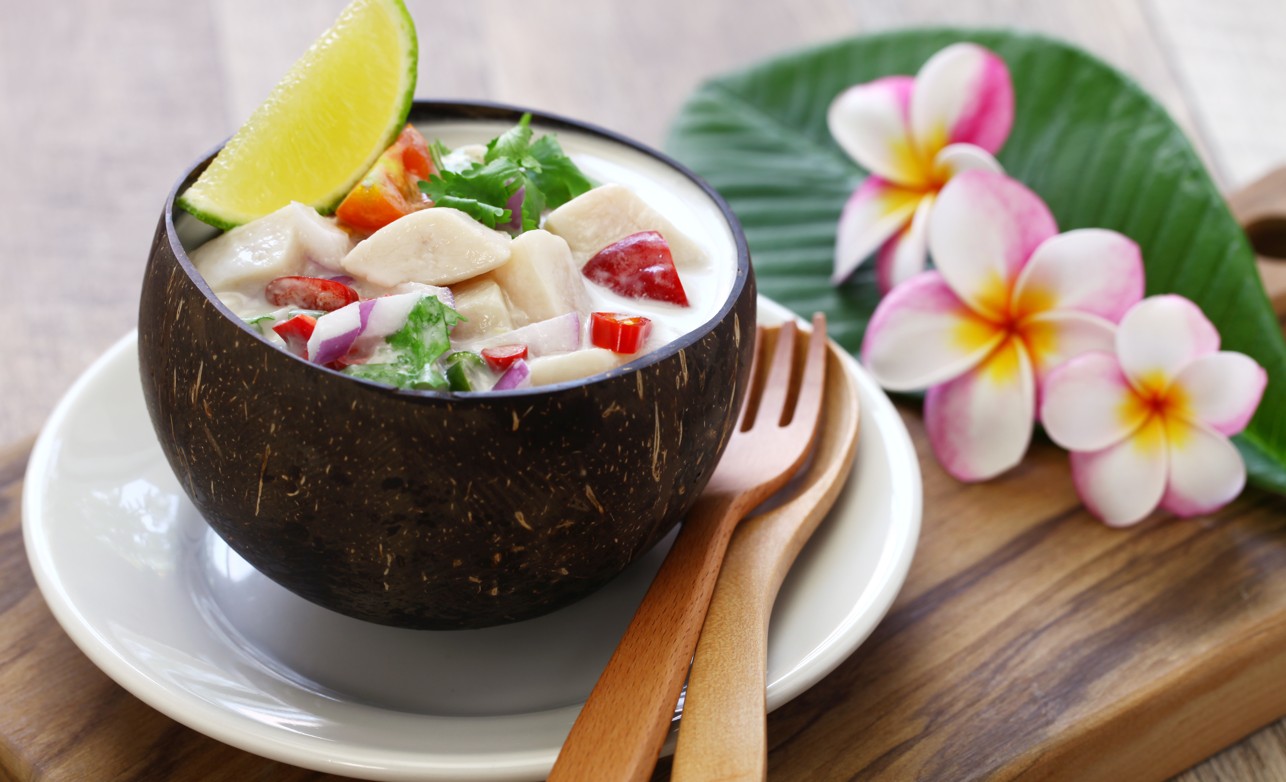
Kokoda, a dish similar to ceviche, features raw fish marinated in lime juice and coconut milk and is common in coastal areas. Pit-roasted pig is the ultimate festive food and a symbol of wealth and status. Introduced staples such as tinned corned beef, often referred to as bully beef, and rice are now widespread, particularly in towns. Sweet potato, known locally as kaukau, is the central staple of the Highlands and may be baked, boiled, or cooked in the mumu.
Other local foods include tulip, a large swamp taro, along with a variety of wild greens, freshwater crayfish and prawns from rivers, and mumu-style cooking applied to chicken and fish. Indigenous fruits and plants such as marita, a type of pandanus fruit, pitpit, a cane-like vegetable, and galip nuts also play an important role in traditional diets.
Everyday Papua New Guinean Food
Daily meals in Papua New Guinea are simple and repetitive, built around whatever starch is locally available. Breakfast may consist of leftover sweet potato or sago, or tea with store-bought bread in urban areas. Lunch and dinner typically revolve around a large portion of starch accompanied by leafy greens, fish, or a small amount of meat when available.
Sweet potato dominates the Highlands and can account for the vast majority of daily calories. Sago is essential in many lowland and coastal regions, while rice and tinned fish have become common purchased foods. Coconut is used extensively for milk, oil, and grated flesh. Meals are often shared communally, with food taken from a central pot or basket. Cooking methods remain basic, including boiling, roasting over open fires, or baking in hot ashes. Seasoning is minimal, and flavor is drawn from smoke, freshness, and the natural character of the ingredients.
Cultural Foundations and Modern Influences
Papua New Guinea’s cuisine is rooted in Melanesian agricultural and foraging practices developed over thousands of years. The introduction of sweet potato to the Highlands several centuries ago transformed subsistence patterns and supported population growth, cementing its central role in daily life. Sago extraction and processing represent one of the region’s most ancient food technologies.
Colonial contact introduced pigs, which became culturally significant, as well as crops such as cassava, pumpkin, and corn. Metal cookware and imported foods gradually entered the diet, and modern trade brought rice, flour, sugar, and tinned meats, especially to urban areas. As a result, contemporary PNG food culture consists of a deeply traditional core layered with modern convenience foods. Food remains closely linked to social structure, ceremony, and kinship, with pig rearing and large feasts playing a central role in celebration, negotiation, and community bonding.
Beverages and Local Practices
Traditional non-alcoholic drinks are simple, consisting mainly of water and fresh coconut water. One of the most culturally significant daily practices involves betel nut, known locally as buai. Chewed with mustard stick and lime powder, it acts as a mild stimulant and serves as a powerful social ritual, visible throughout towns and villages.
In some regions, particularly the islands, kava is consumed ceremonially, producing a calming, sedative effect. Illegally produced homebrew alcohol, often referred to as steam, exists but is associated with serious social problems. Commercial beer, especially national brands such as SP Lager and South Pacific Export, is extremely popular in urban areas. While tropical fruit is abundant, it is rarely processed into commercial juices. What truly distinguishes PNG’s beverage culture is the central role of betel nut chewing as a social adhesive rather than alcohol.
International Dining and the Urban Scene
In Port Moresby and larger towns such as Lae, international restaurants cater mainly to expatriates and affluent locals. These include Chinese, Indonesian, Indian, Filipino, and Australian-style pub dining.
Modern fusion cuisine is rare and limited largely to high-end hotel restaurants, where local ingredients may appear in otherwise Western-style dishes. The most authentic culinary experiences take place outside the restaurant setting, in village homes and communal gatherings. Being invited to share a local meal is considered a great honor, and it is through these experiences that visitors gain the truest insight into Papua New Guinea’s food culture.
Food Customs and Practical Tips
In village settings, food customs are governed by deep tradition. Food offered should always be accepted, as it signifies welcome and respect. Eating with the hands is common, and in some areas the right hand is preferred. Stepping over food or the cooking fire is considered disrespectful, and guests are expected to try everything served.
In urban restaurants, Western dining etiquette applies, and tipping is not expected. Visitors should be cautious with street food and water hygiene to avoid illness. Traditional food experiences are best accessed through cultural festivals such as the Goroka or Mount Hagen Shows, or by traveling with a knowledgeable guide who can arrange village visits. Homebrew alcohol should be avoided, and betel nut chewing customs should be respected, though declining politely is acceptable.
Different regions offer distinct food traditions. The Highlands showcase mumu feasts and sweet potato culture, the Sepik River region highlights sago and freshwater fish, and island areas such as New Britain and New Ireland emphasize seafood, coconut, and tropical fruits. In Port Moresby, international-standard hotels generally offer the safest dining options. Travelers should be prepared for limited variety when visiting remote areas and consider bringing supplementary snacks.
Above all, Papua New Guinea’s culinary spirit should be approached with humility and curiosity. The food is not about complexity or refinement but about sustenance, sharing, and a living connection to land, sea, and community. Each meal offers insight into one of the world’s most enduring and traditional foodways.
This guide covers what to eat in Papua New Guinea, from mumu and saksak to kaukau, kokoda, and essential Melanesian staples, helping you prepare for a culinary experience that is as cultural as it is nourishing.
Check monthly weather averages for
Latest Secret Flying deals to Papua New Guinea
London, UK to Papua New Guinea for only £465 roundtrip
Cheap flights from London, UK to Papua New Guinea for only £465 roundtrip.
View DealNon-stop from Manila, Philippines to Papua New Guinea for only $329 USD roundtrip
Non-stop flights from Manila, Philippines to Papua New Guinea for only $329 USD roundtrip.
View DealAROUND ASIA & OCEANIA: Munich, Germany visiting 8 cities for only €989 roundtrip
An amazing around Asia and Oceania trip from Munich, Germany visiting 8 cities for only €989 roundtrip.
View Deal [adblockingdetector id="638efa67113bf"]