


Phnom Penh Food Guide
Food in Phnom Penh: What to Eat & Drink
Phnom Penh’s culinary landscape is a vibrant, resilient, and complex expression of Cambodia’s soul, where the elegant, aromatic foundations of Khmer cuisine meet the frenetic energy of a city roaring back to life. As the capital and beating heart of the nation, Phnom Penh has developed a food culture that is deeply traditional, surprisingly diverse, and thrillingly accessible, from bustling street-side noodle stalls to refined restaurants rediscovering royal recipes. Shaped by its position at the confluence of the Tonlé Sap, Mekong, and Bassac rivers, its French colonial past, and the profound traumas and recoveries of the 20th century, the city’s cuisine is a delicate balance of sweet, sour, salty, and bitter flavors, built around rice, freshwater fish, herbs, and the foundational fermented paste, prahok.
Core ingredients like rice (especially fragrant jasmine), freshwater fish, pork, chicken, coconut milk, lemongrass, galangal, kaffir lime, turmeric, and a wide range of tropical fruits and vegetables form the backbone of Khmer cooking. Dishes are defined by labor-intensive spice pastes (kroeung), the essential umami of fermented fish paste, and a preference for soups, stir-fries, and grilled foods. Phnom Penh’s riverine geography supplies abundant fish, while surrounding farmland provides rice and produce. From humble carts selling num pang to elegant dining rooms, Phnom Penh offers a profound culinary introduction to Cambodia.
Local Specialities of Phnom Penh
Phnom Penh is an excellent place to try amok, often regarded as Cambodia’s national dish. This fragrant curry of fish (or sometimes chicken) is blended with kroeung paste and coconut milk, then gently steamed in banana leaves until custardy. Nom banh chok, the quintessential breakfast, features fresh rice noodles topped with a green, fish-based curry gravy made with lemongrass and turmeric, served alongside generous piles of raw vegetables and herbs.
Bai sach chrouk is a beloved morning dish of marinated pork grilled over charcoal and served with rice, pickled vegetables, and a light broth. Lort cha consists of short rice pin noodles stir-fried with vegetables, egg, and sweet soy sauce. Khmer red curry (samlor kari) is milder and more aromatic than its Thai counterpart and often enjoyed with French bread for dipping.
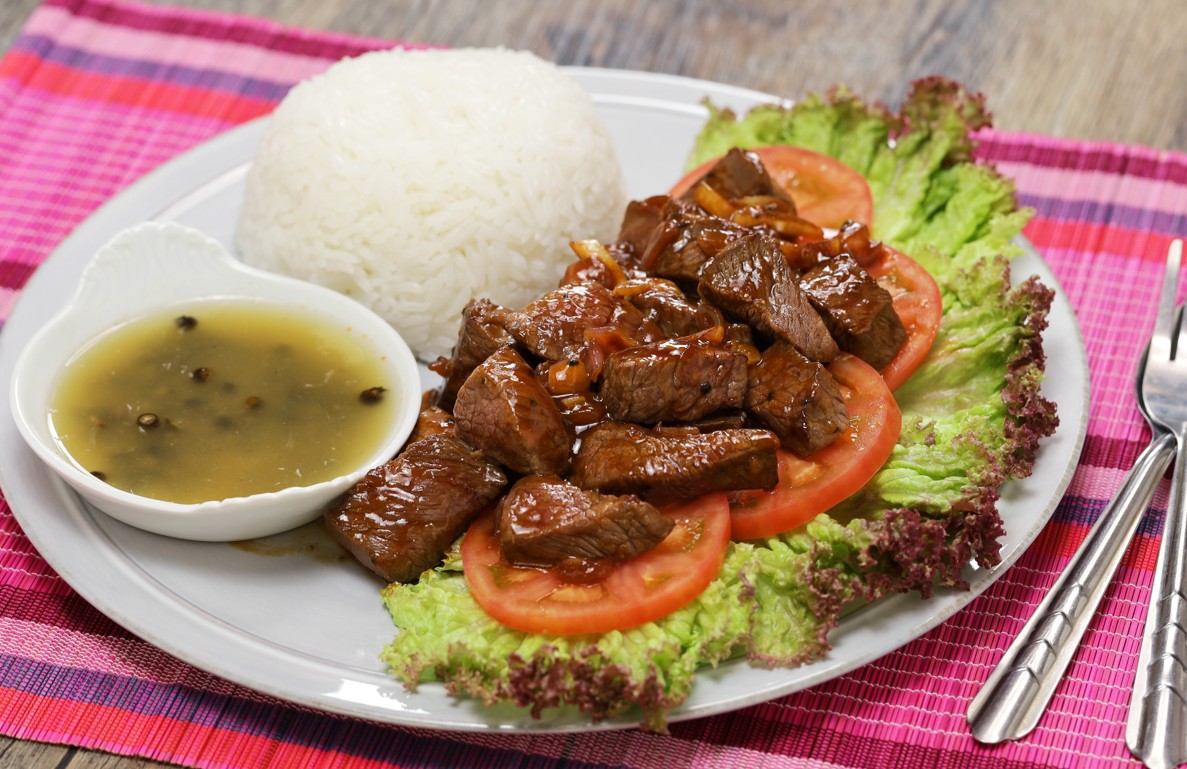
Beef lok lak features tender cubes of stir-fried beef in a peppery sauce, served with rice, a fried egg, and a lime–salt–pepper dipping sauce. Prahok k’tis is a bold dip of minced pork, coconut milk, and fermented fish paste served with raw vegetables. Num pang, the Cambodian baguette sandwich, reflects French influence and is typically filled with grilled meats, pâté, and pickled vegetables.
Everyday Phnom Penh & Cambodian Food
Breakfast is often noodle-based, such as kuy teav or nom banh chok, bought from street vendors. Lunch might be a simple rice dish or stir-fry, while dinner is the main family meal, usually featuring soup, a curry or stir-fry, and several shared dishes accompanied by plenty of rice.
Rice anchors every meal, while soup (samlor) is served alongside dishes rather than as a starter. Meals are communal, with diners sharing from multiple plates. Fresh herbs and raw vegetables are essential accompaniments, offering balance and freshness. Street food is central to daily life, not merely a snack option.
Cultural Fusion: Ancient Khmer Roots, French Influence & Regional Neighbors
Khmer cuisine is ancient, shaped by centuries of reliance on fermented fish, rice cultivation, and complex spice pastes. The Angkorian era laid the culinary foundations still visible today. French colonization introduced baguettes, pâté, and coffee culture, leaving a lasting mark on everyday food habits.
Proximity to Vietnam and Thailand brought shared ingredients and techniques, though Khmer food is typically less spicy and more aromatic. Following the Khmer Rouge era, there has been a determined revival of traditional recipes and culinary pride. Modern Phnom Penh reflects this revival, blending ancient dishes with colonial and regional influences.
Craft Beverage Scene and Local Libations
Phnom Penh’s beverage culture combines traditional refreshments with strong coffee and an emerging craft beer scene. Iced coffee (cafe dtuk kork) is a daily staple, sweetened with condensed milk and served over ice.
Fresh sugar cane juice, fruit shakes (tuk kalohk), and palm juice (dtuk not) are widely consumed to combat the heat. Angkor Beer and other local lagers are inexpensive and popular, while craft beer from small breweries is gaining traction. Rice wine (sraa sor) remains a potent traditional spirit.
International Dining and Contemporary Scene
Phnom Penh’s expatriate population supports a diverse international dining scene, including French, Japanese, Korean, Indian, and Western cuisines.
Modern Khmer fine dining is the most exciting development, with chefs reinterpreting traditional dishes using premium local ingredients. Despite this growth, the heart of the city’s food culture remains in local eateries and street stalls, where everyday meals reflect resilience, tradition, and deep flavor.
Food Customs and Practical Tips
Dining is informal and communal. Use the spoon to eat and the fork to guide food. Tipping is not expected but appreciated in tourist-oriented restaurants. Always drink bottled or filtered water.
Look for busy street stalls with high turnover for the best food. Eat nom banh chok in the morning, and explore markets like Psar Thmei or Psar O Russei for a full sensory experience. Start with milder dishes before trying strongly fermented foods. Phnom Penh offers excellent value and unforgettable flavors. Embrace its culinary spirit: generous, aromatic, and deeply connected to Cambodia’s rivers, land, and people.
This guide covers what to eat in Phnom Penh, from amok and nom banh chok to bai sach chrouk, lok lak, and classic Khmer dishes. Use it to plan your culinary exploration of Cambodia’s resilient and flavorful capital.
Check monthly weather averages for
Latest Secret Flying deals to Phnom Penh
Amsterdam, Netherlands to Phnom Penh, Cambodia for only €481 roundtrip
Cheap flights from Amsterdam, Netherlands to Phnom Penh, Cambodia for only €481 roundtrip with Xiamen Airlines.
View DealStockholm, Sweden to Phnom Penh, Cambodia for only €455 roundtrip
Cheap flights from Stockholm, Sweden to Phnom Penh, Cambodia for only €455 roundtrip.
View DealLondon, UK to Phnom Penh, Cambodia for only £355 roundtrip
Cheap flights from London, UK to Phnom Penh, Cambodia for only £355 roundtrip.
View Deal [adblockingdetector id="638efa67113bf"]