


Phuket Food Guide
Food in Phuket: What to Eat & Drink
Phuket’s culinary landscape is a vibrant and complex tapestry of Southern Thai flavors, Peranakan (Straits Chinese) heritage, and the abundant seafood of the Andaman Sea, creating a unique island cuisine that is distinct from the rest of Thailand. As Thailand’s largest island and a world-famous beach destination, Phuket has developed a dual food personality: one catering to the global tourist with familiar international fare, and a deeply rooted, fiercely flavorful local food culture found in its old-town shophouses and bustling markets. Shaped by its history as a tin-mining hub that attracted Chinese Hokkien immigrants, its position on ancient trade routes, and its lush tropical environment, Phuket’s cuisine is a masterful blend of Thai heat and sourness with Chinese techniques and ingredients, all centered around the extraordinary freshness of the surrounding waters.
Core ingredients like rice, noodles, coconut milk, turmeric, galangal, lemongrass, kaffir lime, shrimp paste, fresh seafood (crab, prawns, fish), and a wide array of local vegetables and herbs form the foundation of Phuket’s cuisine. Dishes are characterized by their bold, often fiery flavors, the prominent use of turmeric, and the complex layering of sour, salty, sweet, and spicy notes. Phuket’s geography provides a bounty of seafood, coconuts, and tropical fruit. Its cultural heart lies in Phuket Old Town, where Sino-Portuguese shophouses shelter generations-old eateries. From humble noodle shops on Thalang Road to rustic seafood restaurants by the sea, Phuket offers a delicious journey through Thailand’s most distinctive island kitchen.
Local Specialities of Phuket
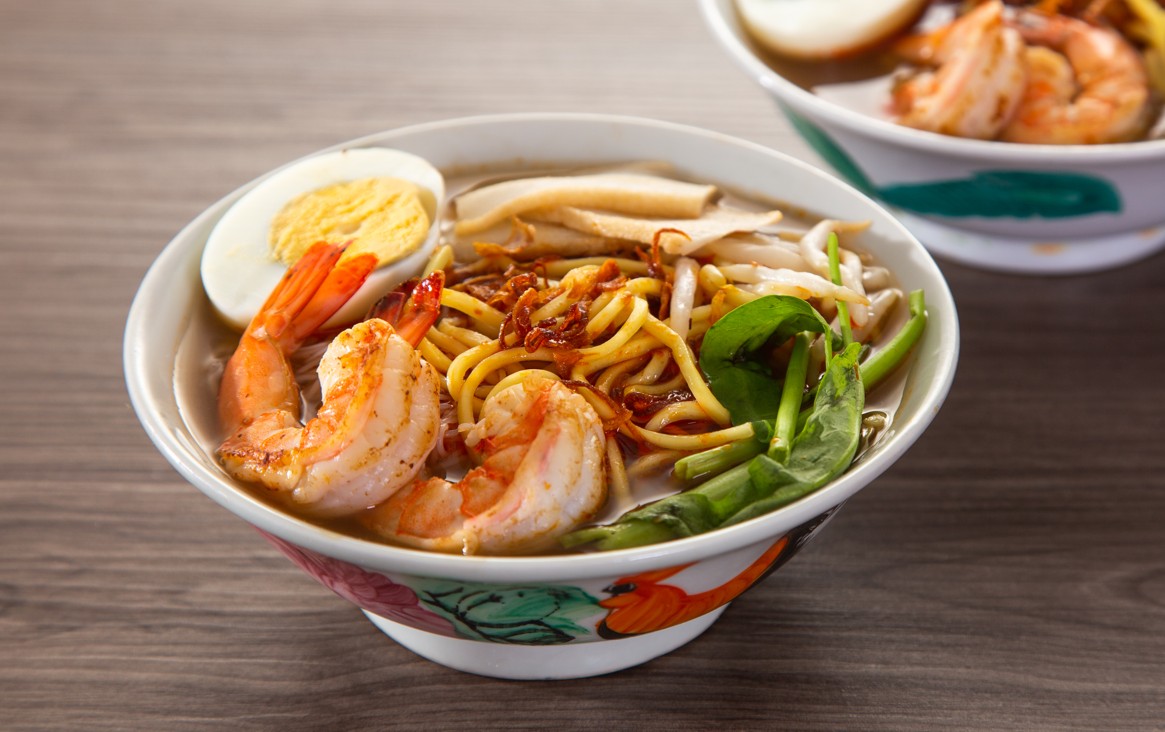
Phuket’s most famous dish is Mee Hokkien Noodles (Phuket-style): thick yellow wheat noodles stir-fried with seafood, pork, eggs, and a rich gravy made from pork and shrimp stock, a direct legacy of Hokkien Chinese immigrants. Oh Tao (or Or Suan) is a crispy oyster omelette made with a starchy batter, eggs, and small oysters, served with a spicy-sour dipping sauce.
Gaeng Som Pla (Phuket sour curry) is a vivid orange, turmeric-heavy curry with tamarind acidity, typically cooked with fish and local vegetables. Khanom Chin (fermented rice noodles) are served with Southern Thai curries such as Nam Ya (a rich, spicy fish curry) or pungent chili sauces. Moo Hong, Phuket’s signature braised pork belly, is slow-cooked in dark soy sauce, garlic, and pepper until meltingly tender.
Fresh seafood dominates local tables: grilled prawns, steamed crab with yellow curry, spicy stir-fried clams, and whole fish simply prepared to showcase freshness. Roti, a flaky, griddle-fried flatbread influenced by Malay and Indian Muslim cooking, is eaten both sweet and savory. Nam Prik Kung Siap, a dried shrimp chili dip, is served with raw vegetables. Tropical fruits such as mangosteen, rambutan, and pineapple round out the cuisine.
Everyday Phuket & Southern Thai Food
Breakfast may be a bowl of jok (rice porridge) or khanom chin from a local stall. Lunch is often a single-plate noodle or rice dish, while dinner is more social, with shared plates of curries, seafood, and stir-fries.
Rice or noodles form the base of every meal. Seafood is consumed daily, often grilled, steamed, or incorporated into curries. Southern Thai food is famously spicy, and Phuket shares this intensity, so asking for pet nit noi (a little spicy) is wise for heat-sensitive diners. Meals are communal and casual, with markets and street stalls providing the most authentic and affordable food.
Cultural Fusion: Southern Thai Roots, Hokkien Chinese Influence & Malay Touches
Phuket’s cuisine is built on the fiery, coconut-rich foundation of Southern Thai cooking. The arrival of Hokkien Chinese miners introduced wheat noodles, soy-based sauces, stir-frying, and braising techniques, which fused seamlessly with local Thai ingredients.
Proximity to Malaysia added Muslim culinary influences, visible in roti and certain spice profiles. This long-standing fusion produced a distinctive Peranakan food culture, where Thai chilies meet Chinese woks and Andaman seafood. Family recipes passed down through generations remain central to local food identity.
Craft Beverage Scene and Local Libations
Tourist areas are dominated by cocktails, but local drinking culture revolves around simple refreshments. Fresh fruit shakes are essential, blended to order from local produce.
Iced Thai tea and iced coffee are sweet, creamy, and restorative in the heat. Fresh coconut water is widely available. Local lagers such as Singha and Chang are ubiquitous, while herbal liquors (ya dong) are occasionally consumed for traditional reasons. What stands out locally is the quality of fresh fruit drinks and the ritual of iced tea or coffee breaks.
International Dining and Contemporary Scene
In resort areas like Patong, Kata, and Kamala, international dining dominates, with Italian, Indian, Russian, Scandinavian, and Western options designed for tourists.
Contemporary Thai and fusion fine dining is emerging in upscale resorts and Phuket Town. However, the true soul of Phuket’s food culture lies in local markets, old-town shophouse restaurants, and simple seafood places where diners select fish directly from ice-filled displays. Seeking out these experiences is essential for understanding Phuket’s culinary identity.
Food Customs and Practical Tips
Dining is informal and relaxed. Use the spoon to eat and the fork to guide food. Tipping is not expected at local places but appreciated in tourist restaurants. Always drink bottled water.
For authentic food, explore Phuket Old Town and visit the weekend walking street market. Seafood restaurants frequented by locals are often found away from the main beaches. Be cautious with spice levels, and learn a few useful Thai phrases such as aroy (delicious) and pet mai (not spicy).
Explore different areas: Phuket Old Town for traditional eateries; Rawai and Chalong for excellent seafood; beach towns for convenience and international options. Try both a historic shophouse restaurant and a simple beachside grill. Phuket rewards those who look beyond the resort buffet. Embrace its dual culinary spirit and you’ll discover one of Thailand’s most distinctive regional cuisines.
This guide covers what to eat in Phuket, from Mee Hokkien and Oh Tao to Gaeng Som, Moo Hong, and Peranakan island specialties.
Check monthly weather averages for
Latest Secret Flying deals to Phuket
Stockholm, Sweden to Phuket, Thailand for only €398 roundtrip
Cheap flights from Stockholm, Sweden to Phuket, Thailand for only €398 roundtrip.
View DealNon-stop from Oslo, Norway to Phuket, Thailand for only €381 roundtrip
Non-stop flights from Oslo, Norway to Phuket, Thailand for only €381 roundtrip.
View DealNon-stop from Mumbai, India to Phuket, Thailand for only $246 USD roundtrip
Non-stop flights from Mumbai, India to Phuket, Thailand for only $246 USD roundtrip.
View Deal [adblockingdetector id="638efa67113bf"]