


Recife Food Guide
Food in Recife: What to Eat & Drink
Recife’s culinary landscape is a vibrant, tropical, and deeply Afro-Indigenous expression of Northeastern Brazil’s soul, where Portuguese colonization, the sugarcane plantation legacy, and the powerful influence of West African traditions converge to create a cuisine defined by bold flavors, abundant seafood, and a joyful, communal spirit of resistance and celebration. As the cultural capital of Pernambuco, built on rivers and bridges along the Atlantic and shaped by its history as a major port, Recife developed a food culture that is fiercely proud of its Pernambucan roots and creatively syncretic in its blend of cultures. Governed by the rhythms of the beach bar (barraca), the Saturday feijoada, the street vendor’s call, and an unwavering love for intense, complex flavors, eating here is inseparable from daily life.
Shaped by its hot coastal climate, Afro-Brazilian heritage, and the bounty of both sea and agreste (hinterland), Recife’s cuisine celebrates fresh fish, coconut milk, dendê (palm) oil, cassava, beans, fiery peppers, and tropical fruits. Meals are served in settings ranging from rustic thatched-roof beach shacks to elegant restaurants in restored colonial houses. Food in Recife is an expression of history, resilience, and carnival-like joy, where a shared caldinho (small cup of soup) acts as social glue and every meal tells the spicy, sweet, and deeply soulful story of Brazil’s Northeast.
Core ingredients reflect the tropics and the sea: fresh seafood (shrimp, crab, lobster, snapper, grouper), cassava (root, flour, and starch), black-eyed peas and other beans, coconut milk, dendê oil, cilantro, onions, garlic, tomatoes, malagueta and other chili peppers, lime, plantains, and an abundance of tropical fruits such as mango, guava, cashew fruit, and passion fruit. Dishes are bold, aromatic, and often creamy or hearty, with a strong emphasis on stewing and frying.
Local Specialities of Recife
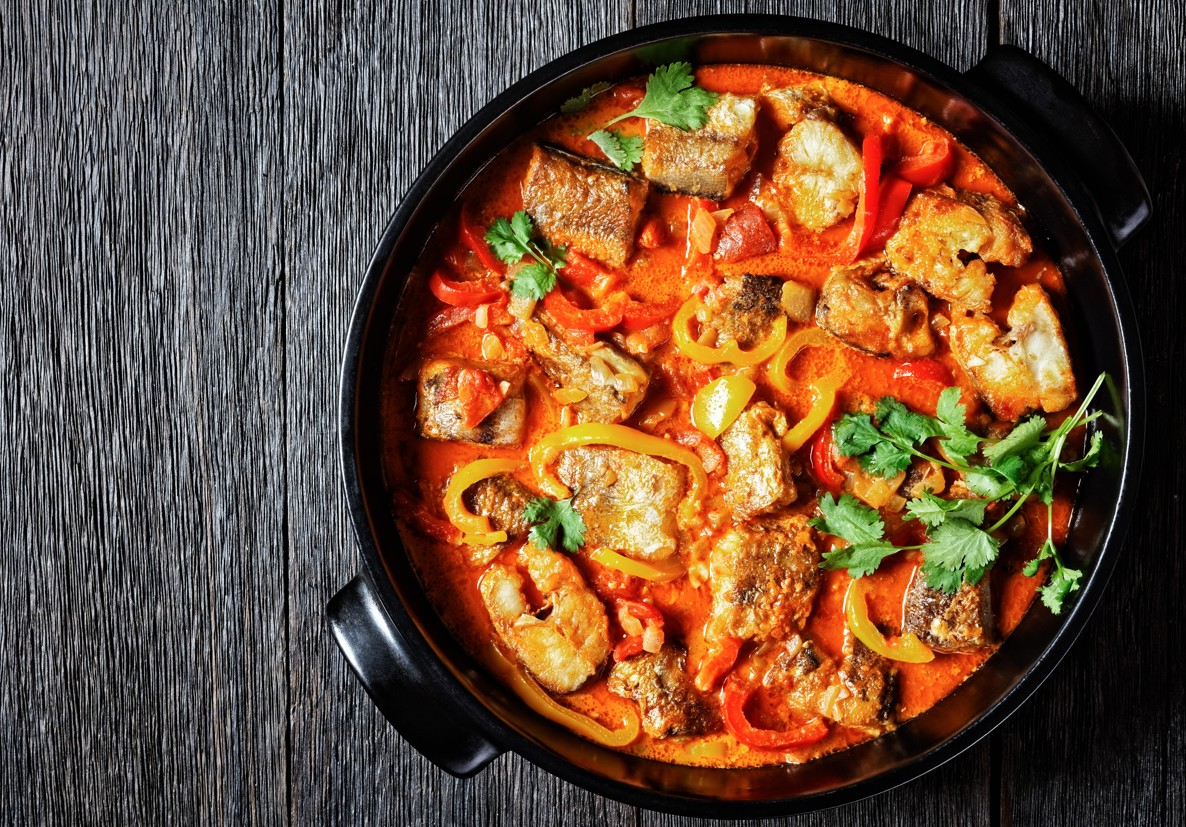
One of Recife’s defining dishes is Moqueca Pernambucana, a rich fish and seafood stew cooked in a clay pot with coconut milk and dendê oil, giving it a deep orange color and luxurious texture. It is seasoned with peppers, tomatoes, cilantro, and lime, and served bubbling hot with rice.
Bolo de Rolo is the city’s most famous dessert and a source of local pride. This impossibly thin cake is rolled many times around a layer of guava paste, creating a delicate spiral that is both visually striking and intensely flavorful. Carne-de-Sol, sun-dried salted beef, is another regional staple, typically grilled or shredded and served with macaxeira (cassava) and beans.
Hearty inland dishes include Buchada de Bode, a robust stew of goat offal rooted in the sertão’s ranching culture, and Sarapatel, a spicy, vinegary stew of pork offal adapted from Portuguese traditions. Tapioca is ubiquitous street food: a crepe made from hydrated cassava starch, filled with cheese, coconut, eggs, or meat. Caldeirada is a simpler fisherman’s stew of mixed fish and potatoes. Acarajé, originally from Bahia, is widely available and beloved—black-eyed pea fritters fried in dendê oil and stuffed with spicy fillings.
Everyday Recife & Pernambucan Food
Breakfast (café da manhã) is light, often fruit, bread, cheese, and strong coffee. Lunch (almoço) is the main meal and commonly eaten at a restaurante por quilo, where diners pay by weight, or as a prato feito with rice, beans, protein, farofa, and salad. Afternoon snacks are important, and dinner is usually later and lighter.
Eating is informal, social, and lively. Meals are shared, conversation is constant, and service is relaxed. Drinks include fresh fruit juices (sucos), ice-cold beer, caipirinhas made with local fruits, and fresh coconut water. Food is as much about social connection as sustenance.
Cultural Fusion: Indigenous Roots, Portuguese Influence & West African Legacy
Recife’s cuisine rests on an Indigenous foundation of cassava, fish, and tropical fruits. Portuguese colonizers introduced sugarcane, onions, garlic, citrus, and stewing techniques. The most profound influence came from enslaved West Africans, who brought dendê oil, coconut, black-eyed peas, okra, and complex seasoning traditions.
This fusion produced one of Brazil’s most distinctive regional cuisines. A single table might feature cassava flatbreads, Afro-Brazilian seafood stews, Portuguese-inspired offal dishes, and uniquely Pernambucan desserts, all bound together by bold flavors and generous portions.
Craft Beverage Scene and Local Libations
Recife’s drinks are refreshing, tropical, and deeply local. Cachaça is the backbone of the caipirinha, often flavored with regional fruits such as cajá, umbu, or siriguela. Fresh fruit juices are exceptional and widely consumed.
Beer is the everyday drink, served very cold, often in small bottles. Caldo de cana (fresh sugarcane juice) is a popular street refreshment. Coffee is strong and sweet. What truly defines Recife is the ritual of an ice-cold beer or fruit-forward caipirinha on Boa Viagem beach, perfectly matched to the tropical heat.
International Dining and Contemporary Scene
Recife’s dining scene has become increasingly sophisticated, especially in neighborhoods such as Boa Viagem, Casa Forte, and Recife Antigo. Alongside traditional food, you will find Italian, Japanese, Lebanese, and contemporary Brazilian restaurants.
A modern Northeastern culinary movement is reinterpreting regional ingredients with refined techniques, but the soul of Recife’s food remains in its beach shacks, markets, and no-frills neighborhood eateries. Tradition and innovation coexist naturally, offering visitors both deeply rooted flavors and creative new expressions.
Food Customs and Practical Tips
Dress is casual and beach-appropriate, though cover-ups are expected away from the sand. A 10% service charge is customary in restaurants. Lunch is the main meal, and portions are generous—sharing is common.
For an authentic experience, eat moqueca at a beach barraca, try tapioca from a street vendor, and sample bolo de rolo from a traditional bakery. Visit the Mercado de São José to see local ingredients and street food in action. Don’t miss a late-afternoon caldinho at a neighborhood bar.
Explore Boa Viagem for beachfront dining, Recife Antigo for history and nightlife, and Casa Forte for refined local restaurants. Be adventurous with flavors, start gently with spice if needed, and embrace Recife’s culinary spirit: fiery, generous, joyful, and deeply rooted in history.
This guide covers what to eat in Recife, from moqueca and bolo de rolo to tapioca, carne-de-sol, and caipirinhas. Use it to plan your culinary journey through the heart of Pernambucan cuisine.
Check monthly weather averages for
Latest Secret Flying deals to Recife
Montreal, Canada to Recife, Brazil for only $645 CAD roundtrip
Cheap flights from Montreal, Canada to Recife, Brazil for only $645 CAD roundtrip with Avianca.
View DealToronto, Canada to Recife, Brazil for only $584 CAD roundtrip
Cheap flights from Toronto, Canada to Recife, Brazil for only $584 CAD roundtrip with Avianca.
View Deal⚠️ ERROR FARE ⚠️ Open-jaw from European cities to Latin America from only €152 roundtrip
Error Fare, open-jaw flights from European cities to Latin America from only €152 roundtrip with Iberia.
View Deal [adblockingdetector id="638efa67113bf"]