


Riyadh Food Guide
Food in Riyadh: What to Eat & Drink
Riyadh’s culinary landscape is a majestic, deeply traditional, and rapidly modernizing expression of Saudi Arabia’s capital, where Najdi Bedouin heritage, the austere beauty of the desert, and the transformative power of 21st-century ambition converge to create a dining scene defined by reverence for hospitality (diyafah), the centrality of family, and a fascinating evolution from private majlis gatherings to a dazzling array of public culinary experiences. As the political and administrative heart of the Kingdom—built on trade routes and date-palm oases and transformed by the oil boom—Riyadh has developed a food culture that is meticulously authentic in its Najdi roots and spectacularly global in its aspirations, shaped by hotel dining, weekend family feasts, and a new wave of ambitious Saudi chefs.
Shaped by its Islamic identity, its position in the heart of the Arabian Peninsula, and the influence of massive expatriate communities from across the Arab world, South Asia, and beyond, Riyadh’s cuisine is a celebration of fragrant rice, spiced lamb, tender camel meat, dates, ghee, and cardamom coffee—served alongside some of the world’s most opulent international restaurants. This is a city where food is an expression of both ancestral custom and national change, where Ramadan iftar becomes a profound communal ritual, and where every gathering is an opportunity to taste the rich, generous, and fast-unfolding story of modern Saudi Arabia.
Core ingredients reflect desert practicality and centuries of trade: lamb and camel, chicken, rice (especially long-grain basmati and regional varieties such as hasawi red rice), dates (countless types), wheat (for breads such as kuboos and samuli), yogurt and labneh, ghee (clarified butter), onions, tomatoes, dried limes (loomi), and a warm spice palette of cardamom, saffron, cinnamon, turmeric, and baharat. Dishes are defined by aromatic, savory profiles with a subtle sweetness, a mastery of slow-cooking (including pit-style methods for mandi), and communal platter service designed for sharing. Riyadh’s geography—an oasis city on the arid Najd plateau—historically demanded self-sufficiency, while today it supports everything from traditional Najdi houses to gleaming food halls in luxury districts.
Local Specialties of Riyadh
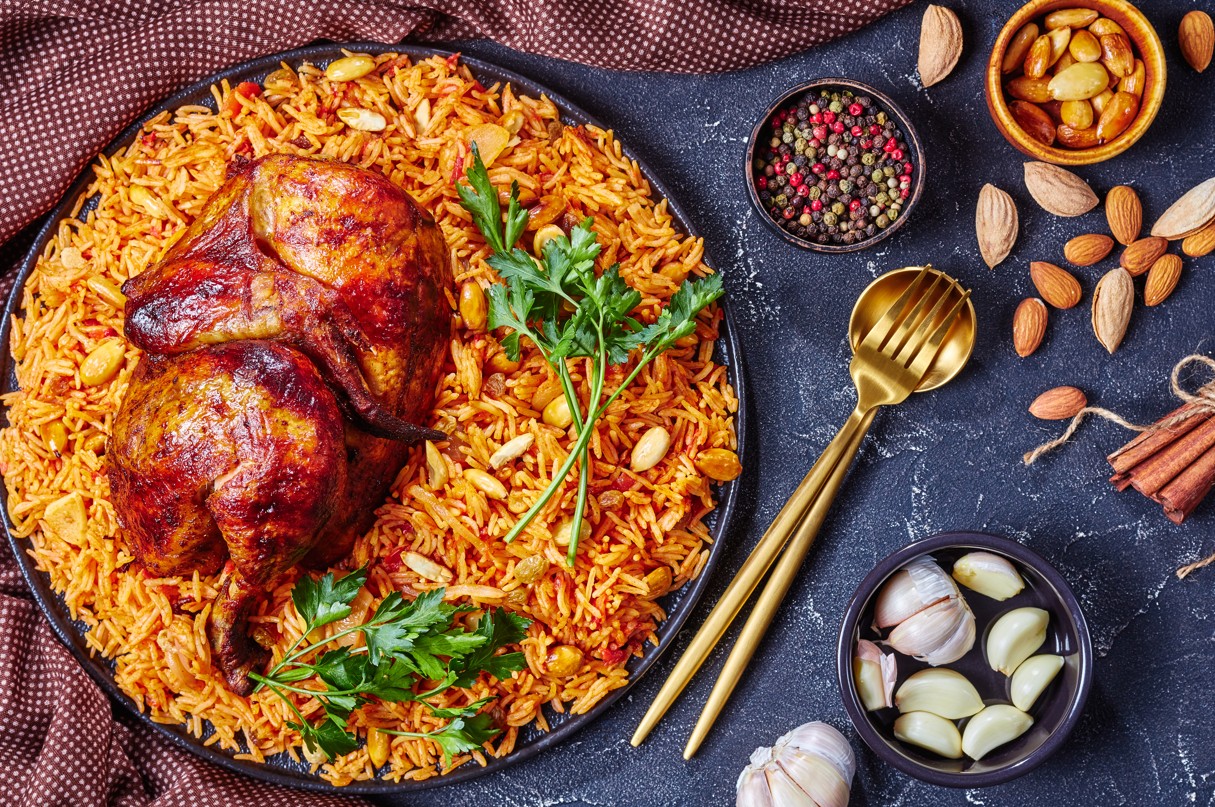
Riyadh’s most iconic dishes are rooted in the Najdi cuisine of central Arabia. Kabsa (sometimes called machboos in broader Gulf contexts) is the national standard: fragrant rice spiced with cardamom, saffron, and dried lime, cooked with meat—often chicken or lamb, sometimes goat or camel—and commonly garnished with toasted nuts and raisins.
Mandi is a close cousin with its own identity: meat (often lamb or chicken) is slow-cooked to exceptional tenderness, traditionally using pit or tandoor-like methods that lend a faint smokiness. Mathbi is another popular rice-and-meat format, with grilled or charred meat served over rice.
For true Najdi home-style comfort, jareesh is essential: crushed wheat cooked into a savory, hearty porridge, often enriched with meat and tomatoes, and served as a warming staple. Hininy is a traditional dessert built from dates, bread or wheat, and ghee—dense, rich, and deeply tied to the date-palm culture of central Arabia.
Hospitality is inseparable from the table: dates (tamr) arrive as a welcome gesture, paired with Arabic coffee (gahwa)—lightly roasted, cardamom-infused, and served in small cups as a continuous ritual rather than a single drink order.
Everyday Riyadh & Saudi Food
Breakfast can be light (labneh, olives, bread, cheese) or more substantial (eggs, beans, and regional staples). Lunch is traditionally the main family meal—often especially important on Friday after prayers—while dinner tends to run late and is frequently social, increasingly enjoyed outside the home.
Riyadh’s dining formats span the full spectrum: traditional Najdi restaurants, Levantine shawarma and mezze spots, Yemeni-leaning mandi houses, café chains, and luxury hotel dining rooms. Many venues are organized around family sections and separate seating areas, reflecting longstanding social norms. Meals are communal, generous, and built for sharing; eating with the right hand and using bread as a utensil remains common in traditional settings.
Alcohol is prohibited, so the everyday beverage culture is built around water, laban (a tangy yogurt drink), fresh juices, and tea. The pace of dining is typically relaxed—meals are a form of connection, not a transaction.
Cultural Fusion: Najdi Foundations, Hejazi Influence, Yemeni Proximity & Global Modernity
Riyadh’s core food identity is Najdi: a cuisine shaped by desert life and oasis agriculture—dates, wheat, dairy, and meat—elevated through hospitality rituals and slow-cooked feasts. Western Saudi (Hejazi) influence arrives through pilgrimage and trade routes, while Yemen’s proximity has left a strong imprint on cooking methods and rice-and-meat traditions, particularly in the popularity of mandi-style dishes.
In the modern era, and especially alongside the city’s rapid cultural and economic shifts, Riyadh has welcomed a remarkable global dining layer: international brands, celebrity-chef concepts, and ambitious Saudi-led restaurants reinterpret heritage ingredients with contemporary technique. The result is a city where a traditional platter of kabsa and a world-class Japanese omakase can coexist within the same neighborhood.
Craft Beverage Scene and Local Libations
In the absence of alcohol, Riyadh’s beverage scene is focused on coffee culture, tea rituals, and sophisticated non-alcoholic mixing. Gahwa remains the ceremonial centerpiece—served continuously with dates as a sign of welcome and respect.
Karak chai (spiced milk tea), popularized by South Asian communities, is a citywide staple, while specialty coffee has exploded in popularity, with modern cafés treating beans, brewing, and presentation with real seriousness. Fresh juice bars are equally prominent, producing elaborate blends and mocktails that match the city’s taste for luxury and spectacle. “Saudi champagne” (a sparkling apple-based drink) is also a common celebratory non-alcoholic option, particularly at gatherings and events.
International Dining and Contemporary Scene
Riyadh boasts one of the Middle East’s most opulent and rapidly expanding international dining scenes, concentrated in luxury hotels, upscale malls, and new entertainment districts. High-end Japanese, Italian, French, pan-Asian, and steakhouse concepts are widely available, often executed at an extremely high standard.
At the same time, a modern Saudi dining movement is gaining momentum, with chefs and restaurateurs reframing traditional flavors—dates, wheat, dairy, lamb, and local spice profiles—into contemporary dishes that speak both to heritage and a future-facing identity. Still, the soul of everyday Riyadh remains in traditional Saudi restaurants, Yemeni mandi houses, and the deep comfort of family meals shared at home or in a private majlis.
Food Customs and Practical Tips
Dress modestly in public places. Many restaurants maintain separate seating arrangements (often family and singles sections), and expectations can vary by venue. Tipping around 10% is generally appreciated. Dining hours skew late; dinner after 9 pm is common, and weekends can be very busy.
For an authentic experience, prioritize a traditional platter meal: kabsa or mandi in a classic setting, eaten slowly and shared. Make time for the full ritual of gahwa and dates, ideally in a traditional environment where the hospitality customs are part of the experience. If you want to see the city’s culinary transformation up close, pair that with a visit to a modern café district for specialty coffee and a high-end food hall for a snapshot of Riyadh’s global side.
Explore by area: Olaya and the Kingdom Centre vicinity for high-end international dining; Tahlia Street for trend-forward cafés and restaurants; and Diriyah for a more historical atmosphere paired with traditional or heritage-themed dining. Try both extremes—a traditional communal feast and a multi-course international restaurant—because the city’s story is precisely in that contrast. Most importantly, embrace Riyadh’s culinary spirit: generous, proudly traditional, strikingly modern, and always offered with a sense of welcome that is uniquely Saudi.
This guide covers what to eat in Riyadh, Saudi Arabia, from kabsa and mandi to jareesh, dates, gahwa, and world-class international dining. Use it to plan your culinary journey to the heart of the Arabian Peninsula.
Check monthly weather averages for
Latest Secret Flying deals to Riyadh
Rome, Italy to Dammam or Riyadh, Saudi Arabia from only €164 roundtrip
Cheap flights from Rome, Italy to Dammam or Riyadh, Saudi Arabia from only €164 roundtrip.
View DealNon-stop from Atlanta to Riyadh, Saudi Arabia for only $695 roundtrip
Non-stop flights from Atlanta to Riyadh, Saudi Arabia for only $695 roundtrip with Delta Air Lines.
View DealSUMMER: Non-stop from Karachi, Pakistan to Riyadh, Saudi Arabia for only $294 USD roundtrip
Non-stop, summer flights from Karachi, Pakistan to Riyadh, Saudi Arabia for only $294 USD roundtrip.
View Deal [adblockingdetector id="638efa67113bf"]