


Rome Food Guide
Food in Rome: What to Eat & Drink
Rome’s culinary landscape is a monumental, eternal, and deeply territorial expression of the Eternal City’s soul, where ancient Roman foundations, papal opulence, and the earthy wisdom of the Jewish Ghetto and working-class quartieri converge to create a dining scene defined by assertive simplicity, sacred pasta shapes, and an unwavering devotion to tradition perfected over centuries. As the historic and cultural heart of Italy—built on seven hills and layered with empire—Rome has developed a food culture that is fiercely proud of its Lazio roots and universally influential as a pillar of Italian cuisine, governed by the rhythms of the morning market, fixed-price pranzo (lunch), the sacred aperitivo hour, and the conviction that four ingredients, perfectly handled, beat forty.
Shaped by its role as the seat of the Church, its history as a capital of empires, and the distinct contributions of its Jewish community, Roman cuisine is a celebration of pecorino romano, guanciale (cured pork cheek), artichokes, offal, and perfect pasta—served in settings ranging from chaotic trattorie with checkered tablecloths to elegant enoteche tucked into Renaissance palazzi. This is a city where food is history, identity, and daily pleasure; where carbonara debates are civic sport; and where every meal is an opportunity to taste the robust, salty, timeless story of la Roma.
Core ingredients are few but non-negotiable: guanciale, pecorino romano, dried pasta (especially tonnarelli, rigatoni, spaghetti), artichokes (carciofi), anchovies, offal (including pajata), lamb, olive oil, black pepper, and mint (mentuccia). Dishes lean bold, savory, and delightfully salty, with a mastery of quick frying (fritto) and slow braising, and a satisfyingly rustic presentation where sauce clings properly to pasta. Rome’s geography—hills, fertile countryside, and access to the sea—shaped its larder, while its neighborhoods shaped its personality: refined in some corners, gloriously blunt in others.
Local Specialties of Rome
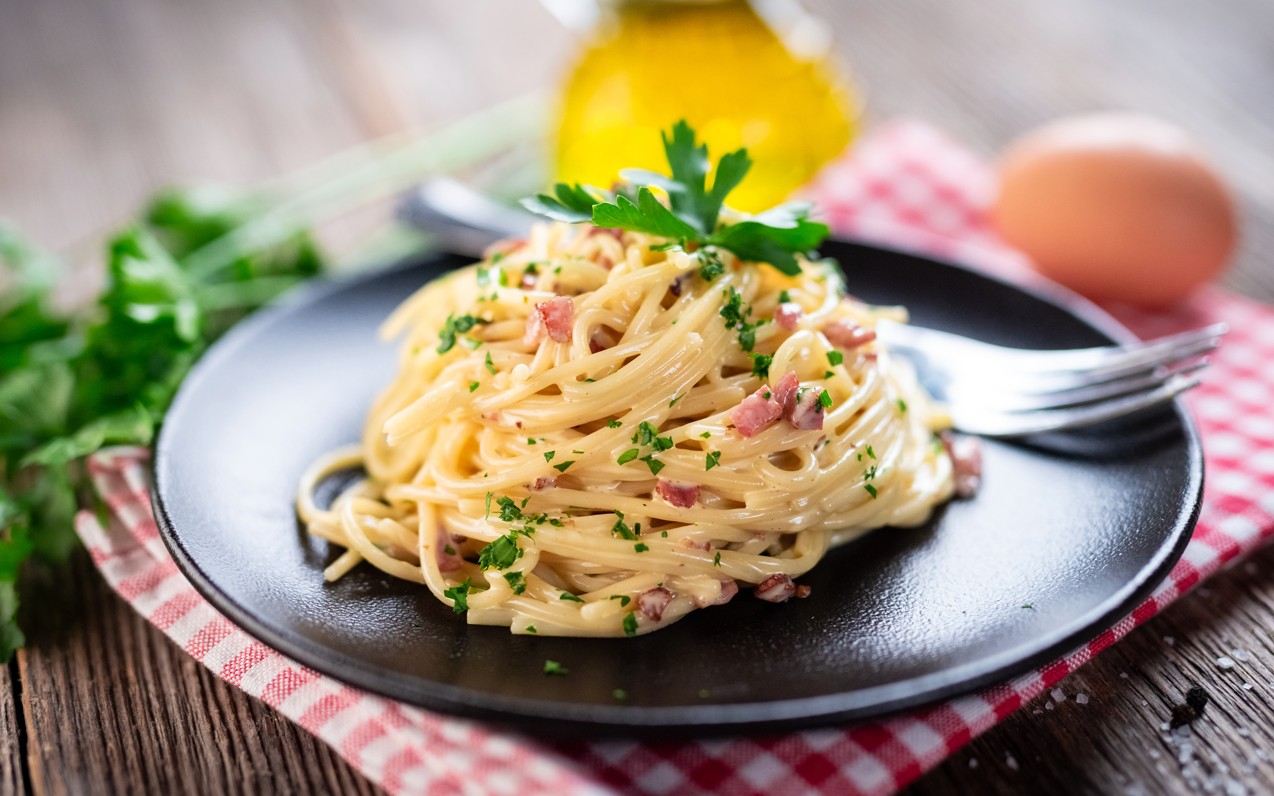
Rome’s iconic dishes are the untouchable classics of its canon. Pasta alla Carbonara is the king: pasta (often spaghetti or rigatoni) dressed in a glossy sauce of eggs, pecorino romano, black pepper, and guanciale—no cream, ever.
Pasta all’Amatriciana, born in nearby Amatrice, combines tomatoes, pecorino, and guanciale for a punchy, savory-sweet perfection. Cacio e Pepe is minimalist mastery: pasta, pecorino, and black pepper emulsified with starchy pasta water into a creamy sauce without cream.
Artichokes define Roman seasonality. Carciofi alla Romana are braised with garlic, mint, and olive oil until tender and perfumed. Carciofi alla Giudia—flattened and deep-fried until shatteringly crisp—are a Jewish-Roman invention and one of the city’s great signature bites.
For main courses, Saltimbocca alla Romana (veal with prosciutto and sage) delivers classic Roman restraint with real flavor. Offal and slow braises remain central: Coda alla Vaccinara is rich, long-cooked oxtail, deeply tied to Rome’s “fifth quarter” traditions. For street-snack glory, Supplì are essential—fried rice balls with tomato and a molten mozzarella core. For something sweet, Maritozzo (a cream-filled bun) is the Roman breakfast indulgence that feels both old-fashioned and timeless.
Everyday Rome & Roman Food
Breakfast (colazione) is swift and usually taken standing at the bar: a cornetto and cappuccino, followed by a quick espresso. Lunch (pranzo) is historically the structured meal, often with set menus, while aperitivo around 7 pm is a key social ritual that bridges the day into evening. Dinner (cena) is late by many standards, commonly after 8:30 pm.
The everyday food ecosystem is built on the trattoria, the osteria, the forno (for bread and pizza by the slice), the friggitoria (fried snacks), the enoteca (wine bar), and the tavola calda (quick hot dishes). Eating is social and animated. Appetizers are often shared. Service can be brisk and direct—more Roman frankness than rudeness. House wine, mineral water, and coffee (after dessert) are standard rhythms.
Cultural Fusion: Ancient Roots, Jewish Innovation, Papal Refinement & Cucina Povera Soul
Rome’s culinary foundations are ancient: legumes, grains, and the frugal brilliance of using everything. The Jewish community—confined to the Ghetto for centuries—left one of the city’s most distinctive culinary legacies, perfecting frying and giving Rome dishes like carciofi alla giudia. Papal and aristocratic kitchens brought refinement and ceremony, but the emotional core remains cucina povera and the “fifth quarter” (quinto quarto) traditions tied to slaughterhouse life in neighborhoods like Testaccio.
The result is a cuisine where humble ingredients become defining icons, where technique matters more than novelty, and where identity is preserved through repetition—done correctly, every single time.
Wine, Coffee, Aperitivo & Digestivi
Rome is wine-centric and ritual-driven. Local Lazio whites—especially easy-drinking bottles from areas around Frascati—pair naturally with salty cheeses, fried artichokes, and pasta. Aperitivo cocktails such as the Spritz and Negroni are a daily habit as much as a drink order.
Coffee is treated with reverence: espresso is fast, strong, and taken at the bar. After a meal, Romans often reach for a digestivo—typically an amaro or, less locally, limoncello. And yes, the public fountains (nasoni) are part of the city’s everyday rhythm: refill your bottle and keep moving.
International Dining and Contemporary Scene
Rome has international restaurants, but it remains proudly Roman at its core. Much of the most satisfying “variety” is simply other regional Italian cooking. A modern Roman movement does exist—chefs refining tradition, sourcing better ingredients, and applying precision—yet the city’s food innovation tends to happen within strict, almost sacred boundaries. Rome’s dining scene is defined by its unchanging center: you come here to eat Roman food, prepared the Roman way, and the city delivers that promise with remarkable consistency.
Food Customs and Practical Tips
Dress smart-casual; Romans generally dress neatly when they go out. Tipping is not obligatory, but rounding up or leaving small change is common for good service. Avoid cappuccino after the morning hours (and never with a meal). Remember the structure: pasta is a primo, not the final act, and a Roman meal often unfolds in courses.
For the most Roman experience, prioritize the classics—carbonara, amatriciana, cacio e pepe—at a straightforward trattoria that takes them seriously. In artichoke season, seek both braised and fried versions. Add a street-food loop: pizza al taglio from a forno, a couple of supplì, and a late-afternoon aperitivo in a piazza.
Explore by neighborhood: Testaccio for quinto quarto and traditional intensity; the Jewish Ghetto for fried artichokes and deep culinary history; Trastevere for atmosphere (choose carefully and avoid the obvious tourist traps); Monti for a more contemporary, boutique feel; and Prati for solid local dining near the Vatican. Balance one sit-down trattoria meal with one fast, delicious street-food lunch, and you will understand Rome’s true culinary rhythm.
This guide covers what to eat in Rome, Italy, from carbonara and cacio e pepe to carciofi alla giudia, supplì, maritozzi, and Lazio wines. Use it to plan your culinary pilgrimage to the heart of Roman cuisine.
Check monthly weather averages for
Latest Secret Flying deals to Rome

Sydney, Australia to European cities from only $1166 AUD roundtrip
Cheap flights from Sydney, Australia to European cities from only $1166 AUD roundtrip with Turkish Airlines.
View DealMelbourne, Australia to European cities from only $1177 AUD roundtrip
Cheap flights from Melbourne, Australia to European cities from only $1177 AUD roundtrip with Turkish Airlines.
View Deal [adblockingdetector id="638efa67113bf"]