


São Paulo Food Guide
Food in São Paulo: What to Eat & Drink
São Paulo’s culinary landscape is a colossal, dynamic, and breathtakingly diverse expression of Brazil’s global megalopolis, where Italian, Japanese, Arab, and Northeastern Brazilian traditions converge with Paulista ingenuity to create one of the world’s most exhilarating and comprehensive food scenes. As the financial and cultural engine of South America, São Paulo has developed a food culture that is voraciously curious, relentlessly innovative, and fiercely proud of its immigrant roots—governed by an insatiable appetite for both authenticity and novelty.
Shaped by waves of immigration that built entire neighborhoods, a 24/7 work ethic, and a cosmopolitan populace with global tastes, Paulistano dining is a celebration of pasta, sushi, esfihas, feijoada, and churrasco, all served with an energy that matches the city’s relentless pulse. This is a city where you can eat world-class omakase, authentic Syrian kibbeh, and traditional Brazilian stews within a few blocks, where every meal is an opportunity to taste the world without ever leaving Avenida Paulista.
Core ingredients reflect its breadth rather than a single terroir: high-quality beef, black beans, rice, farofa (toasted manioc flour), tropical fruits, pasta, sushi-grade fish, and spices from every continent. Dishes are defined by depth of flavor, technical precision across international cuisines, and a uniquely Paulistano ability to synthesize global influences into something new. São Paulo’s inland plateau location means it is less a natural “larder city” than a prodigious importer and curator of ingredients from across Brazil and beyond. Its identity is concrete-jungle ambition with real cultural warmth, where gleaming towers coexist with tiny botecos and century-old immigrant cantinas. From an izakaya in Liberdade to a Northeastern food counter in República, eating in São Paulo is a non-stop culinary odyssey through modern Brazil itself.
Local Specialties of São Paulo
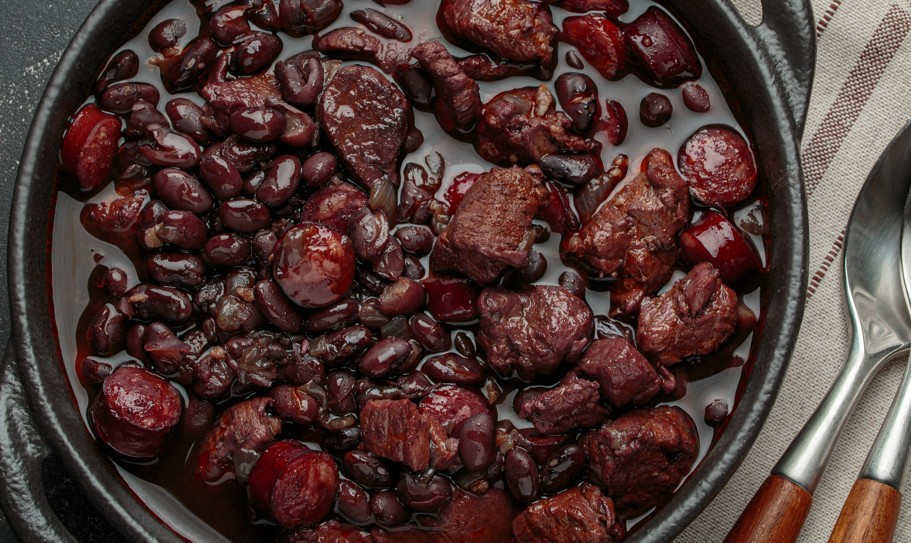
São Paulo’s most iconic dishes blend Brazilian staples and immigrant classics perfected here. Feijoada—black beans simmered with various cuts of pork—is a national institution, served with rice, farofa, collard greens, and orange slices; Wednesday and Saturday are traditional feijoada days. Virado à Paulista is the city’s namesake comfort plate: rice, beans (often mashed), sautéed kale, pork chop, sausage, fried egg, and fried banana—hearty, direct, and deeply satisfying.
Street food is essential. Pastel is the classic: a thin, crackly, deep-fried pastry stuffed with cheese, meat, or heart of palm, ideally eaten hot with cold caldo de cana (sugarcane juice) or a draft beer. Coxinha—the teardrop croquette filled with shredded chicken—appears in every neighborhood bakery and snack bar. Bauru, a pressed sandwich with roast beef, tomato, pickles, and melted cheese, was invented in the city and remains a lunchtime staple.
Immigrant staples are everyday food here, not “international options.” Pizza Paulistana is its own institution—often thicker, fluffier, generously topped, and frequently eaten with knife and fork. Esfiha (open-faced meat or cheese pies) are everywhere, as are Arab snacks like kibbeh and stuffed pastries. At the Mercado Municipal (Mercadão), the legendary mortadella sandwich is a towering, proudly excessive homage to the city’s Italian heritage. And for something sweet, brigadeiro remains the universal Brazilian comfort confection.
Everyday São Paulo & Paulistano Food
Breakfast is often simple—coffee, bread, fruit—though the city’s padarias (bakery-cafés) can turn it into a serious event with pastries, sandwiches, and fresh juice. Lunch (almoço) is a major daily ritual, commonly an executive set plate (prato feito) or the ever-practical comida por quilo buffet (pay-by-weight), which can range from basic to surprisingly high quality. Dinner starts later and can be anything from a quick pastel to a multi-hour tasting menu. Late-night eating matters in a city that runs long past midnight.
The culture of the boteco (neighborhood bar), the padaria, the executive lunch counter, and the delivery-driven apartment lifestyle is central. Eating is social, fast-paced, and intertwined with business and friendship. The variety of options makes Paulistanos adventurous, opinionated, and extremely knowledgeable. Service ranges from brisk and efficient to polished and formal in top-tier dining.
Cultural Fusion: Immigrant Pillars, National Melting Pot & Global Gastronomy
São Paulo is built on distinct immigrant culinary pillars. Italian communities brought pasta culture and created one of the world’s great diaspora food cities. Japanese immigrants shaped Liberdade and helped make Brazil a serious sushi country. Arab (Syrian and Lebanese) communities embedded esfihas, kibbeh, and grills into daily life. Northeastern Brazilians brought dishes like acarajé, hearty stews, and the flavors of the sertão and coast into the metropolis.
But the city’s true superpower is less a single “fusion cuisine” than its role as a culinary synthesizer. It’s where Japanese technique meets Amazonian ingredients, where Italian dough is topped with catupiry and jerked beef, and where Arab snacks become the default afternoon bite. São Paulo offers uncommon depth and authenticity across dozens of cuisines—existing in vibrant, competitive harmony.
Craft Beverage Scene and Local Libations
São Paulo’s beverage scene is as broad as its dining. Cachaça anchors the national cocktail, the caipirinha, and the city’s bars treat it with serious respect—from classic lime versions to fruit-driven variations using local produce. The craft beer scene is large and sophisticated, with taprooms and bottle shops that can sustain a full itinerary on their own.
Coffee culture spans old-school Italian-style counter espresso and a growing third-wave specialty scene. Wine is widely consumed, with a strong presence of both imports and bottles from Southern Brazil. Non-alcoholic favorites include fresh juices (sucos) in endless combinations, açaí na tigela as a daily snack, and the ever-present guaraná soda. What distinguishes São Paulo is the way it treats everything—beer, coffee, cocktails, juice—as a craft worth caring about.
International Dining and Contemporary Scene
São Paulo doesn’t merely “offer” international dining; it defines it in Brazil. Japanese food can be exceptional, Italian dining is foundational, and immigrant neighborhoods sustain authentic Korean, Arab, Jewish, and countless other traditions. Alongside that, modern Brazilian cuisine is a major force: chef-driven restaurants research, elevate, and reinterpret native ingredients with fine-dining technique, creating a contemporary scene that is globally relevant while unmistakably Brazilian.
The result is a city with both extraordinary neighborhood depth and world-class peaks. You can build an entire trip around markets and bakeries, or around tasting menus and top bars—and both would be legitimate ways to understand São Paulo.
Food Customs and Practical Tips
Dining in São Paulo ranges from extremely casual to highly refined. Dress follows the venue. Tipping is not mandatory, but 10% is standard and often included on the bill as serviço; check before adding extra. Reservations are essential at popular restaurants, especially on weekends.
For authenticity, explore the city by neighborhood. Liberdade for Japanese food; Bixiga (Bela Vista) and Mooca for Italian cantinas; Bom Retiro for Korean and Jewish influences; and areas with strong Northeastern presence for regional Brazilian staples. Visit the Mercadão for classic market snacking (including the famous mortadella sandwich), and plan at least one feijoada lunch on a Wednesday or Saturday. Delivery apps are also part of local life and can be a smart way to sample breadth if you are short on time.
To structure exploration, use districts as anchors: Jardins for high-end dining; Pinheiros for contemporary restaurants and craft beer; Vila Madalena for bohemian botecos and bar-hopping; Itaim Bibi for upscale nightlife. Traffic is real—plan meals in clusters to avoid losing the day in transit. Prices range from extremely affordable street food to some of the continent’s most expensive tasting menus. The constant, however, is ambition and breadth: São Paulo’s culinary spirit is insatiable, global, deeply authentic in its diversity, and thrillingly competitive.
This guide covers what to eat in São Paulo, from feijoada and virado à paulista to pastel, pizza paulistana, and global classics perfected in Brazil. Use it to plan your culinary expedition to one of the world’s greatest food cities.
Check monthly weather averages for
Latest Secret Flying deals to São Paulo
Tampa, Florida to Sao Paulo, Brazil for only $469 roundtrip
Cheap flights from Tampa, Florida to Sao Paulo, Brazil for only $469 roundtrip with Copa Airlines.
View DealNon-stop from Porto, Portugal to Sao Paulo, Brazil for only €437 roundtrip
Non-stop flights from Porto, Portugal to Sao Paulo, Brazil for only €437 roundtrip.
View DealOpen-jaw from Prague, Czech Republic to Sao Paulo, Brazil returning to Munich, Germany for only €473
Open-jaw flights from Prague, Czech Republic to Sao Paulo, Brazil returning to Munich, Germany for only €473 with Lufthansa and United Airlines.
View Deal [adblockingdetector id="638efa67113bf"]