


São Tomé and Príncipe Food Guide
Food in São Tomé and Príncipe: What to Eat & Drink
São Tomé and Príncipe’s culinary landscape is a lush, aromatic, and historically rich expression of the Gulf of Guinea’s tropical islands, where Portuguese colonial plantation culture, West African traditions, and the bounty of volcanic soil and surrounding seas converge to create a cuisine of striking simplicity and depth. As a former cocoa and coffee plantation colony, the islands developed a food culture closely tied to farming and fishing cycles, shaped by centuries of forced labor, isolation, and eventual independence. Guided by an equatorial climate and a relaxed leve-leve (easy-going) philosophy, Santomean cuisine celebrates fresh fish, plantains, breadfruit, beans, and palm oil, lifted by locally grown chilies and herbs. Meals are unhurried, generous, and deeply connected to land, sea, and history.
Core ingredients include tuna and wahoo, ripe and green plantains, breadfruit (fruta-pão), yams, taro, red palm oil (dendê), beans, coconut, and abundant tropical fruits such as mango, pineapple, and jackfruit. Dishes are hearty, often spicy and richly textured, relying on slow cooking and grilling rather than complexity. Fertile volcanic soil supports cocoa, coffee, and staple crops, while the surrounding Atlantic supplies daily catches. From crumbling plantation kitchens to beachside grills, eating in São Tomé and Príncipe is an immersion into one of Africa’s least-altered creole food traditions.
Local Specialties of São Tomé and Príncipe
Calulu is the national dish and the heart of Santomean cuisine: a slow-cooked stew of dried or fresh fish (sometimes chicken), smoked fish, okra, eggplant, and leafy greens, simmered in palm oil and served with funge, a smooth starch made from cassava or plantain flour.
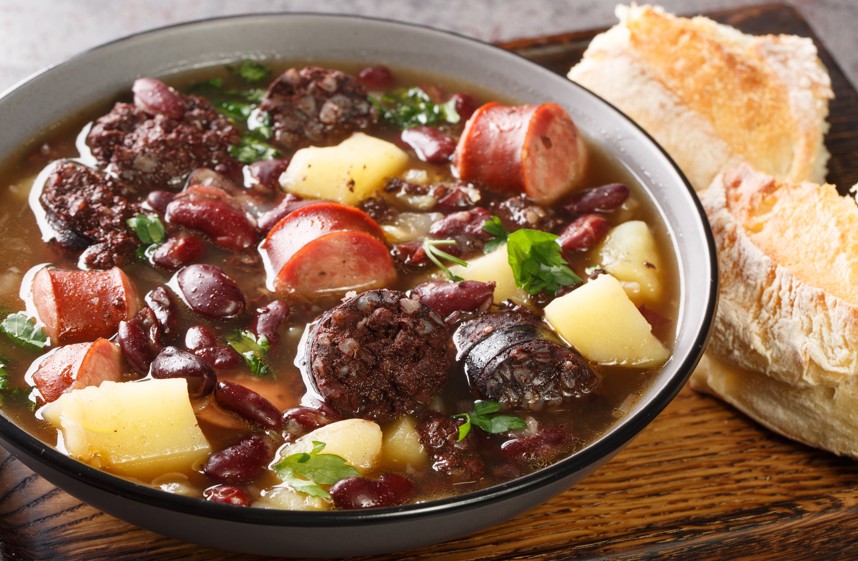
Feijoada Santomense adapts the Portuguese bean stew using local beans, pork, and sausages, enriched with palm oil and island spices. Blablá is mashed or crushed breadfruit, commonly served as a side. Peixe Assado—whole grilled fish seasoned with lime and salt—is ubiquitous along the coast. Molho de Cacau, made from cocoa pulp, is a unique sweet-savory sauce paired with fish or plantains. Desserts are simple, such as arroz doce de coco (coconut rice pudding). Snacks include fried breadfruit and boiled plantain.
Everyday Santomean Food & Island Life
Meals are structured around starch and protein. Breakfast is light—coffee with bread or fruit. Lunch is the main meal, usually a stew or grilled fish with breadfruit, rice, or plantain. Dinner is modest and informal. Home cooking dominates, with most visitors eating at guesthouses or small family kitchens rather than formal restaurants.
Eating is communal, often from shared plates, and follows the rhythm of fishing and harvests. Service is relaxed and friendly, reflecting the leve-leve mindset. Meals are social moments rather than scheduled events.
Cultural Fusion: Portuguese Roots & West African Foundations
Portuguese influence appears in stews, beans, and pork, while West African traditions contribute palm oil, okra, and starch-based sides like funge. These elements fused on isolated plantations (roças), where enslaved and later contracted laborers adapted limited resources into a distinct creole cuisine. The result is a food culture shaped by necessity, resilience, and adaptation.
Craft Beverage Scene and Local Libations
Beverages are simple and deeply local. Coffee is exceptional—strong, aromatic, and grown on the islands. Palm wine (vinho de palma) is lightly fermented and consumed fresh. Cacao pulp juice (água de cacau) is sweet-tart and refreshing. Local sugarcane rum (aguardente), Portuguese beers, and fresh coconut water round out daily drinking.
International Dining and Contemporary Scene
International options are limited to a few tourist-oriented restaurants. There is no formal contemporary dining movement; the essence of eating here lies in traditional home-style cooking. The appeal is authenticity, not reinvention.
Food Customs and Practical Tips
Dining is informal. Tipping is appreciated but not expected. Eating with your hands is common—use your right hand when sharing dishes like funge or blablá. Wash hands before meals.
For the best experience, stay in a guesthouse that offers home-cooked meals. Always choose the catch of the day, visit the São Tomé municipal market, and try calulu whenever available. Be prepared for limited choice but exceptional freshness. Above all, embrace the leve-leve spirit—slow, generous, and deeply connected to land and sea.
This guide covers what to eat in São Tomé and Príncipe, from calulu and feijoada santomense to blablá, peixe assado, and island staples.
Check monthly weather averages for
Latest Secret Flying deals to São Tomé and Príncipe
Lisbon, Portugal to Sao Tome and Principe for only €435 roundtrip
Cheap flights from Lisbon, Portugal to Sao Tome and Principe for only €435 roundtrip.
View Deal🔥 Business Class from Lisbon, Portugal to Sao Tome and Principe for only €792 roundtrip (lie-flat seats)
Business Class flights from Lisbon, Portugal to Sao Tome and Principe for only €792 roundtrip.
View DealPortuguese cities to Sao Tome and Principe from only €447 roundtrip
Cheap flights from Portuguese cities to Sao Tome and Principe from only €447 roundtrip with TAP Air Portugal.
View Deal [adblockingdetector id="638efa67113bf"]