

Tahiti Food Guide
Food in Tahiti: What to Eat & Drink
Tahiti’s culinary landscape is a lush, fragrant, and profoundly Polynesian expression of French Polynesia’s heart, where ancient Maʻohi voyaging traditions, the bounty of volcanic soil and protected lagoons, and the refined overlay of French colonial culture converge to create a cuisine defined by earth-oven feasts, pristine raw seafood, and an elegant fusion of tropical simplicity and Gallic technique. As the political and cultural centre of the islands, Tahiti developed a food culture that remains firmly rooted in its Maʻohi identity while fluently embracing French culinary standards.
Daily life is shaped by the rhythm of the roulotte (food trucks), the Sunday family tamaʻaraʻa (feast), the bustling market, and an appreciation for both a perfectly grilled lagoon fish and a flawlessly baked croissant. Framed by steep green peaks and encircling reefs, Tahitian cuisine celebrates raw fish marinated in lime and coconut (poisson cru), taro, breadfruit, vanilla, and sun-ripened tropical fruit, served in settings that range from beachside snacks to refined restaurants with unmistakably French pricing. Food here expresses mana (spiritual power) and the relaxed philosophy of aita pea pea (“no problem”), where abundance, generosity, and freshness define the table.
Core ingredients are gifts of land and sea: fresh seafood such as tuna, mahi-mahi, parrotfish, and lagoon fish; taro (both root and leaves); breadfruit (uru); coconut in all its forms; world-renowned Tahitian vanilla; root vegetables like sweet potato (ʻumara) and manioc (cassava); pork and chicken; and an abundance of tropical fruits including pineapple, papaya, mango, grapefruit, and noni. Dishes are known for clean, bright flavours, creamy coconut richness, and techniques that favour raw preparation or long, slow earth-oven cooking. From a plastic plate of poisson cru at a roadside snack to a multi-course Franco-Polynesian dinner, eating in Tahiti is a journey through tradition, paradise, and quiet sophistication.
Local Specialties of Tahiti
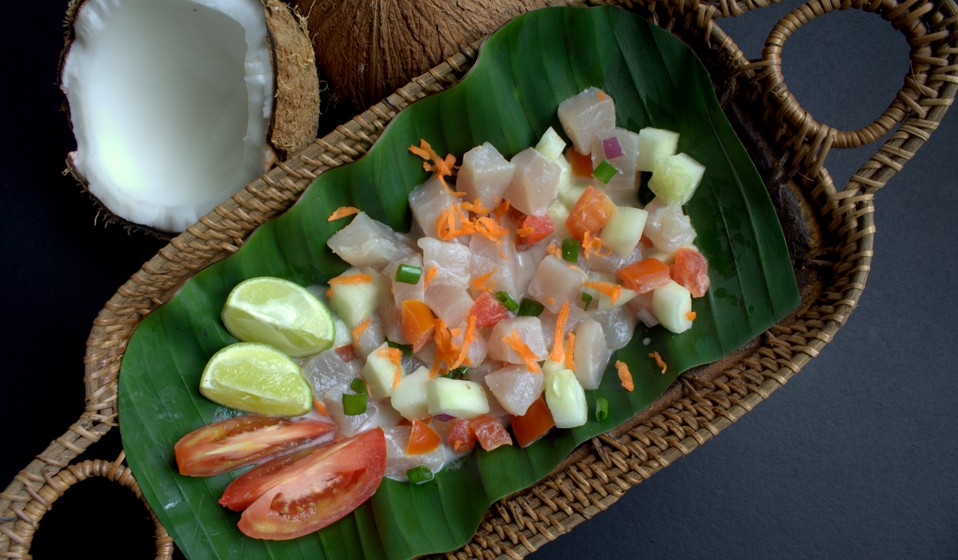
Tahiti’s iconic dishes are the pillars of Polynesian cuisine. Poisson Cru, the national dish, features cubes of ultra-fresh tuna or reef fish lightly “cooked” in lime juice, then mixed with vegetables such as tomato, cucumber, and onion, and finished with rich coconut milk.
Māʻa Tahiti is the traditional feast cooked in the ahimaʻa (earth oven). Pork, chicken, fish, taro, breadfruit, and feʻi bananas are wrapped in leaves and steamed for hours over hot stones, producing smoky, deeply aromatic flavours.
Fafaru is a pungent, acquired-taste preparation in which seafood is marinated in fermented seawater. Puaʻa Roti, a Chinese-influenced roast pork, is commonly found at markets and gatherings. Chevrettes, freshwater shrimp from mountain streams, are often simply grilled.
Poʻe is a classic dessert made from mashed fruit such as banana, papaya, or pumpkin, thickened with manioc or arrowroot starch and enriched with coconut milk. Pain coco (coconut bread) is a sweet, sticky bun sold in bakeries throughout the island. Tahitian vanilla is prized globally and appears in both sweet and savoury dishes.
Everyday Tahiti & Polynesian Food
Breakfast may be French in style, with pastries and coffee, or more substantial with eggs and fruit. Lunch is often the main meal and is commonly eaten at a snack or roulotte. Dinner is typically later in the evening. The Sunday tamaʻaraʻa remains central to family and community life.
The culture of the evening roulottes, small local snacks, boulangeries and pâtisseries, the Papeete Market, and hotel-based fine dining defines Tahitian eating. Meals are casual and frequently outdoors. Service in local eateries is relaxed, while French restaurants follow European dining conventions. Drinks commonly include fresh fruit juice, Hinano beer, imported wine, or chilled coconut water. The pace is unhurried and guided by aita pea pea.
Cultural Fusion: Maʻohi Polynesian Foundations, French Technique & Chinese Influence
The foundation of Tahitian food lies in the ancient Polynesian diet centred on taro, breadfruit, coconut, and seafood cooked in the ahimaʻa. French colonial rule introduced bread, pastries, dairy, sauces, and a culinary philosophy focused on technique and refinement.
Chinese immigrants added roast pork, stir-fried dishes, and noodles, now integral to everyday eating. This fusion produces a uniquely Tahitian table where traditional Polynesian raw fish, French baking, and Chinese roast meats coexist naturally, unified by local ingredients and tropical freshness.
Craft Beverage Scene and Local Libations
Tahiti’s beverage culture blends local staples with imported French influence. Hinano Beer is the iconic local lager and a fixture of everyday life. Fresh fruit juices, especially pineapple and coconut blends, are exceptional.
French wines are widely available but expensive. Rums from the French Caribbean are common, alongside locally infused rhum arrangé. Matoi, a locally produced vodka made from sugarcane, is also popular. Coconut water straight from the nut is the ultimate refresher, while coffee follows French traditions. What defines Tahiti is the contrast between an ice-cold Hinano at sunset and a fresh papaya juice at dawn in the Papeete market.
International Dining and Contemporary Scene
As French Polynesia’s administrative capital, Tahiti offers the widest range of international dining in the region. Papeete and surrounding hotel areas feature French bistros, Italian restaurants, Chinese eateries, and Japanese sushi bars.
High-end dining highlights a refined Franco-Polynesian fusion, where classical French technique meets pristine local seafood, vanilla, and tropical produce. Despite this sophistication, the soul of Tahitian food culture remains in the roulottes, snacks, and home-cooked feasts. Visitors experience a rare duality: deeply traditional Polynesian food alongside elegant French-influenced cuisine, often within a few blocks of each other.
Food Customs and Practical Tips
Dress is casual but modest; swimwear is reserved for beaches and resorts. Tipping is not customary due to French influence, though small change is appreciated. The Papeete roulottes open in the evening and are an essential experience for atmosphere and value.
For an authentic visit, always try poisson cru, as each cook prepares it slightly differently. Visit the Marché de Papeete in the morning for produce, snacks, and local colour. Eat dinner at the roulottes on the waterfront, and, if possible, attend a traditional Māʻa Tahiti feast prepared in a real ahimaʻa.
Sample vanilla products, from beans to paste and perfume. Explore Papeete for markets and casual dining, Punaʻauia and Paea on the west coast for resorts and local restaurants, and Mahina and Point Venus for a more residential feel. Expect high prices for imported goods and resort dining, and carry cash for markets and snacks. Above all, embrace Tahiti’s culinary spirit: generous, fragrant, deeply connected to land and sea, and effortlessly blending Polynesian earthiness with French refinement.
This guide covers what to eat in Tahiti, from Poisson Cru and Māʻa Tahiti to coconut bread, Hinano beer, and refined Franco-Polynesian cuisine. Use it to plan your culinary journey through the heart of the South Pacific.
Check monthly weather averages for
Latest Secret Flying deals to Tahiti
SUMMER & NEW YEAR: San Francisco to Tahiti, French Polynesia for only $605 roundtrip
Summer and New Year flights from San Francisco to Tahiti, French Polynesia for only $605 roundtrip with Delta Air Lines and Air France.
View DealSUMMER: Sacramento, California to Tahiti, French Polynesia for only $597 roundtrip
Summer flights from Sacramento, California to Tahiti, French Polynesia for only $597 roundtrip with Alaska Airlines.
View DealSUMMER: Oakland, California to Tahiti, French Polynesia for only $597 roundtrip
Summer flights from Oakland, California to Tahiti, French Polynesia for only $597 roundtrip with Alaska Airlines.
View Deal [adblockingdetector id="638efa67113bf"]