


Toulouse Food Guide
Food in Toulouse: What to Eat & Drink
Toulouse’s culinary landscape is a hearty, generous, and deeply rooted expression of southwestern France (le Sud-Ouest), where Gascon peasant traditions, the bounty of the surrounding countryside, and the energy of a lively university city converge to create a cuisine defined by robust flavors, a love of duck and goose, and an unmistakably convivial spirit. As the historic capital of Occitanie and the “Ville Rose” (Pink City) for its terracotta bricks, Toulouse developed a food culture that is fiercely proud of its terroir, governed by the rhythms of farm and market life, and marked by a warmth and informality distinct from more formal French dining traditions. Shaped by its position between the Mediterranean and Atlantic, its past as a trading center, and its strong regional identity, Toulousain cuisine is a celebration of cassoulet, saucisse de Toulouse, duck confit, foie gras, and Armagnac, all served with a genuine southern warmth that turns every meal into a celebration.
Core ingredients such as duck and goose in all their forms (confit, magret, foie gras, gizzards), garlic, white lingot beans, tomatoes, potatoes, mushrooms, and hearty charcuterie form the foundation of the local kitchen. Dishes are characterized by rich, deeply savory flavors, mastery of slow-cooking and preservation techniques like confit and terrines, and a reliance on exceptional regional produce. Toulouse’s setting in the fertile Garonne River valley provides outstanding poultry, legumes, and fruits. From a traditional bistro in the Carmes district to a bustling stall at the Marché Victor Hugo, eating in Toulouse is an immersion into the generous soul of French country cooking.
Local Specialties of Toulouse
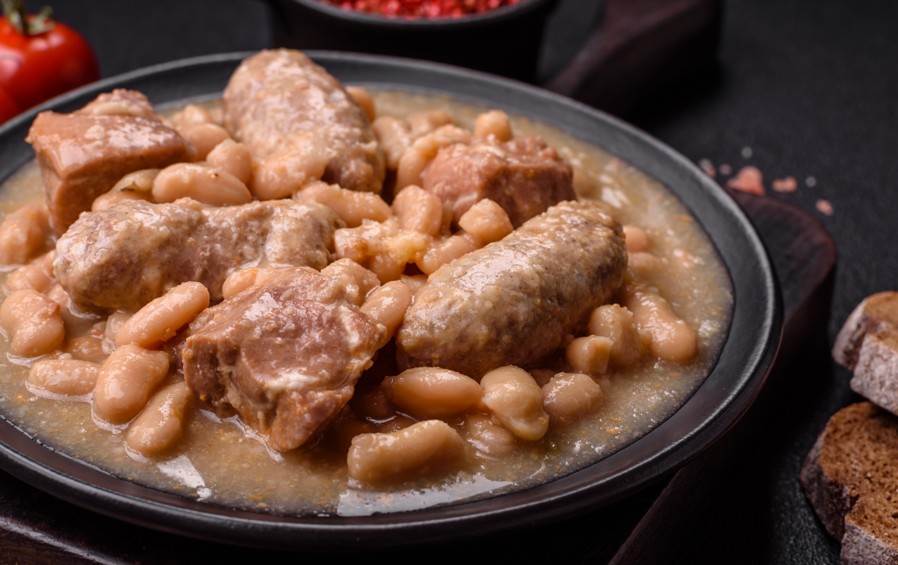
Toulouse’s iconic dishes are pillars of rustic French cuisine. Cassoulet de Toulouse is the city’s most famous dish: a slow-cooked casserole of white beans, saucisse de Toulouse, duck or goose confit, and sometimes pork, baked until a rich crust forms on top. Saucisse de Toulouse itself is a coarse-ground, lightly seasoned pork sausage that appears both as a cassoulet ingredient and grilled on its own.
Confit de Canard features duck legs preserved and cooked slowly in their own fat until meltingly tender, often served with sautéed potatoes. Foie Gras is enjoyed as a terrine or lightly pan-seared. Magret de Canard, the prized duck breast, is typically grilled and paired with pepper, honey, or fruit-based sauces. Gésiers (duck or goose gizzards), usually confited, appear frequently in salads. Saucisse aux Lentilles pairs the local sausage with green lentils from Lauragais. Fénétra, a traditional local dessert, is an almond-and-lemon tart with a light meringue-style topping. The city’s emblematic flower also appears in violette de Toulouse candies and liqueurs.
Everyday Toulouse & Southwestern Eating
Breakfast is typically simple and French: a croissant or tartine with coffee. Lunch is a substantial affair, often a set formule menu at a bistro that includes a starter, a hearty main such as cassoulet or duck, and dessert. Dinner is later and may be similar or slightly lighter. The culture of the meat-focused bistro, the market restaurant, and the café terrace defines everyday dining.
Meals are social, leisurely, and often accompanied by robust regional wines. The rhythm of eating follows market days and the long French lunch break. Service is friendly and straightforward, with less formality than in Paris. The idea of produits du terroir—local, seasonal ingredients—is central, and meals are enjoyed with enthusiasm and conversation.
Cultural Foundations: Gascon Roots & Occitan Identity
Toulouse’s cuisine is the urban expression of Gascon peasant cooking, born from the need to preserve meat and create nourishing, one-pot dishes for agricultural life. Its identity is deeply Occitan, sharing traditions with the wider Languedoc region.
While proudly local, Toulousain food fits into the broader southwestern French tapestry, with influences from neighboring areas such as Périgord and the Basque Country. The result is a table where humble peasant dishes like cassoulet sit comfortably alongside luxurious foie gras and fine Armagnac, reflecting a region that values abundance, pragmatism, and pleasure in equal measure.
Craft Beverages and Local Drinks
Toulouse’s beverage culture is distinctly regional. Wines from nearby appellations dominate, especially robust reds from Fronton, Gaillac, and Madiran, which pair naturally with the rich local food.
Armagnac, the older and earthier cousin of Cognac, is the classic digestif. Floc de Gascogne is a popular sweet apéritif, while pastis reflects southern French tastes. Craft beer has a small but growing presence, and café culture thrives on sunny terraces. A glass of Fronton with cassoulet, followed by Armagnac and a strong coffee, captures the essence of Toulouse dining.
International and Contemporary Dining
As a major student city and aerospace hub, Toulouse offers a solid range of international restaurants, including Spanish, Italian, North African, Vietnamese, and Japanese cuisine, catering to a diverse population.
Modern southwestern and creative French cooking is present, with chefs lightening and refining traditional dishes using contemporary techniques. Still, the heart of Toulouse’s food scene remains its traditional bistros and market-driven restaurants. Rather than chasing trends, the city focuses on preserving and perfecting its regional culinary heritage, offering visitors the chance to experience iconic dishes at their source.
Food Customs and Practical Tips
Dining in Toulouse is relaxed but respectful. Tipping is not obligatory, though rounding up or leaving small change is customary. Meals are meant to be enjoyed slowly, and discussing daily specials with the server is encouraged, as they often highlight the best seasonal dishes.
For an authentic experience, eat cassoulet at a traditional bistro, where it is often a house specialty. Visit the Marché Victor Hugo and eat at one of the restaurant counters upstairs for outstanding market-driven lunches. Try saucisse de Toulouse grilled, often served with lentils or aligot. Order a “menu du marché” for the freshest cooking, and explore side streets away from Place du Capitole to find local favorites.
Explore different neighborhoods: Carmes and Esquirol for classic bistros, Saint-Cyprien for a more local atmosphere, Place Saint-Georges for charming cafés, and Marché Victor Hugo for the ultimate food-focused visit. Expect generous portions and rich flavors, and arrive hungry. Toulouse offers excellent value for the quality of its ingredients and cooking. Above all, embrace its culinary spirit: hearty, sun-soaked, deeply traditional, and joyously social—a true taste of southwestern France.
This guide covers what to eat in Toulouse, from cassoulet and saucisse de Toulouse to duck confit, foie gras, and classic Toulousain specialties. Use it to plan your culinary journey to the heart of the French southwest.
Check monthly weather averages for
Latest Secret Flying deals to Toulouse
Chicago to French cities from only $186 one-way
Cheap flights from Chicago to French cities from only $186 one-way with British Airways.
View DealWestern USA to French cities from only $468 roundtrip
Cheap flights from Western USA to French cities from only $468 roundtrip with American Airlines and British Airways.
View DealToronto, Canada to French cities from only $569 CAD roundtrip (Oct-Jan dates)
Cheap flights from Toronto, Canada to French cities from only $569 CAD roundtrip with Air Canada.
View Deal [adblockingdetector id="638efa67113bf"]