


Best Things to Do in Tunis: A Complete Guide
10 Best Things to Do in Tunis
Looking for what to do in Tunis? Tunisia’s capital is a vibrant crossroads of Mediterranean, Arab, Berber, Ottoman and French influences — a place where ancient ruins rise above the sea, blue-and-white villages cling to cliffs, and centuries of culture unfold between modern boulevards and historic souks. Tunis blends old-world charm with contemporary energy, offering archaeological treasures, artistic enclaves, bustling markets, elegant mosques and coastal scenery all within easy reach of one another.
From the monumental ruins of Carthage and the blue streets of Sidi Bou Said to the atmospheric Medina and world-renowned Bardo Museum, Tunis provides a diverse and deeply rewarding travel experience. Here are the 10 best things to do in Tunis to help you plan the perfect trip.
1. Wander the Tunis Medina
The Tunis Medina is a UNESCO World Heritage Site and one of the most fascinating historic centres in North Africa. Dating back to the 7th century, it is filled with winding alleyways that twist past centuries-old mosques, ornate madrasas, hidden palaces, and artisan workshops where skilled craftsmen produce perfumes, ceramics, textiles, carpets and traditional brassware. The souks are arranged by specialty — from Souk El Attarine’s perfume merchants to the jewellers and leatherworkers of Souk El Berka — making it an endlessly rich place to explore.
Beyond shopping, the Medina offers architectural gems such as Dar Lasram and restored palaces that once belonged to wealthy families. Many now serve as cultural centres or museums, showcasing the unique blend of Andalusian, Ottoman and Maghrebi influences. Wandering through the Medina provides a vivid sense of Tunis’s layering of history, culture and daily life — every alley reveals something unexpected, from quiet courtyards to bustling market squares.
2. Explore the ancient ruins of Carthage
Carthage, once a dominant power of the ancient world and rival to Rome, is today one of the Mediterranean’s most impressive archaeological sites. Spread across several districts overlooking the sea, the ruins tell the story of the Phoenicians, Romans and early Christians who shaped its destiny. Visitors can explore the monumental Antonine Baths — among the largest Roman bath complexes ever built — along with Punic harbours, temples, villas, cisterns and the Carthage National Museum, which houses exquisite artifacts uncovered throughout the region.
Walking through the ruins feels like stepping back thousands of years. Byrsa Hill offers panoramic views and insight into the city’s strategic importance, while the Roman theatre and amphitheatre reveal the scale of Roman engineering. Because the sites are spread out, Carthage is best explored over several hours or as a guided tour to fully appreciate its layers of history and significance as one of antiquity’s greatest cities.
3. Visit the Bardo Museum
The Bardo Museum is one of Africa’s premier cultural institutions, renowned especially for its extraordinary collection of Roman mosaics — the largest and most detailed in the world. These mosaics, preserved from villas across Tunisia, depict scenes of mythology, everyday life, hunting, gods, feasts and ceremonial events in astonishing colour and detail. The craftsmanship offers a rare glimpse into ancient Tunisian society and the sophistication of Roman-era artistry.
Beyond mosaics, the museum showcases Punic artifacts, Islamic art, Greek and Roman sculptures, Carthaginian jewelry, ceramics, coins and archaeological finds spanning thousands of years. The Bardo is vast, deeply informative and beautifully curated, making it an essential stop for anyone interested in ancient civilizations and Mediterranean history.
4. Explore Sidi Bou Said
Perched high above the Mediterranean, Sidi Bou Said is Tunisia’s most picturesque village — a clifftop town known for its whitewashed buildings with cobalt-blue doors, wrought-iron balconies and sweeping sea views. Its charming streets are filled with art galleries, boutique shops and cafés that overlook the Gulf of Tunis, making it a favourite gathering place for artists, writers and musicians throughout the 20th century.
Visitors can wander the cobblestone alleys, visit traditional houses such as Ennejma Ezzahra — a palace-turned-museum showcasing Andalusian-inspired architecture — and enjoy mint tea or almond pastries at Café des Délices, one of the most iconic viewpoints in Tunisia. Whether you’re there for the scenery, the photography, or the relaxed village atmosphere, Sidi Bou Said offers an unforgettable glimpse of Tunisia’s coastal charm.
5. Visit Zitouna Mosque
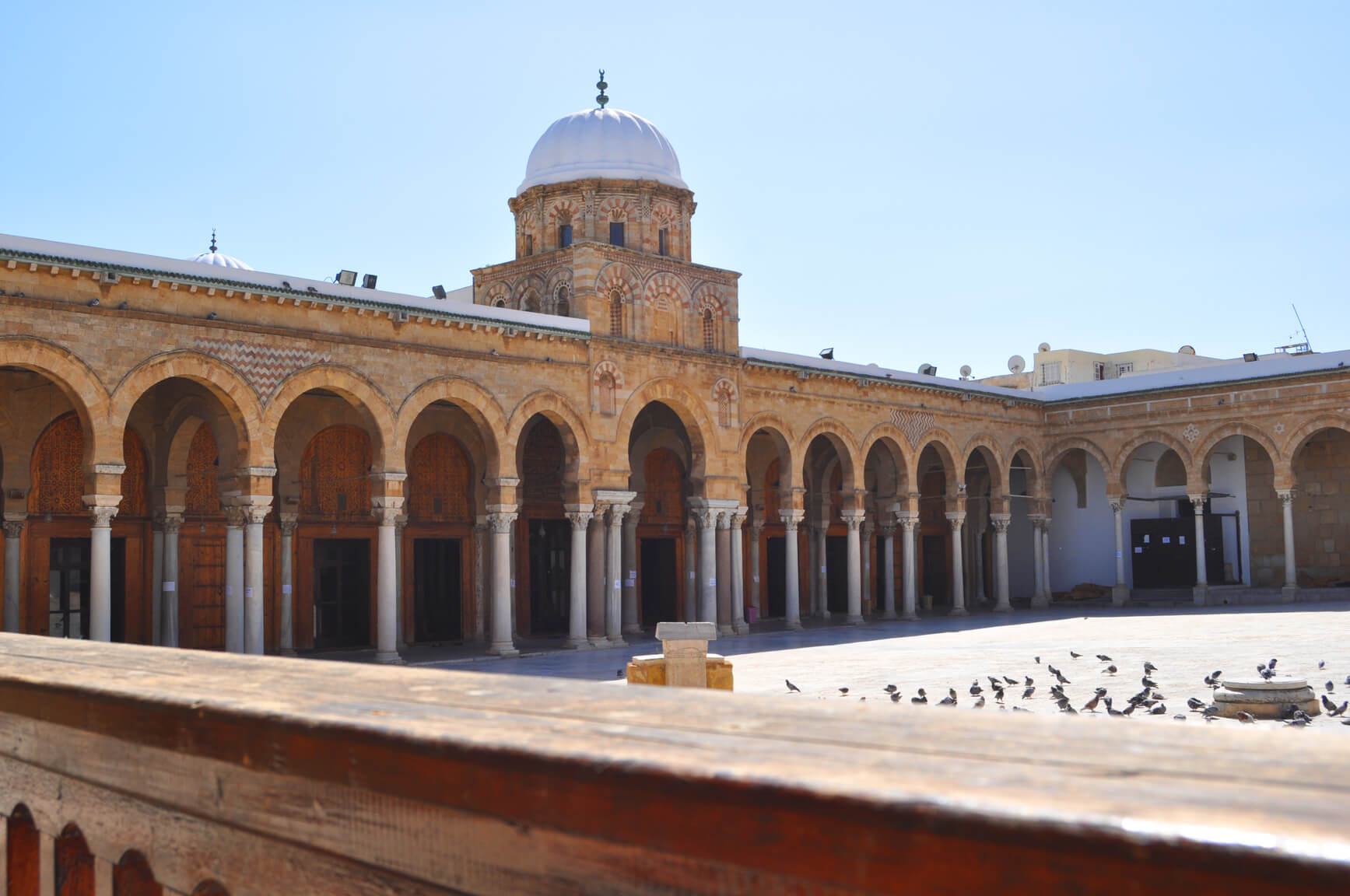
Zitouna Mosque, founded in the 8th century, is the spiritual and intellectual heart of Tunis and one of the most important Islamic sites in North Africa. Over the centuries, it served as a major centre of learning that influenced religious and academic scholarship across the Maghreb. Its architecture reflects centuries of Islamic styles, with marble columns sourced from ancient Carthage, elegant arches, carved woodwork and a serene central courtyard.
While non-Muslims cannot enter the main prayer hall, the mosque can be admired from several elevated viewpoints nearby, offering beautiful perspectives of its golden dome and the surrounding rooftops of the Medina. The surrounding souks and madrasas further reflect the cultural and religious significance of this historic site.
6. Stroll Avenue Habib Bourguiba
Avenue Habib Bourguiba is the modern heart of Tunis — a wide boulevard lined with cafés, palm trees, French colonial architecture and landmark buildings. Often compared to the Champs-Élysées, the avenue is a lively space where locals gather for coffee, shopping, festivals and political events. Its broad sidewalks and outdoor terraces make it ideal for people-watching and soaking in the city’s cosmopolitan character.
Along the avenue you’ll find key sites such as the Cathedral of St. Vincent de Paul, the Municipal Theatre, the iconic clock tower and numerous cafés that played important roles in Tunisia’s political and social movements. Day or night, the boulevard captures the urban pulse of Tunis and its blend of European and North African influences.
7. Relax in Belvedere Park
Belvedere Park is the largest green space in Tunis and one of the best places to find nature within the city. The park features forested walking trails, shaded lawns, lakes and rolling hills that offer pleasant views across the surrounding neighbourhoods. It’s a favourite spot for joggers, families, picnickers and anyone looking to unwind away from the busy streets of the Medina and downtown.
The park is also home to the Tunis Zoo, which houses animals from across Africa, though many visitors come primarily for the open-air scenery and fresh air. Early mornings and late afternoons are especially beautiful when sunlight filters through the pine trees and the city becomes quiet for a moment.
8. Explore La Marsa
La Marsa is an upscale coastal neighbourhood known for its sandy beaches, seaside promenades, stylish cafés and relaxed Mediterranean lifestyle. Popular with both locals and expatriates, it’s a wonderful place to spend a slow afternoon near the water. The central square, with its open-air cafés, offers a welcoming atmosphere, while the long beachfront draws sunbathers, swimmers and walkers throughout the year.
La Marsa also hosts boutique shops, art galleries and excellent seafood restaurants. Its close proximity to Sidi Bou Said and Carthage makes it a perfect base for exploring the northern suburbs — each with its own character and connection to Tunisian culture and history.
9. Visit Dar Ben Abdallah Museum
Dar Ben Abdallah, housed in an 18th-century palace, provides a beautifully immersive look into traditional Tunisian life. The museum’s rooms are filled with antique furniture, clothing, ceremonial objects, musical instruments and everyday household items. Displays illustrate how wealthy families once lived, celebrated, dressed and organized their homes, offering insight into cultural traditions that continue to influence Tunisian identity.
The palace itself is a masterpiece of Tunisian architecture — featuring intricate tilework, ornate wood carvings, arched doorways and peaceful courtyards that reflect the artistry of the Ottoman era. It’s an ideal stop for those interested in local culture, heritage and historical domestic life.
10. Enjoy Tunisian food, markets & cafés
Tunis boasts a diverse and flavourful culinary scene shaped by Mediterranean, Berber, Arab and Ottoman influences. Local dishes feature vibrant spices, fresh vegetables, olive oil, seafood and semolina-based breads. Must-try specialities include brik (crispy pastry with egg), couscous dishes, seafood tagines, ojja, mechouia salad, and a wide variety of sweets flavoured with almonds, honey and orange blossom.
The Medina is full of street-food stalls and traditional eateries, while La Marsa and Sidi Bou Said offer scenic cafés overlooking the sea. Markets such as the Central Market and neighbourhood souks allow visitors to sample local ingredients, spices and sweets. Whether you’re enjoying mint tea in a historic café or dining by the coast, food is an essential part of experiencing Tunisian culture.
Check monthly weather averages for
Latest Secret Flying deals to Tunis
Bucharest, Romania to Tunis, Tunisia for only €189 roundtrip
Cheap flights from Bucharest, Romania to Tunis, Tunisia for only €189 roundtrip with Lufthansa.
View DealNon-stop from Geneva, Switzerland to Tunis, Tunisia for only €123 roundtrip
Non-stop flights from Geneva, Switzerland to Tunis, Tunisia for only €123 roundtrip with Tunisair.
View DealNew York to Tunis, Tunisia for only $567 roundtrip
Cheap flights from New York to Tunis, Tunisia for only $567 roundtrip with Royal Air Maroc.
View Deal [adblockingdetector id="638efa67113bf"]