


Vilnius Food Guide
Food in Vilnius: What to Eat & Drink
Vilnius’s culinary landscape is a hearty, earthy, and historically resilient expression of the Baltic region, where ancient peasant traditions, the influences of a grand duchy that once spanned from sea to sea, and the stark realities of 20th-century history converge to create a cuisine defined by its wholesome flavors, mastery of preservation, and a deep, romantic connection to land and forest. As the capital of the Grand Duchy of Lithuania—one of medieval Europe’s largest states—and later a city shaped by successive occupations, Vilnius developed a food culture that is proudly rustic yet increasingly cosmopolitan, governed by the rhythm of the seasons, the bounty of forests and farms, and a renewed sense of national identity. Shaped by Slavic, Polish, German, and Jewish neighbors, a climate that demands hearty sustenance, and a modern drive to reinterpret the past, Lithuanian cuisine in Vilnius celebrates rye bread, potatoes, mushrooms, berries, pork, dairy, and beetroot, all served with comforting honesty and a growing creative flair. This is a city where food is survival and soul, where the aroma of baking bread is sacred, and where every meal is an opportunity to taste the fortitude and sweetness of a nation that has rediscovered its table.
Core ingredients like rye (for dark, dense bread), potatoes (in countless forms), pork, beef, chicken, freshwater fish, beets, cabbage, cucumbers, dill, caraway, mushrooms (both cultivated and foraged), wild berries (bilberries, lingonberries), apples, honey, and rich dairy products (curd cheese (varškė), sour cream, butter) form the foundation. Dishes are characterized by earthy, savory, sour, and subtly sweet profiles, a mastery of fermentation (pickling, sourdough) and slow-cooking, and a satisfying balance between heft and freshness. Vilnius’s history as a multicultural hub contributes influences ranging from Polish-style braises to Jewish culinary traditions and Karaim kibinai. Its identity is one of baroque churches and Soviet blocks, where bustling market halls sit minutes from serene parks. From a medieval-themed tavern in the Old Town to a sleek modern bistro in Užupis, eating in Vilnius is an immersion into the heart of the Baltics.
Local Specialties of Vilnius
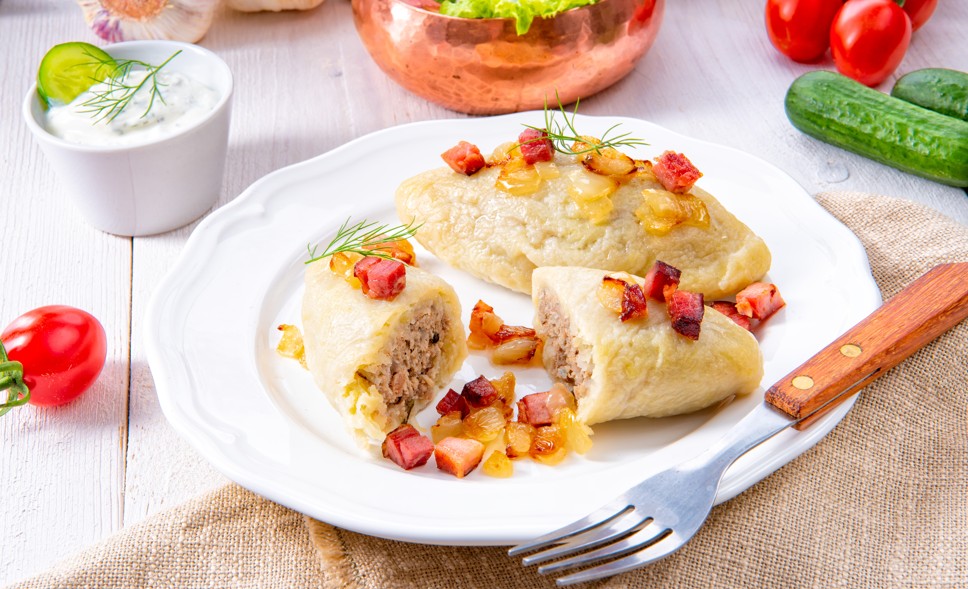
Vilnius’s iconic dishes revolve around bread, potato, and pork. Cepelinai (also called didžkukuliai) are the national dish: massive, zeppelin-shaped potato dumplings stuffed with minced meat (or curd cheese), served with sour cream, bacon, and fried onion.
Šaltibarščiai is the signature cold beetroot soup—vibrant pink and served chilled with cucumbers, dill, and hard-boiled egg, usually accompanied by hot boiled potatoes. Kugelis is a baked potato pudding (casserole) made from grated potatoes, eggs, milk, and bacon, typically served with sour cream (and sometimes applesauce).
Vėdarai are potato sausages: grated potatoes stuffed into pig intestines and roasted. Kibinai are savory pastries associated with the Karaim community, filled with spiced meat (often lamb) and especially linked to nearby Trakai. Žemaičių blynai are thick potato pancakes, often stuffed with meat and served with sour cream. Skilandis (and the closely related kindziukas) is a smoked, matured pork sausage traditionally cured and aged.
Kepta duona is the quintessential beer snack: dark rye bread fried until crisp and served with garlic and cheese sauce. Gira (kvass) is a lightly fermented rye-bread drink, sometimes mildly alcoholic but often treated as a soft drink. Šakotis (also called raguolis) is the spectacular “tree cake” baked on a rotating spit over an open flame, a centerpiece at celebrations. Varškės sūris (curd cheese) is eaten sweet or savory, sometimes smoked.
Everyday Vilnius & Lithuanian Food
Breakfast is often substantial: porridge, open-faced rye sandwiches (sumuštiniai) with cheese, ham, or cucumber, and coffee or tea. Lunch is commonly the main hot meal, frequently starting with soup and followed by a potato- or meat-based main. Dinner may be lighter, sometimes resembling breakfast foods.
The culture of the kavinė (café), the virtuvė (self-service canteen with home-style food), the restoranas, and the turgus (market hall) is central. Meals are straightforward, family-oriented, and seasonal. The idea of namų darbo (“homemade”) and food “from the earth” is a mark of quality. Drinks often include gira, beer, or fruit compotes. Service can be reserved but sincere, and café culture encourages lingering.
Cultural Fusion: Baltic Roots, Grand Duchy Multiculturalism & Soviet Legacy
Lithuanian cuisine rests on an ancient Baltic foundation of rye bread, porridge, fermented foods, and forest foraging. The Grand Duchy era layered in Slavic, Jewish, Karaim, and German influences—introducing variations of dumplings, pastries, braises, and spice usage.
The Soviet period standardized many foodways through canteens and supply constraints, narrowing regional variety while reinforcing core staples. Since independence, Vilnius has seen a lively revival: traditional dishes are defended with pride, while chefs reinterpret familiar ingredients—beetroot, mushrooms, rye, smoked fish—with modern technique. The result is a table where history feels present, but not frozen.
Craft Beverage Scene and Local Libations
Vilnius’s beverage scene is robust and in the midst of a craft renaissance. Midus (mead), an ancient honey wine, has returned in styles ranging from dry and herbal to richly sweet.
Craft beer (alus) is widely available, with local breweries and bars offering everything from crisp lagers to bold IPAs and stouts. Gira remains the beloved traditional non-alcoholic option. Degtinė (vodka) and other spirits are often infused with honey, herbs, or berries, while fruit liqueurs are common in colder months. Coffee culture is strong and increasingly specialized. What distinguishes Vilnius is how naturally traditional snacks like kepta duona pair with modern craft beer, creating a citywide “pub food” ritual that still feels distinctly Lithuanian.
International Dining and Contemporary Scene
As a modern European capital, Vilnius has a growing international dining scene—Italian, Asian (sushi is popular), Georgian, and other global options—especially concentrated in the Old Town and Užupis.
The most compelling trend is modern Lithuanian cuisine: chefs elevate familiar staples into refined plates—smoked fish with rye crumb, mushrooms treated like a main protein, beetroot transformed through fermentation and smoke. Still, the soul of the city’s everyday eating remains in cozy taverns, market stalls, and grandmother-style virtuvės where the classics are served with satisfying generosity.
Food Customs and Practical Tips
Dining is generally casual. Tipping (around 10%) is appreciated for good service but not obligatory. Bread is treated with particular respect—avoid wasting it. Soup is a common starter even at lunchtime.
For an authentic experience, start at Halės Turgus (the market hall) to sample local produce, cheeses, and smoked goods. Order šaltibarščiai on a warm day—it’s the most iconic seasonal dish. Eat at a virtuvė for an inexpensive, genuinely local lunch. Pair kepta duona with craft beer in a relaxed bar setting. Try kibinai in Vilnius or as part of a day trip to Trakai.
Explore different areas: Old Town for traditional taverns and modern bistros; Užupis for bohemian cafés and creative kitchens; and the Station District around Halės Turgus for market eats and no-frills local spots. Try both a theme-heavy “medieval” restaurant for atmosphere and a modern Lithuanian spot for a contemporary take. Expect generous portions and comfort-forward flavors. Most importantly, embrace Vilnius’s culinary spirit: it is hearty, honest, forest-and-field rooted, and currently pulsing with creative energy—a true taste of Baltic resilience and renaissance.
This guide covers what to eat in Vilnius, Lithuania, from Cepelinai and Šaltibarščiai to Kibinai, Kepta Duona, and modern Lithuanian cuisine. Use it to plan your culinary journey to the heart of the Baltics.
Check monthly weather averages for
Latest Secret Flying deals to Vilnius
Toronto, Canada to Vilnius, Lithuania for only $663 CAD roundtrip
Cheap flights from Toronto, Canada to Vilnius, Lithuania for only $663 CAD roundtrip with Scandinavian Airlines.
View DealBangkok, Thailand to Vilnius, Lithuania for only $192 USD one-way
Cheap flights from Bangkok, Thailand to Vilnius, Lithuania for only $192 USD one-way.
View DealOslo, Norway to Vilnius, Lithuania for only €30 roundtrip
Non-stop flights from Oslo, Norway to Vilnius, Lithuania for only €30 roundtrip.
View Deal [adblockingdetector id="638efa67113bf"]