


Xi’an Food Guide
Food in Xi’an: What to Eat & Drink
Xi’an’s culinary landscape is a robust, historic, and deeply flavorful expression of China’s ancient heartland, where the legacy of the Silk Road, the culinary traditions of the Qin and Tang dynasties, and the hearty flavors of Northwestern China converge to create a cuisine defined by bold aromatics, mastery of wheat, and profound Muslim Chinese (Hui) influence. As the eastern terminus of the Silk Road and the capital for numerous dynasties, Xi’an developed a food culture that is both monumentally significant and vibrantly street-level, governed by the rhythm of the Muslim Quarter’s bustling markets, the communal joy of sharing a feast, and a deep, unbroken connection to over a thousand years of culinary history. Shaped by its landlocked location on the Loess Plateau, the influx of spices, ingredients, and culinary techniques from Central Asia, and a large, influential Hui Muslim community, Xi’an cuisine is a celebration of hand-pulled noodles, savory breads, lamb and beef, chili oil, cumin, and vinegar, all served with a straightforward, satisfying intensity. This is a city where food is living history, where the biangbiang noodle is a cultural icon, and where every meal is an opportunity to taste the rugged, spicy, and unforgettable soul of Northwestern China.
Core ingredients like wheat flour (for noodles and breads), lamb and beef (pork is less common in Hui cooking), chicken, tofu, potatoes, bell peppers, garlic, scallions, cilantro, cumin, chili flakes, Sichuan pepper, black vinegar, and soy sauce form the foundation. Dishes are characterized by hearty, savory, spicy, and cumin-forward profiles, a mastery of hand-pulling and baking, and a compelling contrast between chewy carbohydrates and rich, aromatic meats. Xi’an’s unique history as a cosmopolitan Silk Road hub created a cuisine that blends Central Asian grilling techniques with Chinese noodle-making genius. Its identity is one of ancient city walls and modern high-rises, where the labyrinthine Muslim Quarter sits steps from landmarks like the Big Wild Goose Pagoda. From a humble street stall steaming lamb buns to a bustling restaurant specializing in banquet soups, eating in Xi’an is a thrilling, sensory immersion into the cradle of Chinese civilization.
Local Specialties of Xi’an
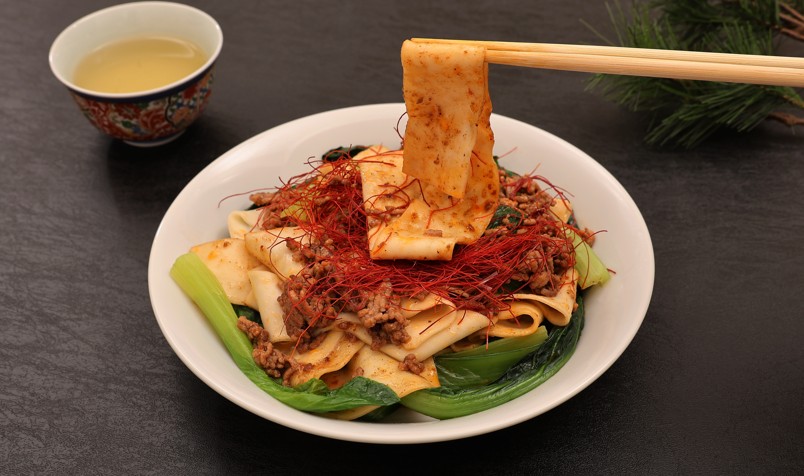
Xi’an’s iconic dishes are centered around wheat and lamb, with a heavy Hui Muslim influence. Biangbiang Mian are the city’s most famous noodles: extraordinarily wide, belt-like strands served in a savory, spicy sauce with chili oil, garlic, and aromatics, often topped with braised meat, vegetables, or a simple, searing-hot oil pour-over that blooms the spices at the table.
Roujiamo is often called the “Chinese hamburger”: tender, stewed meat (commonly pork in many shops, or beef/lamb in Hui-style versions) chopped and stuffed into a crisp, clay-oven-baked flatbread. It’s one of the most satisfying handheld street foods in China.
Yangrou Paomo is the ultimate communal Xi’an ritual: you tear a dense flatbread into small pieces by hand, then a rich lamb broth is poured over it, often with glass noodles and pickled garlic on the side. The tearing is not a gimmick—it affects texture and is considered part of doing the dish properly.
Liangpi (cold “skin” noodles) are chewy, slippery noodles made from wheat or rice starch, served chilled in a spicy, tangy dressing with bean sprouts, cucumber, and often chunks of wheat gluten. Baozi (steamed buns) are excellent here too, commonly filled with beef and carrot or other savory combinations suited to the region’s wheat-based palate.
Chuan’r (skewers) are a Silk Road legacy: small lamb skewers grilled over charcoal and seasoned aggressively with cumin, chili, and salt, especially dominant in the Muslim Quarter. Hulatang (pepper soup) is a thick, warming breakfast soup, aromatic and peppery, filled with tofu, vegetables, and sometimes meat.
Persimmon Cakes (Shizi Bing) are a beloved sweet street snack: persimmon-based dough pan-fried until crisp, typically filled with sweet pastes and nuts. Eight-Treasure Rice (Babaofan) is a sticky rice dessert studded with dried fruits and beans. Ice Peak (Bingfeng) is the iconic local orange soda in a glass bottle, a classic pairing with chili-oil-rich noodles and grilled meats.
Everyday Xi’an & Northwestern Chinese Food
Breakfast is savory and substantial: hulatang, baozi, or youtiao (fried dough sticks) with warm soybean milk. Lunch might be a quick bowl of noodles or a roujiamo grabbed on the move. Dinner is the most social meal, often shared with family or friends, with a soup or noodle “centerpiece” and several sides.
The culture of the street food stall (especially in the Muslim Quarter), the specialty noodle shop, the Hui Muslim restaurant, and the local canteen is central. Eating is communal, noisy, and joyful. Service is efficient and no-frills. Look for the concept of laozihao (time-honored “old brand” shops), which signals trusted, long-established reputation. Meals are enjoyed with tea, light local beer, yoghurt drinks, or Ice Peak soda. The pace is fast at stalls but more relaxed at dinner, where sharing and conversation matter.
Cultural Fusion: Ancient Base, Silk Road Exchange & Hui Muslim Synthesis
Xi’an cuisine’s foundation comes from the Guanzhong region’s long relationship with wheat and noodles. Its defining transformation arrived via the Silk Road, which brought ingredients such as cumin, cilantro, sesame, and new fruit-and-spice accents, along with cooking methods like clay-oven baking and charcoal grilling.
The Hui Muslim community—descended in part from Silk Road traders—synthesized these influences with Chinese techniques, shaping the lamb-forward, bread-and-noodle-centric identity that defines Xi’an today. The result is a cuisine that tastes distinctly “northwest”: robust, aromatic, and built for appetite, cold winters, and communal eating.
Craft Beverage Scene and Local Libations
Xi’an’s beverage culture is traditional and practical. Tea is ubiquitous, often simple green tea or floral infusions. Local beer is typically light, crisp, and designed to wash down chili oil and grilled meats.
Baijiu remains the banquet spirit for toasts. For everyday refreshment, Ice Peak (Bingfeng) is the non-alcoholic signature—sweet, fizzy orange soda that feels inseparable from the city’s street-food rhythm. Suan Mei Tang (sour plum drink) is excellent for cutting through richness and spice. Suan Nai (tart yoghurt), sometimes sold in distinctive cups or pots, is a common, soothing counterpoint to cumin-heavy, chili-laced dishes. What distinguishes Xi’an is the simple perfection of pairing a fiery bowl of noodles with an ice-cold bottle of Ice Peak.
International Dining and Contemporary Scene
As a major tourist city and provincial capital, Xi’an has modern malls, cafes, and a growing selection of international dining (Korean, Japanese, and Western), especially around university districts and commercial centers.
There is also a small but notable movement toward refined presentations of Shaanxi classics. Still, the soul of Xi’an dining remains in its street stalls, long-established noodle shops, and Hui Muslim restaurants. This is a city where the “must-eat” list is overwhelmingly local, intensely distinctive, and best experienced in motion—snacking and sampling across many small stops rather than settling for a single grand meal.
Food Customs and Practical Tips
Dining is extremely casual. Tipping is not practiced. Expect crowds, noise, and sometimes shared tables in popular places. If you cannot read a menu, pointing at what another table is eating is a perfectly workable strategy.
For the most authentic experience, explore the Muslim Quarter (Huimin Jie) at night and sample small portions from many stalls. Try yangrou paomo at a specialist and embrace the bread-tearing ritual. Eat biangbiang mian at a dedicated noodle shop and watch the hand-pulling. Grab a roujiamo from a shop with a line. Do not skip chuan’r—order several skewers and lean into extra cumin and chili if you like it bold.
Explore different areas: The Muslim Quarter for peak street food and Hui restaurants; South Gate (Nanmen) area for many famous, long-established eateries; Xiaozhai and university districts for a mix of classic local food and modern, youth-oriented dining. Try both a chaotic street-food crawl and a sit-down meal focused on one signature dish. Be prepared for flavors that are unapologetically aromatic, cumin-forward, and often chili-rich. Xi’an offers excellent value, especially for street food. Most importantly, embrace Xi’an’s culinary spirit: historic, robust, communal, and intensely satisfying—a true taste of China’s Northwestern soul.
This guide covers what to eat in Xi’an, China, from Biangbiang Mian and Roujiamo to Yangrou Paomo, Liangpi, and Hui Muslim specialties. Use it to plan your culinary pilgrimage to the start of the Silk Road.
 [adblockingdetector id="638efa67113bf"]