


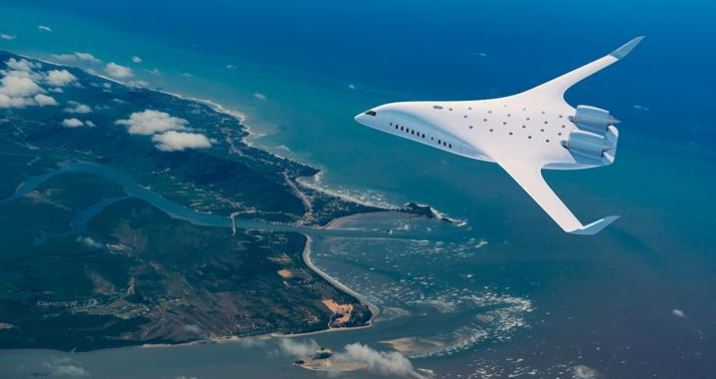
Blended-wing-body design aims to revolutionise efficiency and reduce emissions.
JetZero, a US-based start-up, is making significant strides in the development of its full-scale blended-wing-body (BWB) demonstrator aircraft. The company, based in Long Beach, is aiming for the first flight of the BWB demonstrator by 2027. Earlier this year, the aircraft passed its preliminary design review (PDR), which was officially completed in June, with final closeout activities wrapped up a few weeks ago, according to JetZero’s chief executive and co-founder, Tom O’Leary.
The BWB design, which targets the middle-market segment currently dominated by the Boeing 767 and 787-8, is expected to undergo a critical design review by next summer. Speaking at an EasyJet sustainability event at Cranfield University in the UK, O’Leary highlighted the importance of staying on schedule.
JetZero’s progress has been supported by funding from various sources, including the US Air Force (USAF), NASA, and the Federal Aviation Administration. The company also secured private investment, with Alaska Airlines backing its Series A funding round last year. JetZero has high hopes for the BWB aircraft, projecting that it could reduce fuel emissions by up to 50% compared to current traditional designs.
Despite the ambitious 2030 service-entry target, O’Leary remains optimistic. He believes that leveraging existing technology will be key to speeding up the development process. While the BWB introduces a radical new airframe, JetZero plans to incorporate “already certified equipment” such as narrowbody turbofan engines. This strategy, O’Leary asserts, will help avoid delays and accelerate development.
Originally, JetZero intended to equip the demonstrator aircraft with Pratt & Whitney’s geared turbofan (GTF) engines. However, the company has since opted for twin PW2043 engines, which are civil versions of the 43,000lb-rated engines used in the Boeing C-17 military transport aircraft. While JetZero hopes to eventually have multiple engine suppliers for its commercial variant, the current lack of options producing thrust beyond 35,000lb remains a challenge.
The development of the commercial version of the BWB aircraft will be shaped by JetZero’s newly established Airline Working Group. This body, expected to grow to 12 members, will meet for the first time later in 2024. Alaska Airlines was the first to join the group, with UK-based EasyJet joining on 4 September. Although EasyJet has not yet made a financial investment, O’Leary is hopeful this partnership will grow over time.
The working group will provide valuable operational insights to ensure that the BWB aircraft meets the needs of airlines. This includes considerations such as passenger capacity, speed, and compatibility with existing airport infrastructure. While the BWB aircraft promises significant fuel savings and efficiency, its larger wingspan, at around 58 metres, poses challenges for gate compatibility at airports currently serving narrowbody aircraft.
EasyJet is particularly interested in the potential of the BWB design to accommodate hydrogen propulsion systems. The larger fuselage, combined with better economic performance, could allow for the installation of larger fuel tanks necessary for hydrogen-powered flight, even if it means sacrificing some passenger capacity.
JetZero remains committed to resolving the logistical challenges posed by the BWB design, with O’Leary noting that the goal is to integrate the aircraft into existing airport terminals without incurring the substantial infrastructure costs associated with larger aircraft like the Airbus A380. Despite these challenges, JetZero’s innovative approach could mark a significant step forward in the aviation industry’s efforts to reduce emissions and enhance operational efficiency.
 [adblockingdetector id="638efa67113bf"]