


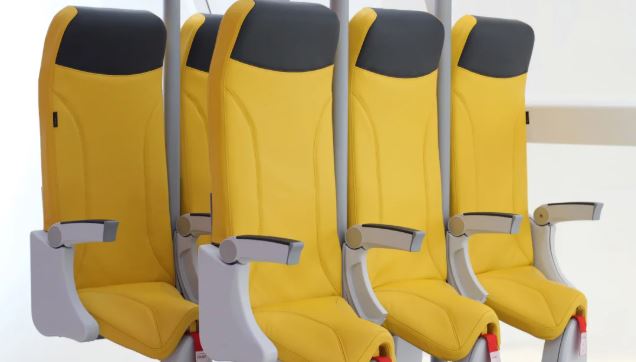
Airlines consider controversial upright seating option.
A radical shift in air travel may be on the horizon, as low-cost airlines prepare to introduce standing-only seating arrangements by 2026. While some see it as an innovative solution to the growing demand for cheaper flights, others worry it signals a decline in passenger comfort and safety standards.
These new standing seats, which resemble padded supports more than traditional chairs, are designed to allow passengers to lean against them rather than sit. While not truly standing, they involve minimal seating, positioning travellers at a slight angle during their journey. Industry insiders suggest the new model has already passed initial safety tests and regulatory approval processes, making it a feasible reality for short-haul flights in the near future.
One of the driving forces behind this shift is the potential to increase passenger capacity by up to 20 per cent. For budget airlines constantly seeking ways to maximise revenue without raising ticket prices, the opportunity to carry more travellers per flight is extremely appealing. This change could lead to significantly cheaper fares, although many passengers may be unwilling to sacrifice comfort for cost.
Among the most vocal supporters of the concept is Ryanair, the Irish budget airline known for its ultra-low fares and no-frills approach. The airline’s leadership has been advocating for standing-style seats since at least 2012, viewing them as a viable means of further reducing ticket prices and operational costs. Although initially dismissed by many as a publicity stunt, the idea now appears to be gaining serious traction across the industry.
Public reaction, however, remains mixed. Some customers express enthusiasm about the possibility of more affordable air travel, particularly for short domestic routes where comfort may be a lower priority. Others have raised concerns about the long-term effects on health, especially on longer journeys, as well as the implications for flight safety in turbulent conditions.
Aviation experts note that the upright seating model is most likely to be used on routes lasting no longer than one to two hours. These are typically domestic flights or short regional hops where passengers may be more willing to tolerate limited comfort. Airlines are expected to market these flights aggressively to younger or more price-sensitive travellers.
If implemented, these new seat designs could represent one of the most significant changes to cabin configurations since the inception of budget air travel. Whether travellers will embrace the change or reject it outright remains to be seen, but the debate over comfort versus cost is certain to intensify as 2026 approaches.
 [adblockingdetector id="638efa67113bf"]