


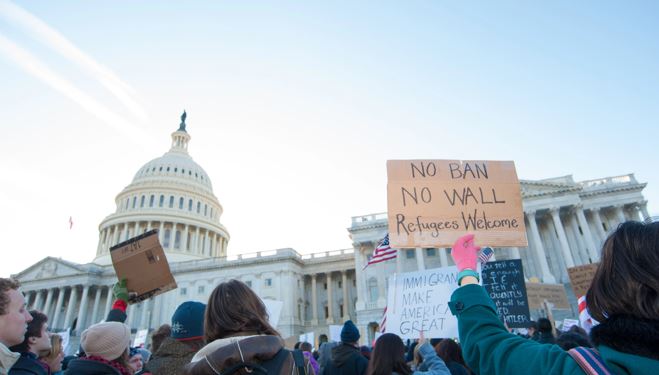
Widespread restrictions spark criticism over immigration policies.
US President Donald Trump has enacted a new executive order that introduces significant travel restrictions affecting individuals from numerous countries. Under the directive, nationals from twelve countries including Afghanistan, Haiti, Sudan, and others face full bans on entering the United States. In addition, travellers from seven more nations such as Cuba, Venezuela, and Laos will be subject to partial entry restrictions.
The proclamation revives and broadens the scope of earlier travel bans implemented during Trump’s initial presidency. His administration has justified the move by citing concerns over national security, foreign policy interests, and counterterrorism objectives. Trump reportedly signed the order on his first day back in office, tasking his officials with assembling a list of affected countries, which they delivered by late March.
According to the White House, these actions aim to prevent individuals who might overstay visas or who allegedly pose a security threat from gaining entry. The administration also referenced recent incidents, such as an attack in Boulder, Colorado, carried out by a foreign national, to bolster its argument that stricter controls are necessary.
However, critics have fiercely condemned the move. Many argue the policy unfairly targets individuals based solely on their nationality or ethnicity. Immigration advocates warn that the bans will once again lead to the separation of families and cause widespread disruption in immigrant communities, particularly those with ties to countries like Venezuela, Haiti, and Cuba.
Democratic Congresswoman Pramila Jayapal described the ban as discriminatory and economically harmful. She emphasised that immigrants contribute significantly to the American economy and society, and shutting the door on them contradicts the country’s foundational values.
The new restrictions are part of a broader set of hardline immigration measures rolled out by the Trump administration. These include blocking asylum claims at the southern border and revoking temporary protected status for individuals from nations experiencing humanitarian crises. Moreover, new protocols have been issued for US embassies to conduct stringent social media vetting of visa applicants, and limitations have been placed on student visas at institutions like Harvard University.
Trump has signalled that the list of countries under restriction is not final. He stated that further nations could be added if new threats are identified and that countries currently affected could see changes to their status if they implement certain improvements.
During his recent campaign trail, Trump reiterated plans to curb immigration from what he labelled “terror-prone” regions. This echoes his earlier rhetoric from 2017, when his initial travel ban caused chaos at airports and provoked legal battles. Though that order faced widespread backlash and multiple legal challenges, it was eventually upheld by the US Supreme Court, which ruled it fell within the president’s national security authority.
The original ban disproportionately affected Muslim-majority countries, drawing intense criticism from civil rights groups and legal experts. The Council on American-Islamic Relations (CAIR) argued that the policy was driven by religious discrimination, even though the Supreme Court did not agree with that assessment.
President Joe Biden reversed the ban shortly after assuming office in 2021, a move hailed by human rights organisations. The reinstatement and expansion of the ban under Trump marks a sharp pivot back to restrictive immigration policies, signalling an era of renewed controversy and debate.
 [adblockingdetector id="638efa67113bf"]